From understanding the splash pattern to pinching, propagation, and the best varieties worth growing.
What Makes a Polka Dot Plant Look the Way It Does
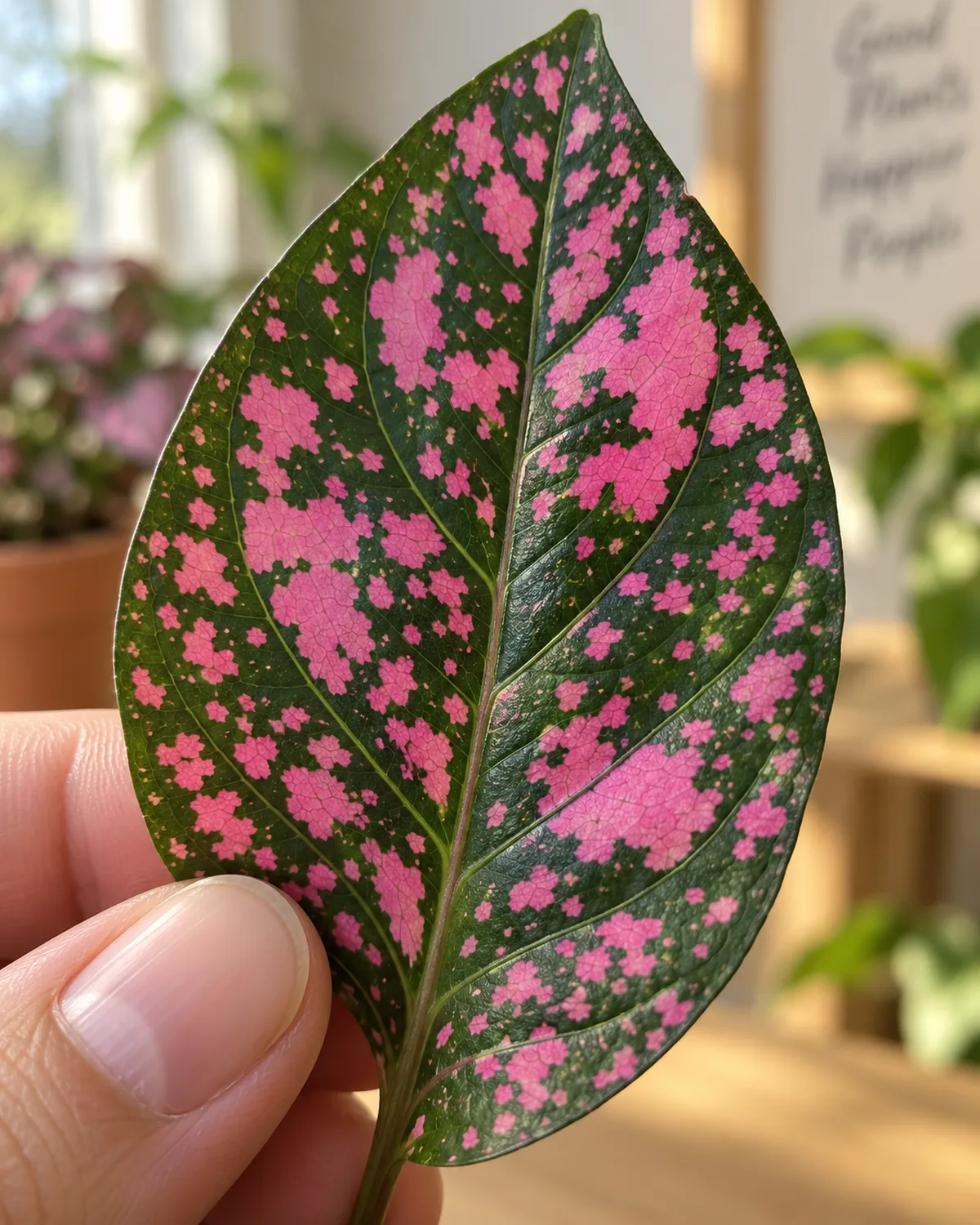
The name is literal. Hypoestes phyllostachya — commonly called polka dot plant, freckle face, or flamingo plant — wears irregular splashes of color across every leaf surface. Pink, white, red, or rose patches appear where chlorophyll is absent, replaced by anthocyanin pigments or simply no pigment at all, depending on the cultivar.
The plant belongs to the Acanthaceae family and is native to the understory forests of Madagascar, where it grows as a low shrub in dappled shade. That origin explains the single most important care rule: the color depends on light.
- How the spots work: the colored patches are areas where the leaf tissue lacks chlorophyll — the green pigment that drives photosynthesis — so a different pigment (anthocyanin for pink and red) or no pigment (white) shows through instead
- More light equals more color: in bright indirect light, the plant expresses more pigment in those patches, making the spots vivid and saturated — in dim conditions, the plant compensates by producing more chlorophyll everywhere, and the spots fade toward plain green
- Size and habit: compact bushy growth, typically fifteen to thirty centimeters tall and about the same wide when pinched regularly — without pinching, it shoots up to sixty centimeters as a single leggy stem
- Growth speed: fast in warm conditions with adequate light — a small nursery plant fills its pot in one growing season
This color-light relationship is the concept that makes or breaks polka dot plant care. Every faded, all-green Hypoestes sitting in a dim corner was once a vivid specimen — it did not lose a genetic trait, it just stopped expressing one because the light was not there to trigger it.
Light Requirements That Keep the Spots From Fading
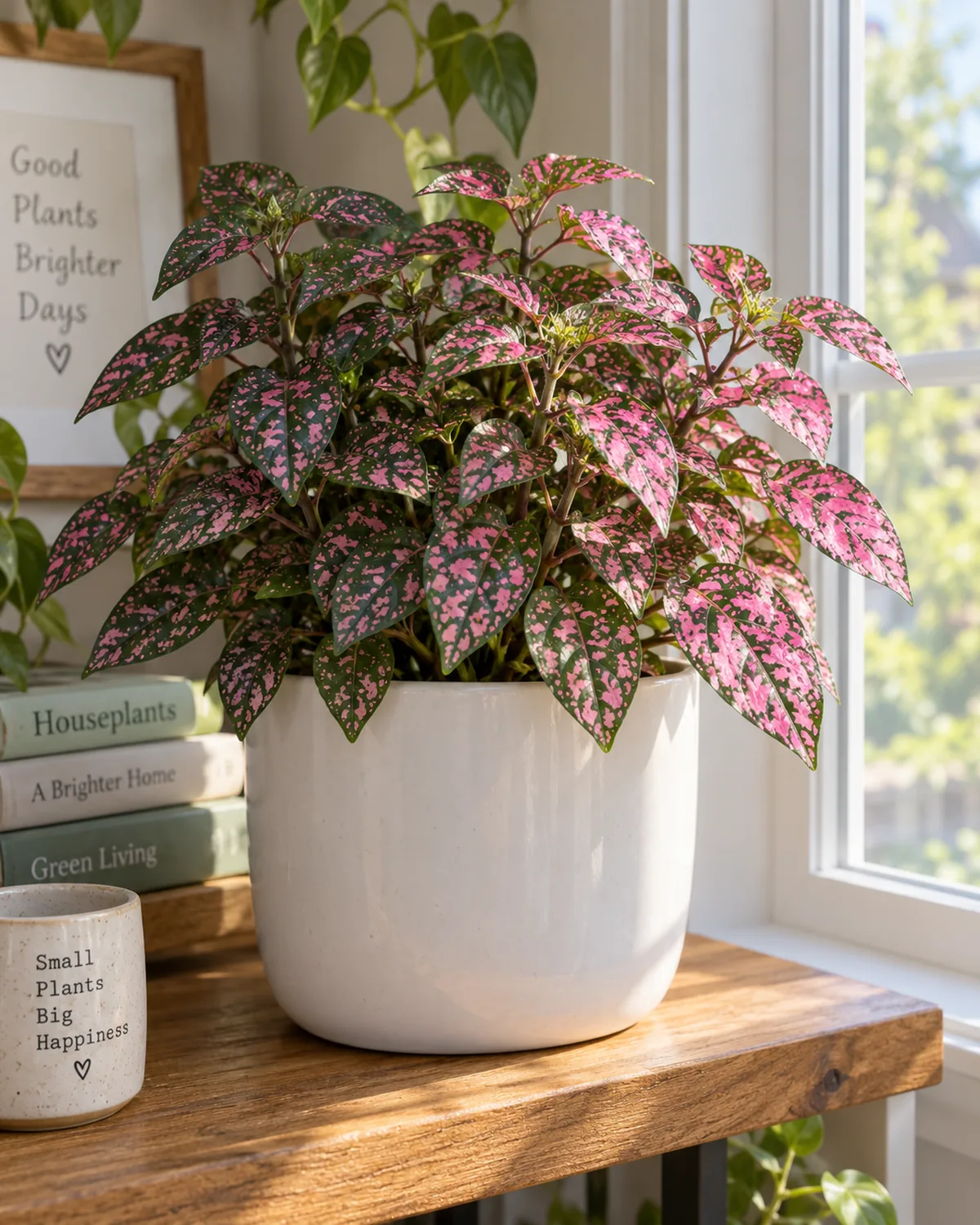
Bright indirect light is non-negotiable for color retention. An east-facing or west-facing window delivers the right intensity — enough to drive pigment expression without scorching the thin leaves. North windows will keep the plant alive but the foliage reverts to mostly green within three to four weeks as the chlorophyll production ramps up to compensate for lower light.
Direct midday sun through a south-facing window is too intense. The leaves are thin and lack the waxy cuticle that protects succulents and other sun-loving plants. Extended direct exposure bleaches the color patches and leaves behind tan or white scorch marks that do not heal.
- East window: the ideal placement — morning sun is gentle enough to boost pigment without burning, and the afternoon shade prevents heat stress
- West window with a sheer curtain: strong afternoon light filtered to remove the direct rays works almost as well as east exposure — pull the plant back twenty centimeters from the glass if you notice any bleaching
- Grow lights are excellent: position a full-spectrum LED twenty to twenty-five centimeters above the plant on a ten-to-twelve-hour timer — Hypoestes responds very well to consistent artificial light because it eliminates the daily fluctuation of window light
- The fade is reversible: a plant that has turned mostly green from low light will regain its spots within two to three weeks of being moved to brighter conditions — the existing green leaves will not change, but all new growth will come in spotted
Same plant, three different placements — color tells you what the light is really doing.
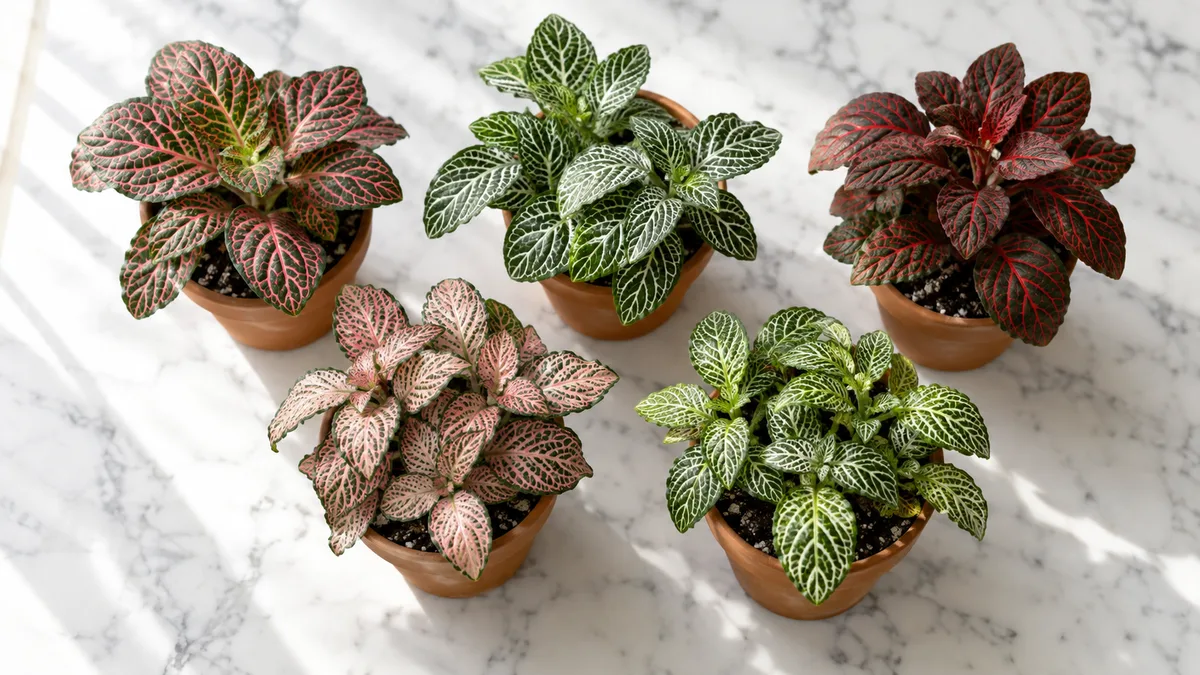
The light requirements of polka dot plants align closely with those of nerve plants and begonias — all forest-floor tropicals that need bright conditions without direct exposure. If one thrives in a spot, the others likely will too.
Watering a Thin-Leaved Tropical That Dries Out Fast
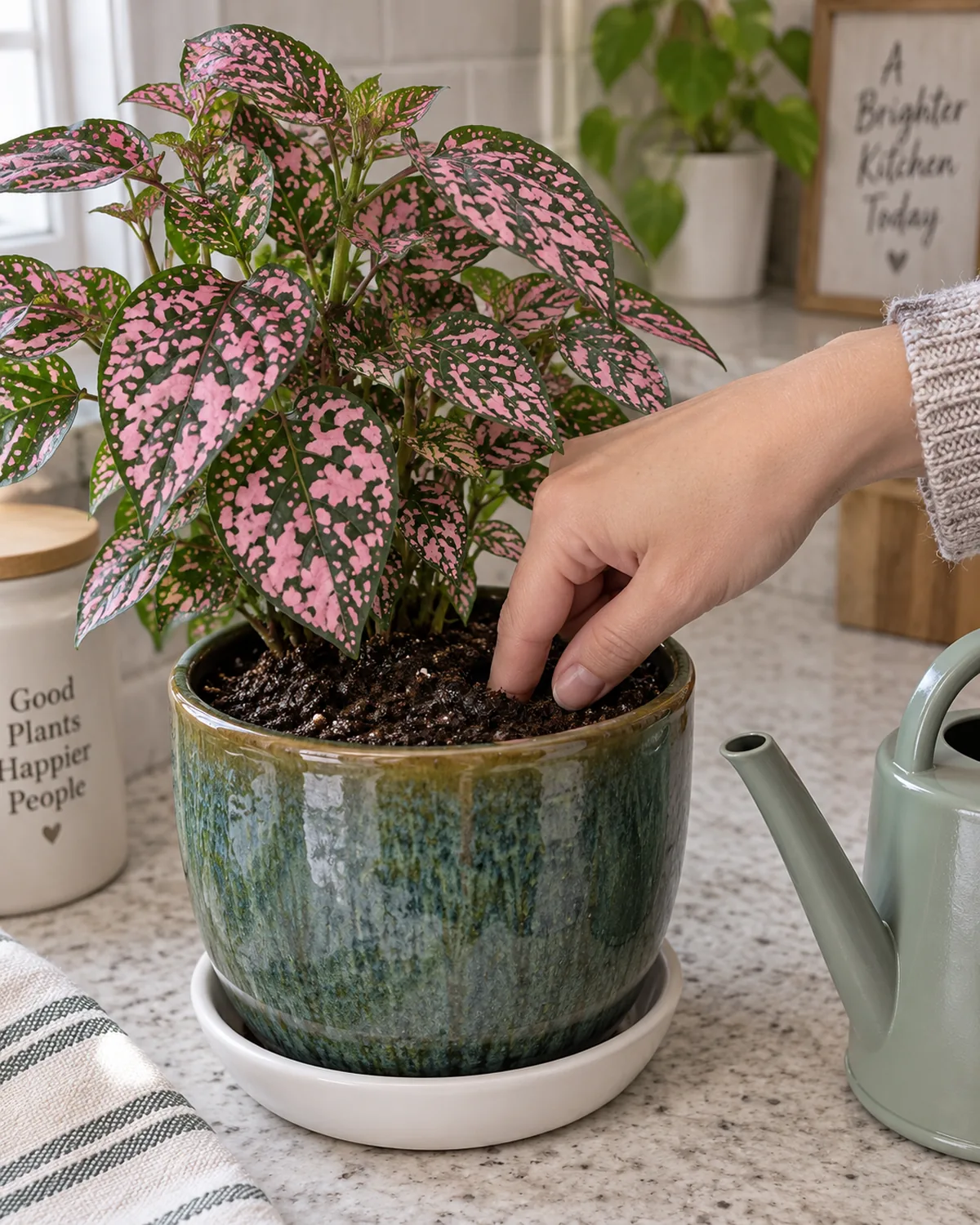
Consistently moist soil is the target. Polka dot plants have thin leaves that lose moisture quickly through transpiration, and once the soil dries out completely the leaf edges crisp and curl before the plant shows the full-plant wilt that some tropicals use as a warning signal.
Check the soil every two to three days by pressing a fingertip half a centimeter into the surface. When the top layer feels dry, water thoroughly until it runs from the drainage holes. Do not wait until the plant wilts — by that point, the leaf margins have already taken damage that will not reverse.
- Bottom watering works well: set the pot in a shallow tray of lukewarm water for ten to fifteen minutes — the soil wicks up exactly what it needs, keeping the root zone evenly moist without saturating the surface
- Cold water shocks the roots: Hypoestes is sensitive to cold tap water, especially in winter — let it sit to room temperature or use filtered water
- Yellow leaves from the base up: this is classic overwatering — the roots are sitting in saturated soil and suffocating — check that the drainage holes are clear and the pot is not sitting in a saucer of standing water
- Crispy brown leaf edges: usually low humidity rather than underwatering — check both before adding more water
The watering frequency shifts with seasons. Summer growth and higher temperatures mean the soil dries faster — you may water every two to three days. In winter, the plant slows down and needs less, but indoor heating dries the air, which complicates the picture. Check the soil, not the calendar.
Madagascar Microclimate: Recreating Understory Air Indoors
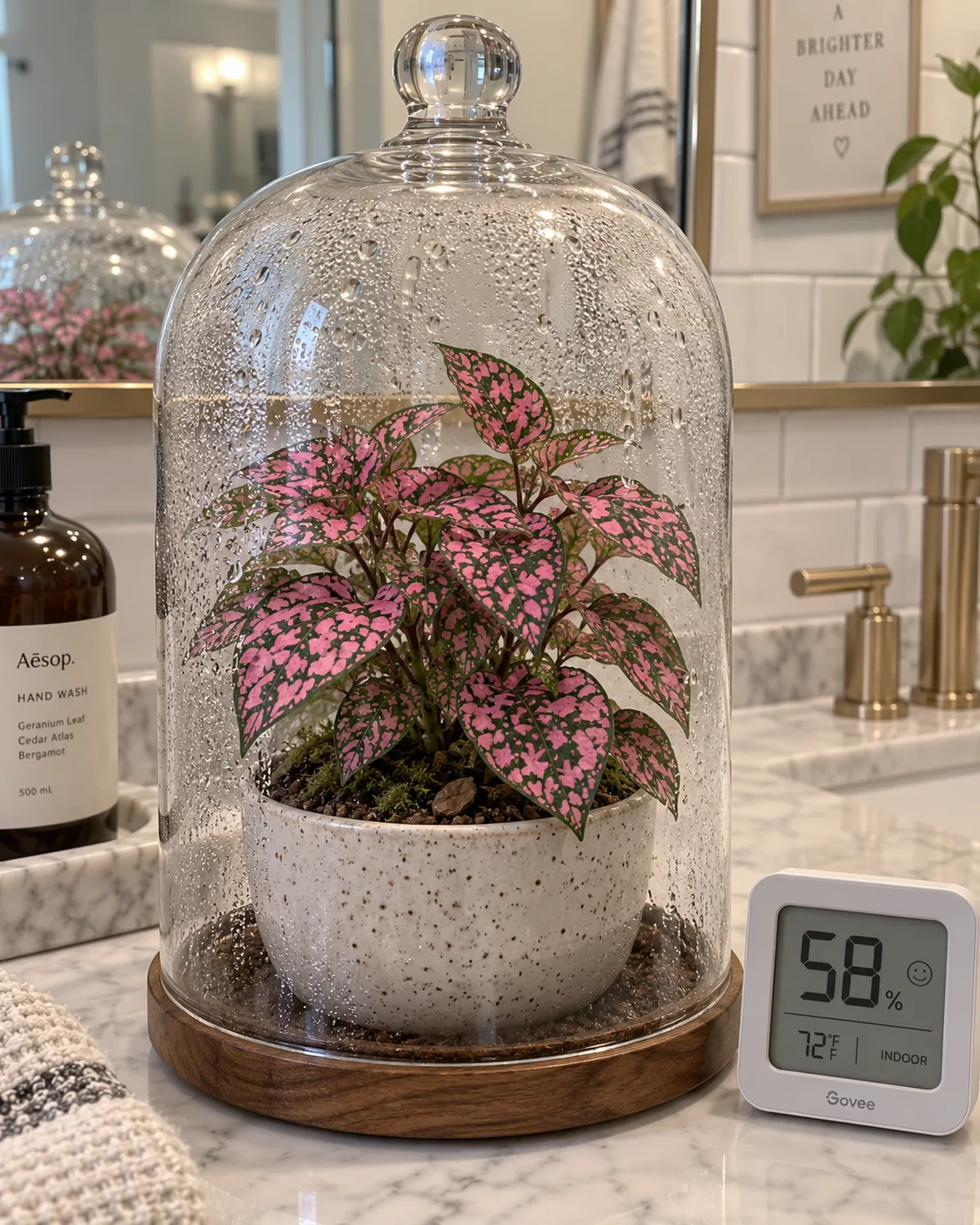
Hypoestes grows on the shaded forest floor in Madagascar where relative humidity rarely drops below sixty percent. Indoors the magic number is fifty percent — below that threshold, leaf margins brown and curl inward no matter how well you water, because the thin pigmented patches lose moisture through their surface faster than green tissue does.
The colored spots are essentially weak points in the leaf's moisture barrier. Where chlorophyll is absent, the leaf tissue is thinner and more porous. High humidity slows moisture loss across the entire leaf surface, but the pigmented patches benefit disproportionately.
- Group with other tropicals: clustering polka dot plants with ferns, calathea, and prayer plants creates a shared transpiration microclimate that raises local humidity by five to ten percent
- Pebble tray as a baseline: fill a tray wider than the pot with river stones and water to just below the stone surface — the pot sits on top, and evaporation adds a modest humidity boost
- Humidifier within one meter: the most reliable solution for dry rooms — run a cool-mist unit for at least eight hours a day, ideally timed to match the light cycle
- Terrarium for chronic dry homes: a semi-closed glass terrarium self-regulates at sixty to eighty percent humidity — polka dot plants are popular terrarium specimens for exactly this reason
Temperature sweet spot is sixty-five to eighty degrees Fahrenheit. Below sixty degrees the plant stalls and may drop leaves. The real killer is not steady cold but sudden temperature swings — a heating vent cycling on and off nearby causes more leaf drop than a consistently cool room. Keep the plant away from exterior doors, single-pane windows in winter, and air conditioning vents.
Color comes back once you fix the light-humidity equation.
The Potting Mix a Shallow-Rooted Plant Actually Needs
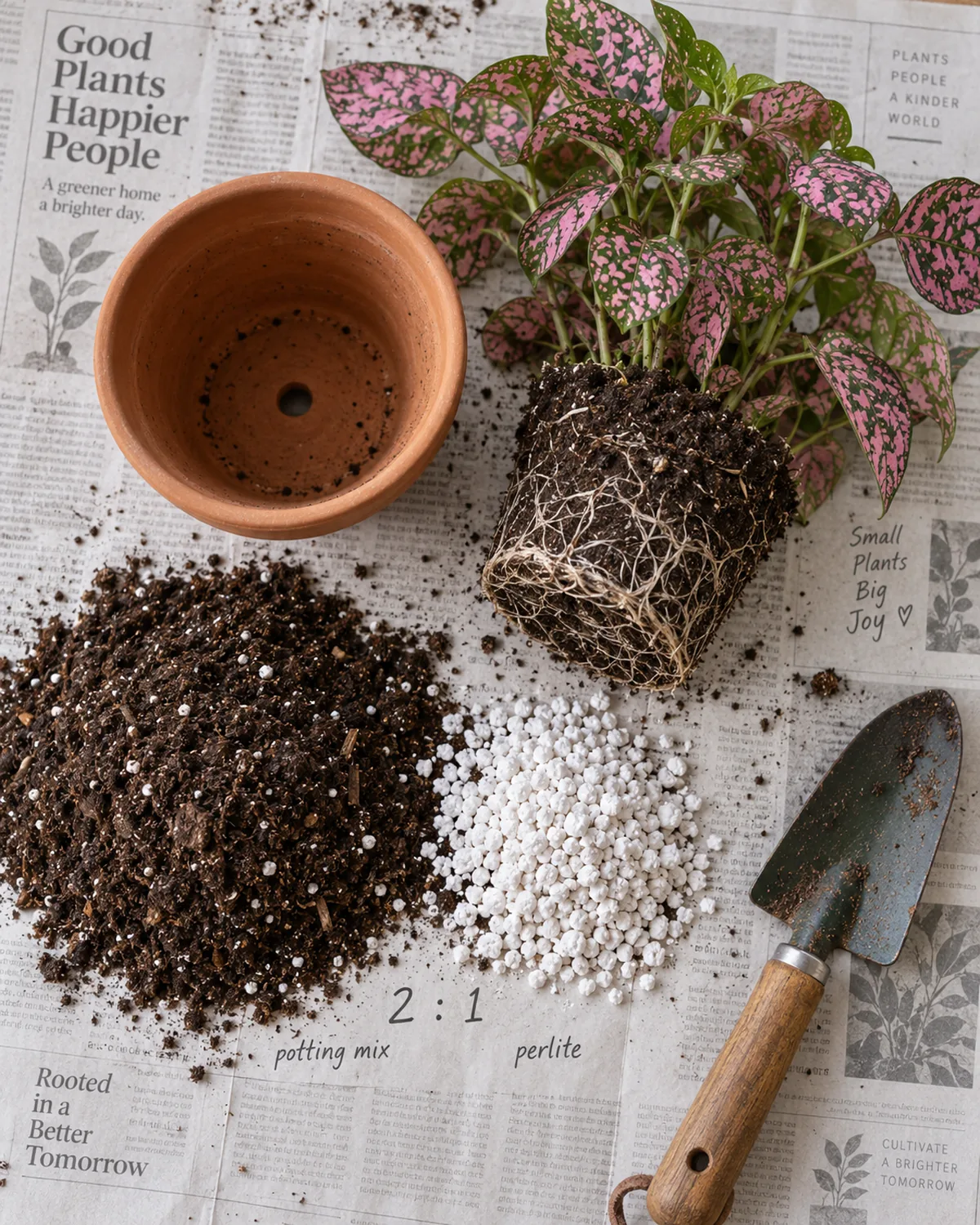
Polka dot plants have shallow, fine root systems that spread horizontally in the top five to eight centimeters of soil rather than diving deep. This root architecture needs a mix that retains moisture in the upper layer but drains fast enough that the roots never sit in waterlogged conditions.
Two parts standard indoor potting mix to one part perlite is the simplest recipe that works. The potting mix provides moisture retention and nutrients for the shallow roots, and the perlite creates air pockets that prevent the compaction these fine roots cannot push through.
- Avoid heavy garden soil: it compacts around the fine roots, holds too much water, and suffocates them — if you only have garden soil, mix it at least one-to-one with perlite before using
- Pot choice matters: a shallow, wide pot (ten to twelve centimeters diameter, eight centimeters deep) suits the horizontal root spread better than a tall narrow pot — deep pots hold excess moisture below the root zone where it serves no purpose and creates rot risk
- Drainage holes are non-negotiable: polka dot plants in pots without drainage holes develop root rot within weeks in the consistently moist conditions they need
- Repot annually in spring: the fast growth means roots fill the pot in one season — go up one pot size (two to three centimeters wider) and refresh the soil mix completely
A sign that the plant needs repotting: roots visible at the drainage holes, water running straight through without being absorbed, or a noticeable slowdown in growth despite adequate light and feeding. Early spring is the best timing because the plant is entering its fastest growth period and recovers from root disturbance quickly.
Fertilizing Without Burning Delicate Roots
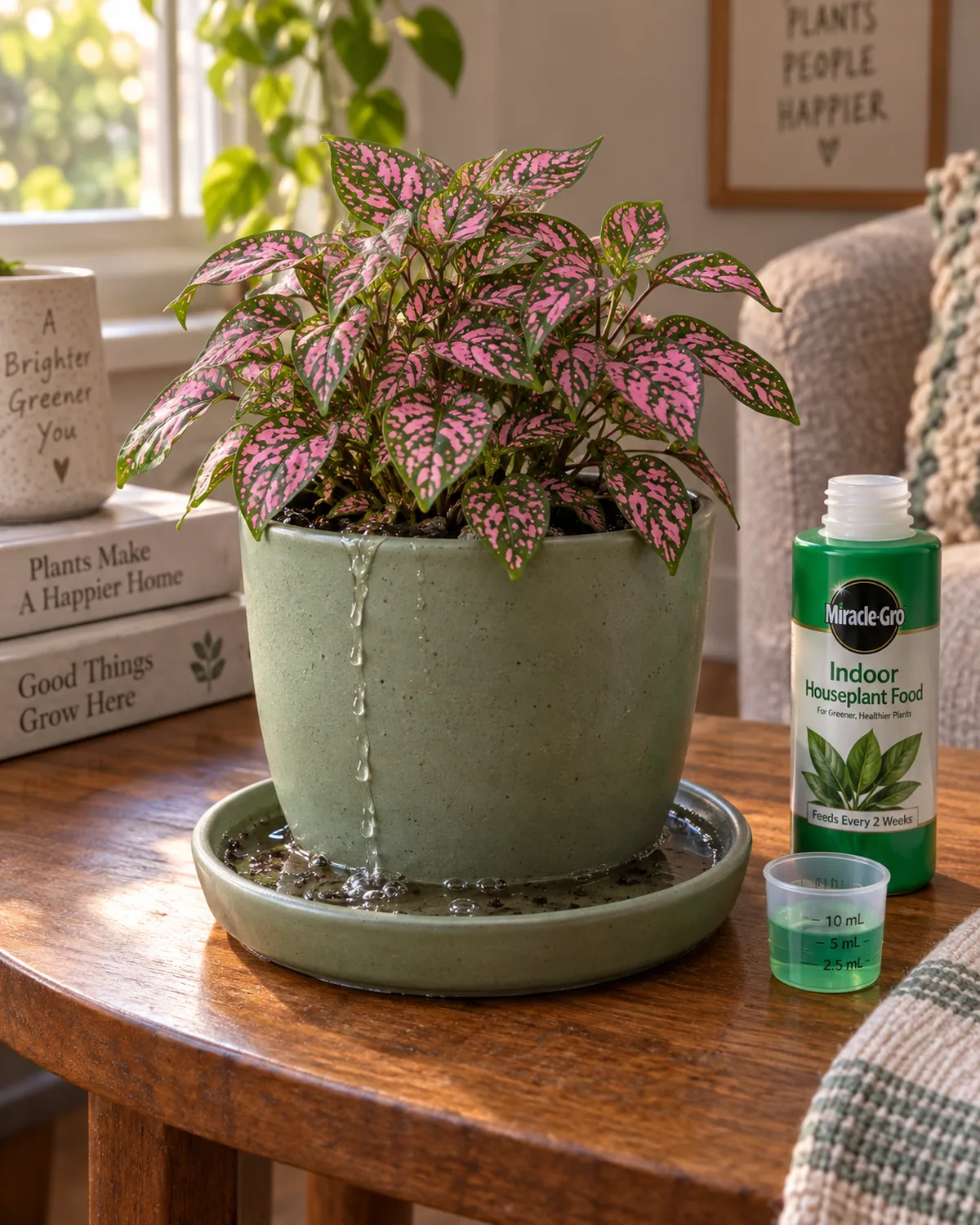
Balanced liquid fertilizer — 10-10-10 or 20-20-20 diluted to half the recommended strength — applied every two to four weeks during the growing season (spring through early fall) covers all of the polka dot plant's nutritional needs. Stop feeding entirely from October through February when growth slows.
The spots do not intensify with more fertilizer. Color responds to light, not food. Over-fertilizing causes salt buildup that burns the fine roots, and the symptom — brown leaf tips — looks identical to low-humidity damage. If your humidity reads above fifty percent and you are still seeing crispy margins, excess fertilizer salt is the likely cause.
- Half strength is a hard rule: the fine root system is sensitive to concentrated mineral salts — full-strength applications risk chemical burn even with a single dose
- Flush the soil every two to three months: run three to four pot volumes of plain lukewarm water through the soil and let it drain completely — this washes out accumulated salts before they reach damaging concentrations
- Organic alternative: diluted worm casting tea applied biweekly provides gentler, slower-release nutrients with essentially zero burn risk — a good option if you tend to over-fertilize
- Signs of under-feeding: slow growth and pale new leaves during the active season — uncommon because polka dot plants are moderate feeders, but possible if the soil has been flushed frequently without replenishing nutrients
Pinching and Pruning: The One Step Between Bushy and Leggy
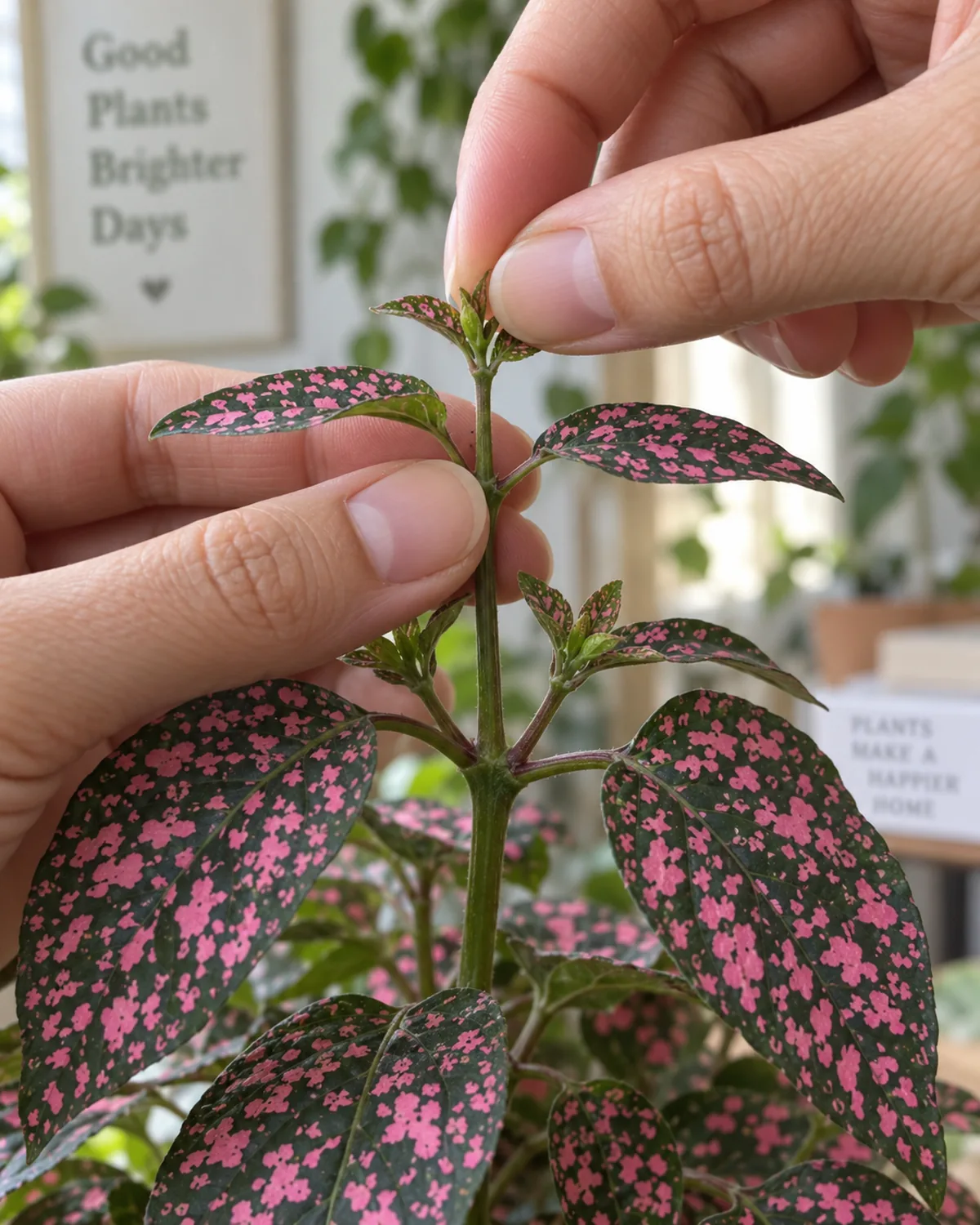
This is the section that separates a compact showpiece from a tall, sparse disappointment. Polka dot plants grow fast and get leggy faster — the stems shoot upward, the internodes stretch, and within two months an unpinched plant looks like a stick with a tuft of leaves at the top.
Pinching fixes this completely. Every two to three weeks, remove the top pair of leaves from each actively growing stem by squeezing the tip between your thumb and forefinger. The stem responds by pushing out two side shoots from the leaf nodes just below the pinch point. Those side shoots each get pinched in their turn, and the branching compounds into a dense, bushy shape.
- Timing: start pinching when the plant is ten to twelve centimeters tall and has at least four to five leaf pairs per stem — if you wait until it is already leggy, the lower stem will stay bare even after pinching
- Every pinched tip is a cutting: do not throw away the pinched tips — they root easily in water or moist soil and give you free new plants
- Flower spikes must be pinched immediately: polka dot plants are functionally annuals in the wild — once they flower and set seed, the plant diverts all energy from foliage and often declines to the point of dying back entirely — pinching off flower spikes the moment they appear forces the plant to keep growing vegetatively
The flower response is the most misunderstood part of polka dot plant care. The small lavender or white flower spikes look harmless, and many growers leave them because they assume a flowering plant is a happy plant.
In Hypoestes, flowering is actually a stress response that signals the plant has decided its lifecycle is ending. Removing the flowers tells the plant to keep living — a strange botanical quirk but an important one.
Propagation by Stem Cuttings
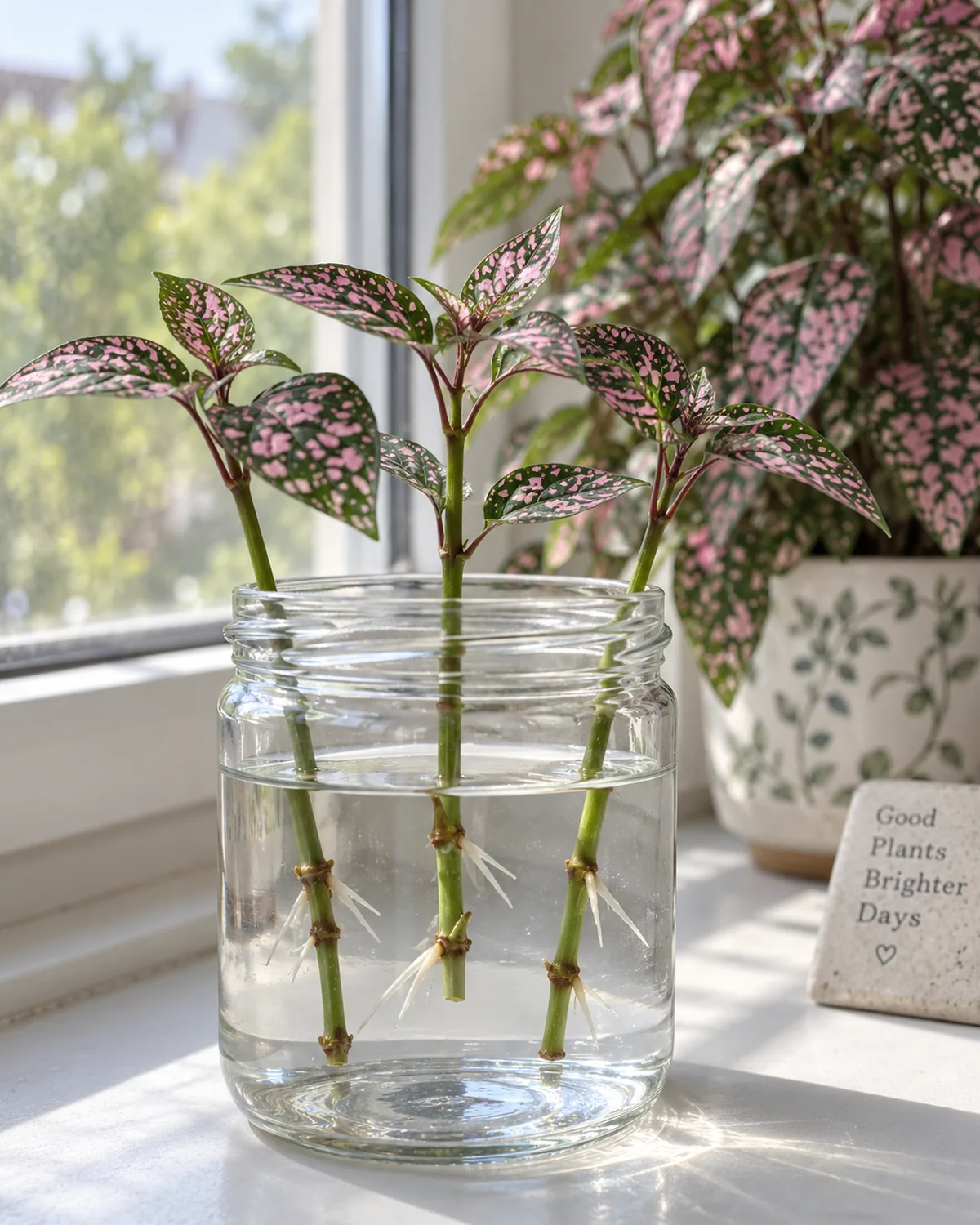
Polka dot plants are among the easiest houseplants to propagate. Stem cuttings in water root visibly within one to two weeks, and the process is forgiving enough that even first-time propagators rarely fail.
Cut a healthy stem eight to ten centimeters long with at least two nodes — the slightly swollen points where leaves attach to the stem. Strip the leaves from the bottom node so it can sit cleanly in water, and leave two to three leaf pairs at the top.
Place the cutting in a small jar of clean water with the bare node submerged and the leaves above the surface. Set it in bright indirect light. White root tips appear within seven to ten days in warm conditions.
- Water change every five days: stagnant water breeds bacteria that can rot the cutting before roots establish — fresh room-temperature water keeps the node clean
- Transplant when roots reach two to three centimeters: longer roots in water become adapted to aquatic conditions and take longer to adjust to soil — shorter is better
- Soil propagation alternative: dip the cut end in rooting hormone, push it into moist perlite or vermiculite, and cover with a clear plastic bag to hold humidity — new leaf growth from the top confirms rooting in two to three weeks
- Division of mature clumps: a full, bushy polka dot plant is actually a cluster of individual stems sharing a pot — gently tease the root ball apart into two or three sections and pot each separately for instant full-sized plants
Propagation is doubly practical for polka dot plants because pinching — which you should be doing every two to three weeks anyway — produces a steady supply of viable cuttings. Every pinched tip is four to five centimeters of stem with a node, which is all you need.
Common Problems and How to Read What the Leaves Are Telling You
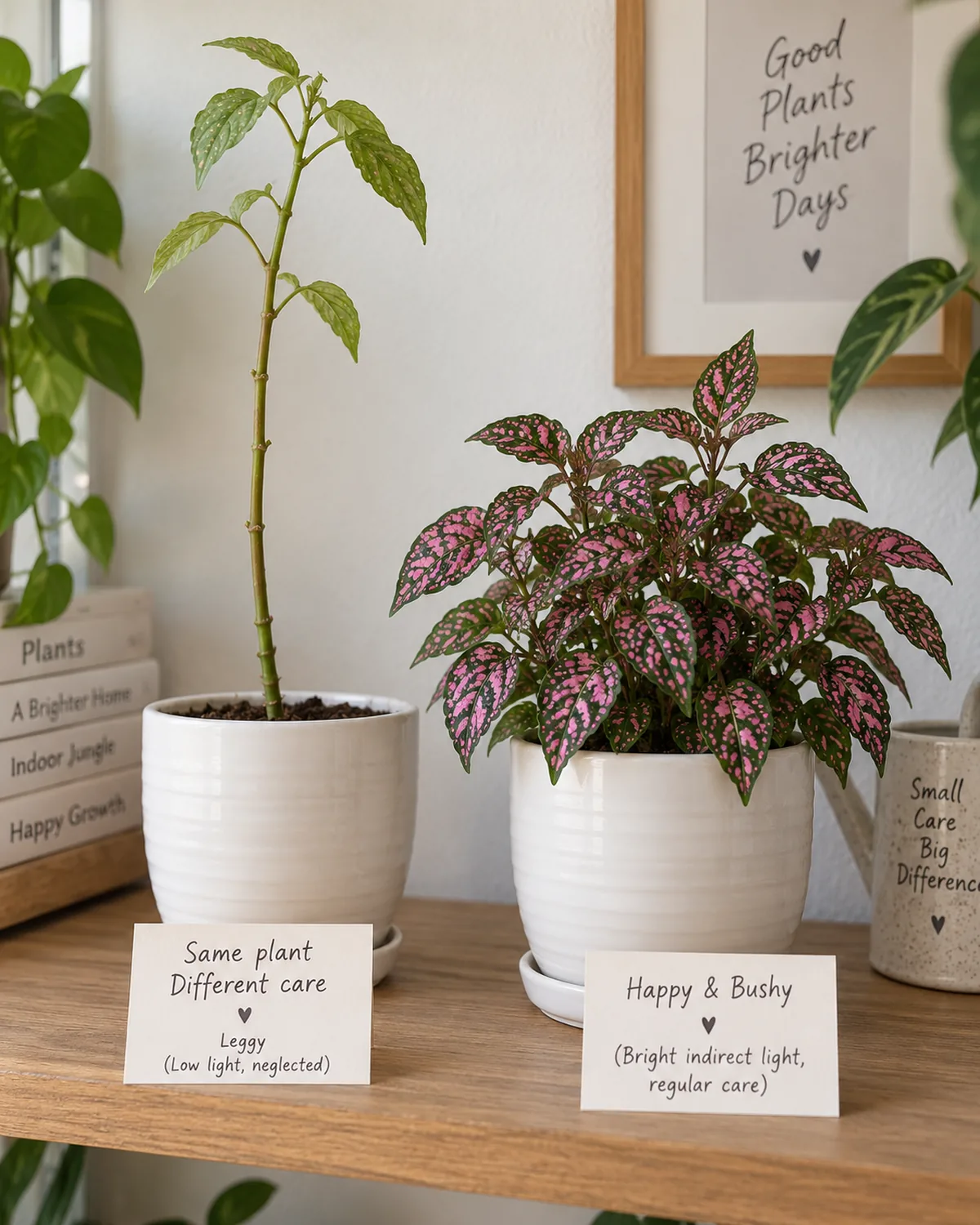
Most polka dot plant problems trace back to one of three causes: not enough light, not enough humidity, or not enough pinching. The leaves are expressive enough that you can diagnose the issue visually without guessing.
Fading spots that revert to green tell you the light is insufficient. Move the plant to a brighter location and wait for new growth — existing leaves will not regain their spots, but all new foliage will come in colored.
- Leggy, stretched growth with long bare stems: insufficient light combined with no pinching — the plant reaches for whatever light is available and does not branch on its own — move to brighter light and start a regular pinching schedule
- Crispy brown leaf edges that spread inward: low humidity — the thin leaves lose moisture to dry air faster than the roots can replace it — add a humidifier or pebble tray before reaching for the watering can
- Yellow leaves dropping from the base: overwatering or root rot — check drainage, let the top centimeter of soil dry slightly between waterings, and make sure the pot is not sitting in collected water
- Sudden whole-plant wilt that does not recover after watering: likely root rot from prolonged overwatering — unpot and inspect the roots, trim anything brown and mushy, and repot in fresh dry mix
- Flower spikes appearing: the plant is trying to complete its lifecycle — pinch them off immediately to keep the foliage growing
- Pests: mealybugs (white cottony clusters) and whiteflies (tiny white flying insects when you brush the foliage) are the most common — wipe mealybugs with alcohol-dipped cotton swabs, spray whiteflies with insecticidal soap, repeat weekly for three weeks
| Symptom | Likely Cause | Fix |
|---|---|---|
| Spots fading to green | Insufficient light | Brighter window or grow light |
| Brown crispy edges | Humidity below 50% | Humidifier or terrarium |
| Flower spikes | Lifecycle ending | Pinch off immediately |
Polka dot plants are non-toxic to cats and dogs according to the ASPCA. This makes them one of the safest colorful houseplants for homes with pets — a direct alternative to plants like croton that offer vivid color but are toxic.
Varieties Worth Growing
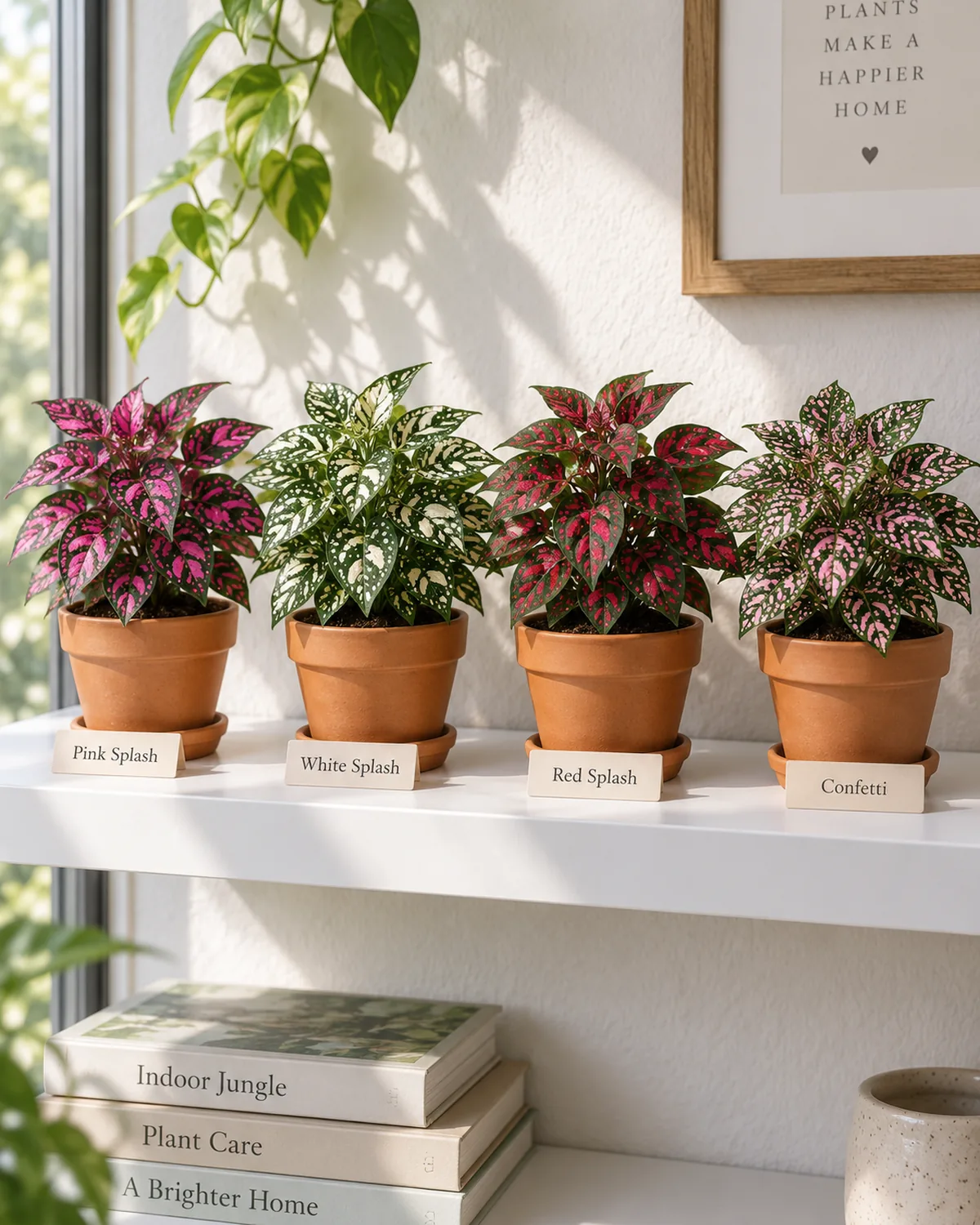
The species itself has one basic form — Hypoestes phyllostachya with pink spots on dark green — but decades of selective breeding have produced a range of cultivars that vary in spot color, spot size, and growth habit. All share the same care requirements. The only variable is light: red cultivars need slightly more bright indirect light than pink or white forms to maintain their color intensity.
- Pink Splash: the classic and most widely available — bold magenta-pink spots on dark green, vigorous growth, the most forgiving variety for beginners
- White Splash: creamy white patches on deep green foliage — slightly less vigorous than the pink form but the high-contrast look is striking in a grouping
- Red Splash: deep crimson spots that darken with maturity — demands more light than the pink or white forms to prevent the red from muddying toward brown-green
- Confetti series: smaller, more scattered spots in pink, rose, white, or red — the freckled pattern is more subtle and works well in terrariums where the plant is viewed up close
- Carmina: vivid true red with a compact habit — one of the most intensely colored cultivars and a good choice for a statement plant on a bright shelf
- Wit: large white patches that cover more leaf surface than any other variety — the reversed color ratio where white dominates and green is the accent creates a plant that almost glows in bright indirect light
Mini cultivars sold as "splash select" or "confetti compact" stay under ten centimeters and are bred specifically for terrariums and fairy gardens. Same care, smaller scale, and the compact habit means they rarely need pinching.
All varieties benefit from the same pinching, watering, and light regime. Growing several color forms together in a shallow planter creates a patchwork effect that shows off the genus's range — and since they share every care requirement, one routine covers the entire collection.
Frequently Asked Questions
Is polka dot plant toxic to pets?
No. The ASPCA lists Hypoestes phyllostachya as non-toxic to both cats and dogs. This makes it one of the safest colorful foliage plants for homes with curious pets.
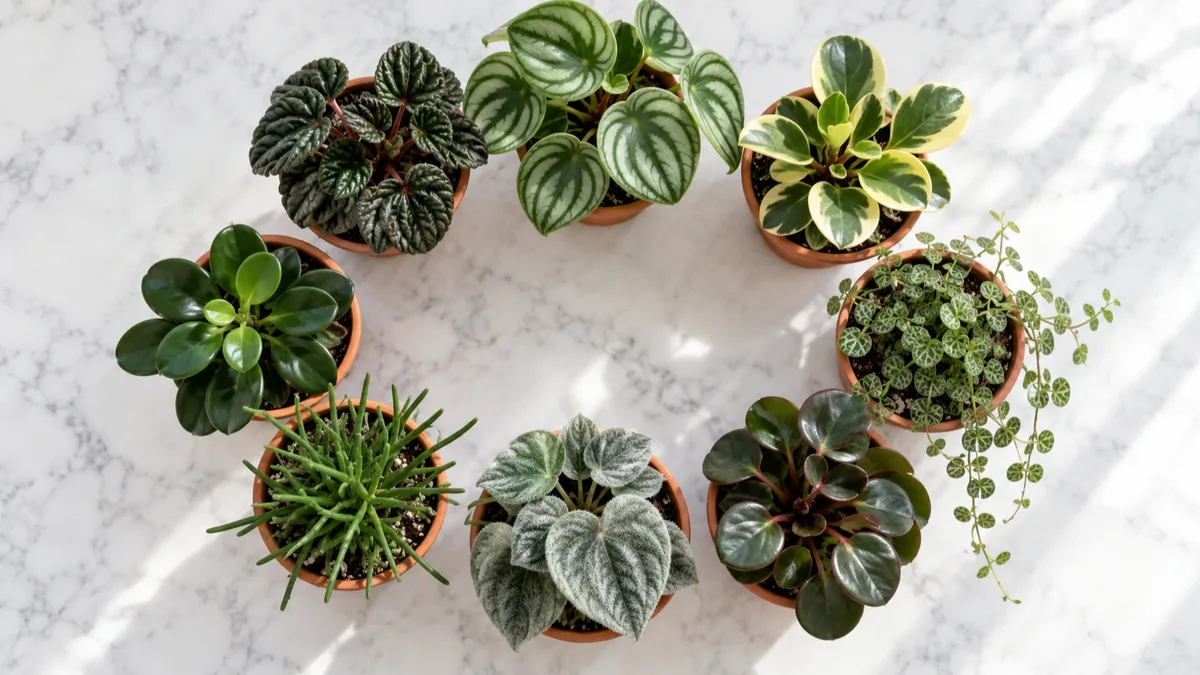
- Other pet-safe colorful options: spider plants, nerve plants, prayer plants, and peperomia
Why is my polka dot plant flowering?
Flowering means the plant is signaling the end of its annual cycle. In the wild, Hypoestes is functionally a short-lived perennial that flowers, sets seed, and declines.
Indoors, pinching off the small lavender or white flower spikes the moment they appear redirects the plant's energy back into foliage growth. If allowed to flower and set seed, the foliage quality deteriorates rapidly and the plant often dies back to the soil line.
| Question | Short Answer |
|---|---|
| Is it annual or perennial? | Perennial indoors if flower spikes are pinched — otherwise behaves like an annual |
| How fast does it grow? | Fast — fills a pot in one growing season with adequate light and pinching |
| Can it go outside? | Zones 10-11 as perennial ground cover; warm-season annual everywhere else |
Can polka dot plant grow outdoors?
In USDA zones 10 and 11, polka dot plants grow as perennial ground cover in shaded garden beds. Everywhere else, they make excellent warm-season annuals for shaded borders and container arrangements — bring them indoors before nighttime temperatures drop below sixty degrees Fahrenheit.
Quick Reference
10 polka dot plant care essentials to save
- 1Color comes from missing chlorophyll, not added pigmentThe spots are areas where anthocyanin (pink/red) or no pigment (white) replaces chlorophyll — more bright light triggers more vivid expression.
- 2Bright indirect light is the single biggest care factorEast or west window ideal. Low light fades spots to green. Direct sun scorches the thin leaves. Grow lights work exceptionally well.
- 3Keep soil consistently moist, never waterloggedCheck every two to three days. Bottom watering is the most reliable method. Room-temperature water only — cold tap shocks tropical roots.
- 4Humidity above fifty percent protects the thin pigmented patchesColored spots lose moisture faster than green tissue. Pebble tray, humidifier, or terrarium placement prevents the crispy edges watering cannot fix.
- 5Shallow pot, well-draining mix, drainage holesTwo parts potting mix to one part perlite. Shallow roots need moisture in the top layer, not a deep column of wet soil below them.
- 6Half-strength fertilizer every two to four weeks in growing seasonSpots respond to light, not food. Over-fertilizing burns fine roots and mimics humidity damage. Flush soil every two to three months.
- 7Pinch every two to three weeks or it becomes a leggy stickRemove the top leaf pair to force branching. Pinch off flower spikes immediately — flowering signals lifecycle decline and foliage deteriorates.
- 8Stem cuttings root in water in one to two weeksEvery pinched tip is a free cutting. Four-inch stem, one bare node in water, bright light. Division of mature clumps produces instant full plants.
- 9Most problems trace to light, humidity, or pinchingFading = low light. Crispy edges = dry air. Leggy growth = no pinching. Non-toxic to cats and dogs. Watch for mealybugs and whiteflies.
- 10Collect across the color spectrumPink Splash, White Splash, Red Splash, Confetti, Carmina, Wit — all share the same care. Red needs the most light, white the least.
kultivy.com — polka dot plant care guide

Mara writes about indoor plants for people who want honest, practical care advice without the fluff. She covers everything from first-time plant parents to collectors chasing rare aroids — always with the science behind why something works. More at kultivy.com.