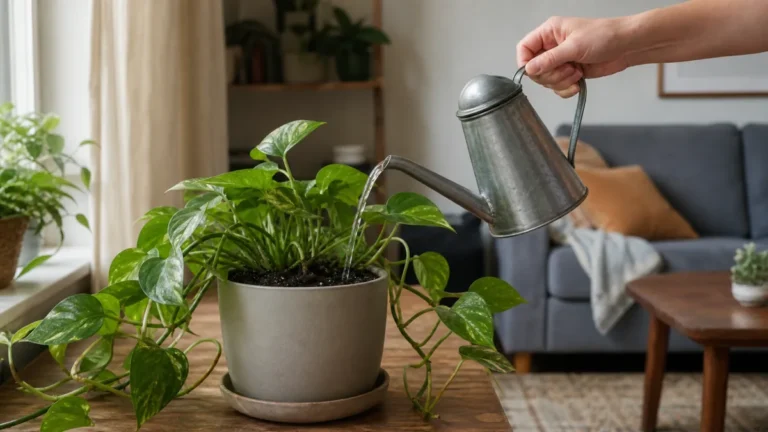
Most houseplant owners either never fertilize at all, or feed on a vague “sometimes” schedule that’s really just guessing. Both approaches miss the same thing: fertilizer isn’t rescue medicine for a struggling plant, it’s fuel for growth that’s already happening.
This guide skips the vague “feed it sometimes” advice and covers what the label numbers actually mean, when feeding helps versus when it just builds up salt, and how to tell real fertilizer burn from a plant that’s only hungry.
Fertilizing questions almost always come down to timing and dose, not the brand on the bottle. The thirteen sections below cover what the label numbers mean, when feeding actually helps, and how to tell fertilizer burn from a plant that’s genuinely hungry.
- 1Survive vs. thrive
- 2Water before you feed
- 3What N-P-K means
- 4When to feed
- 5Why winter feeding harms
- 6The “weakly weekly” method
- 7Signs of fertilizer burn
- 8Signs a plant is hungry
- 9Fast growers vs. slow growers
- 10Newly repotted plants
- 11Liquid, granular, slow-release
- 12Salt buildup and flushing
- 13Organic vs. synthetic
Houseplants don’t need fertilizer to survive — but they need it to thrive
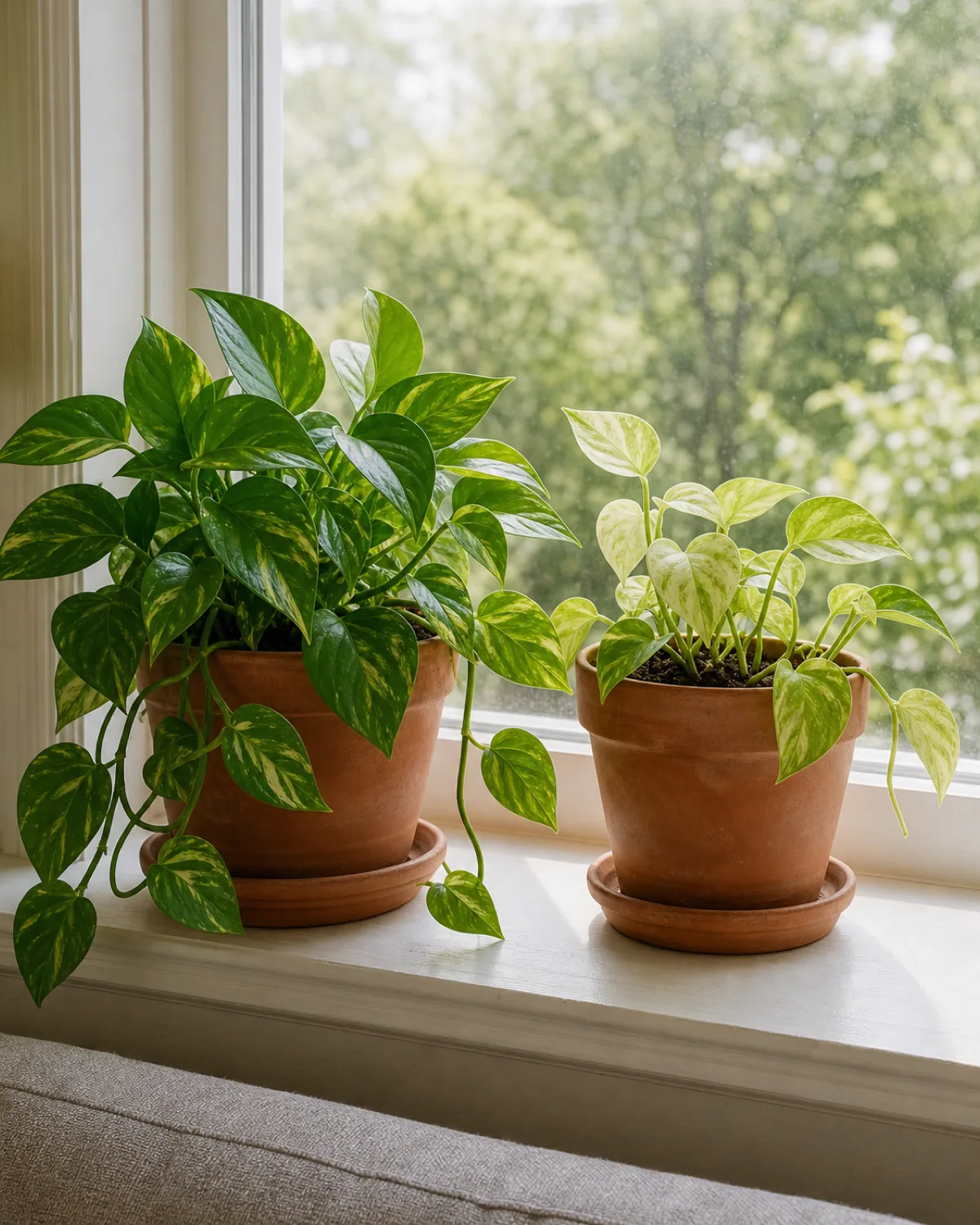
Potting soil holds enough nutrients for roughly two to three months of normal growth before it’s mostly used up. A plant that’s never fertilized will survive on what’s left, but it stalls out — staying the same size, with smaller and paler new leaves instead of actually growing.
Fertilizer isn’t a rescue step for a sick plant, it’s what fuels the growth you actually want to see.
- Potting soil’s nutrients last about 2-3 months, then they’re mostly gone.
- An unfertilized plant survives but stalls — new leaves come in smaller and paler.
- Fertilizer fuels visible growth, it doesn’t rescue a plant that’s already struggling for other reasons.
Always water before you fertilize — never feed dry soil
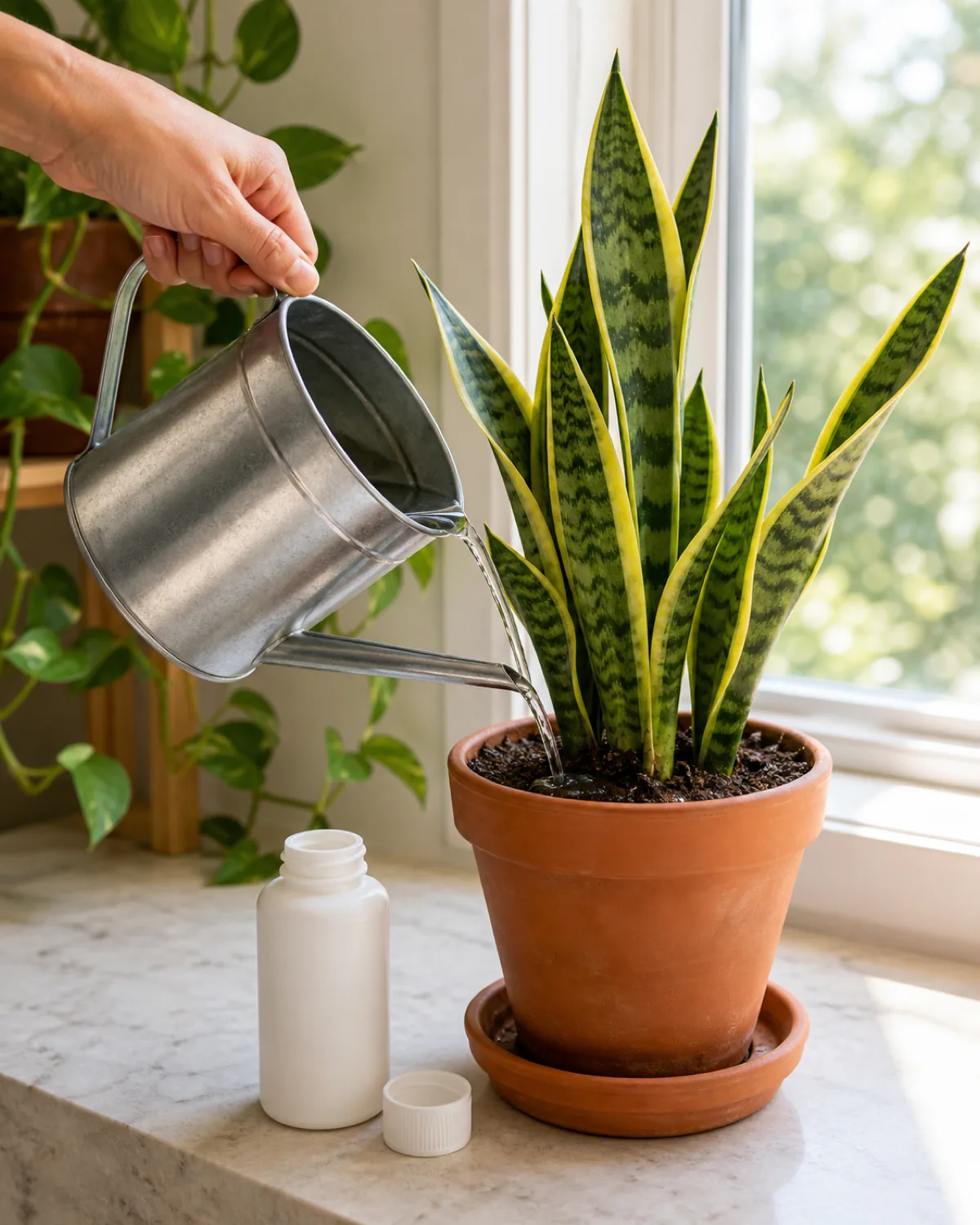
Fertilizer applied to bone-dry soil concentrates around the roots instead of spreading evenly through the pot, which is one of the most common causes of root burn. Watering thoroughly first dilutes and distributes the nutrients so roots absorb them gradually instead of getting hit with a concentrated dose all at once.
Always water thoroughly first — see the full watering indoor plants guide if the soil’s already dry and you’re not sure how much it needs.
- Never fertilize bone-dry soil — concentrated nutrients sitting right at the roots is how burn starts.
- Water first, then feed, so the fertilizer spreads through soil that’s already moist.
- This single sequence prevents most feeding-related burn before it happens.
What the three numbers on the label actually mean
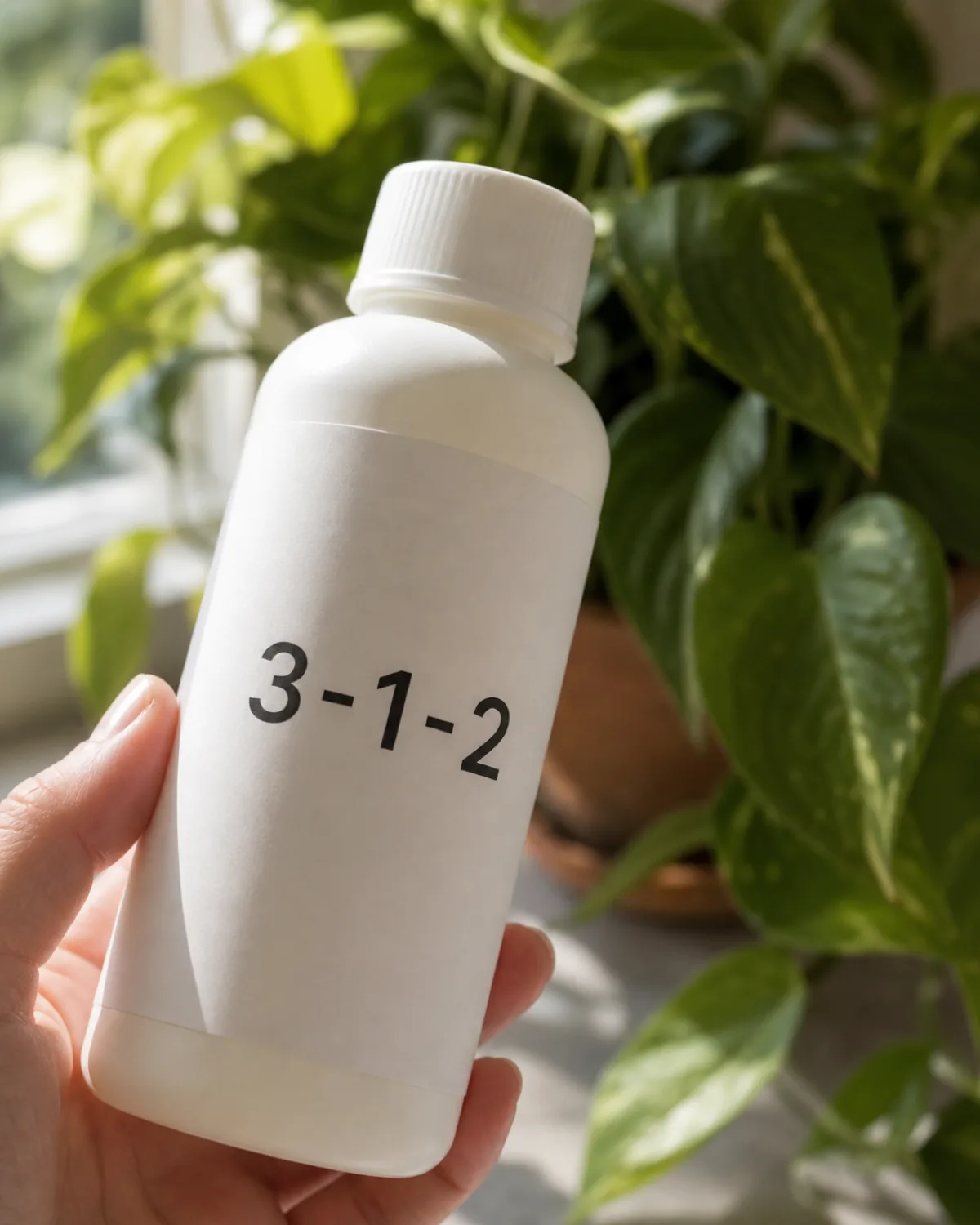
The N-P-K ratio, like 10-10-10, stands for nitrogen (leaf and stem growth), phosphorus (root and flower development), and potassium (overall plant health and disease resistance), always in that order and expressed as a percentage by weight.
A balanced ratio like 10-10-10 or 20-20-20 works for most general foliage houseplants, and the numbers themselves matter more than whatever brand name sits above them.
- N-P-K stands for nitrogen-phosphorus-potassium, always in that order.
- Nitrogen drives leaves and stems, phosphorus drives roots and flowers, potassium supports overall health.
- A balanced ratio (10-10-10 or 20-20-20) suits most foliage houseplants — no need to chase a specialty blend by default.
Most fertilizing questions trace back to one of four situations. Start with whichever one describes yours, then circle back to the rest later.
When to feed: the growing season is the only time it matters
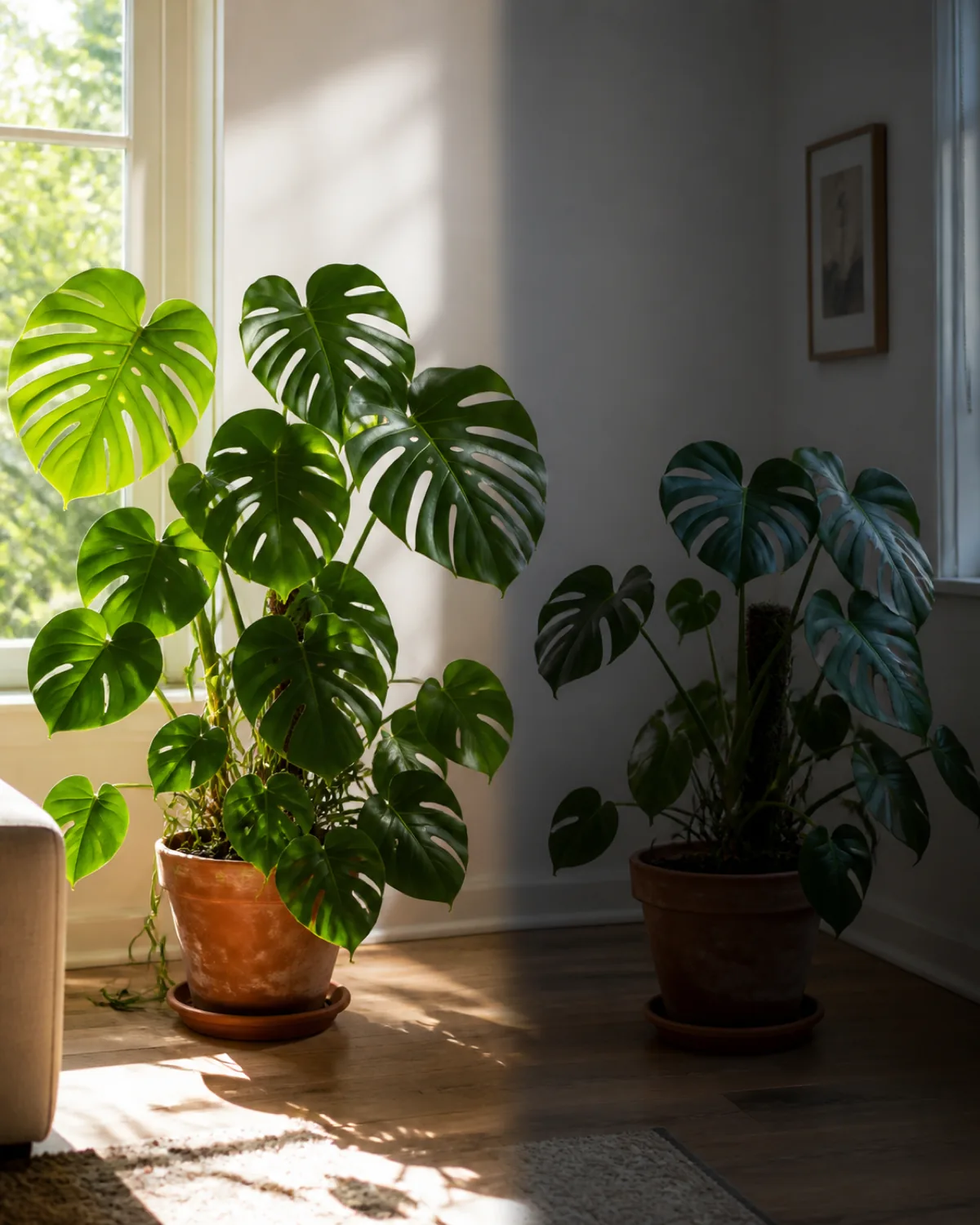
Most houseplants actively grow from spring through early fall, when daylight hours are longer — and that’s the only window where added nutrients actually get used for new growth. Feeding every two to four weeks during this window, diluted per the label, is the general default for most common foliage houseplants.
- Spring through early fall is the active growing window for most common houseplants.
- Feed every 2-4 weeks during this window, diluted per the label instructions.
- Outside the growing season, feeding has nothing to fuel — the plant isn’t using it.
Why feeding in fall and winter does more harm than good
As daylight drops, most houseplants slow their growth or go semi-dormant and stop actively using nutrients, so fertilizer applied during this window just sits in the soil, building up mineral salts around the roots instead of feeding growth that isn’t happening. Keeping the same summer feeding schedule through winter is one of the single biggest year-round feeding mistakes.
- Semi-dormant plants aren’t using added nutrients — daylight drop slows or stops growth.
- Unused fertilizer becomes salt buildup, not stored-up growth for later.
- Carrying a summer feeding schedule into winter is one of the most common mistakes of the whole year.
The “weakly weekly” method — the safest way to avoid burn
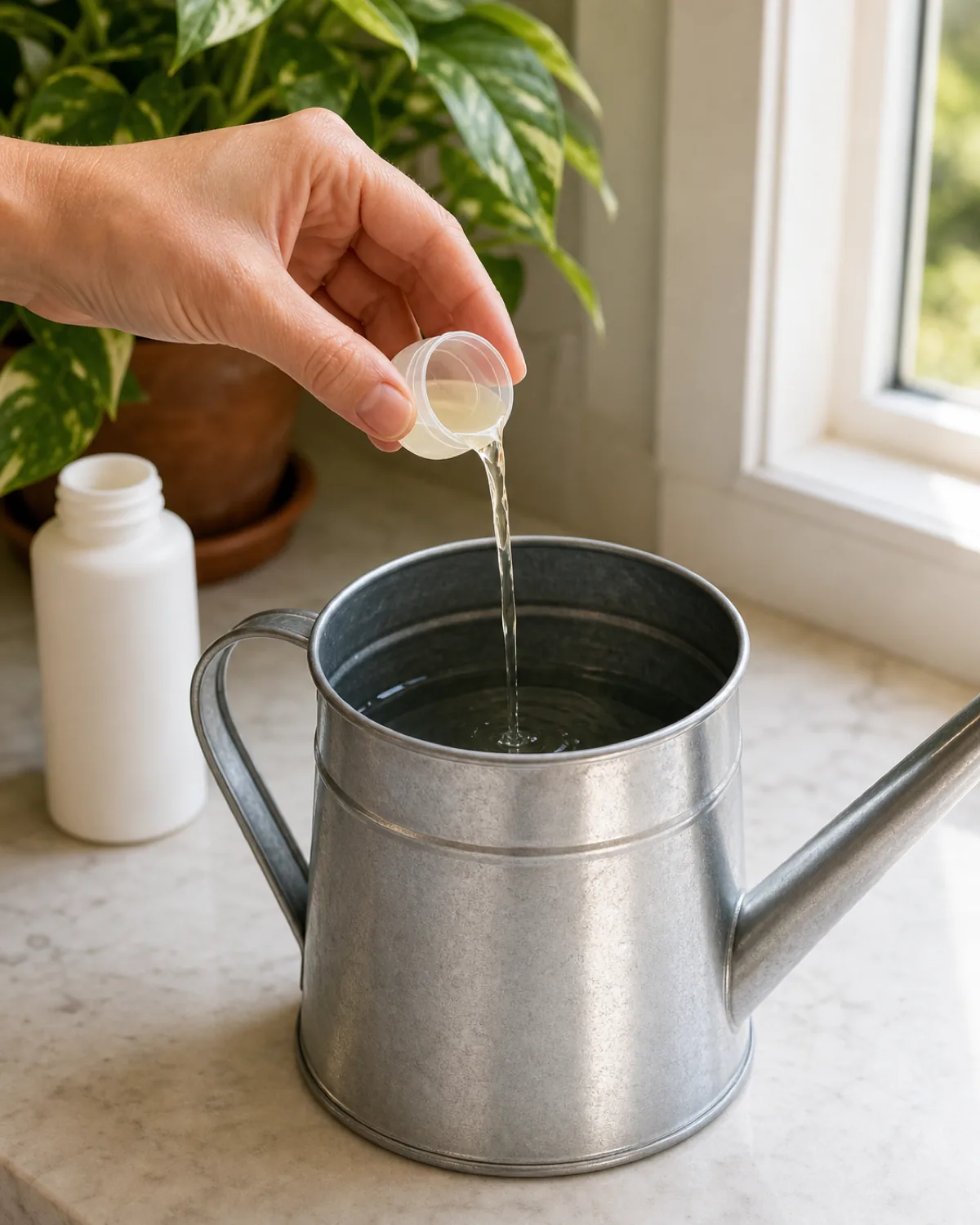
Instead of feeding at full label strength every month, diluting fertilizer to about a quarter strength and applying it every time you water during the growing season delivers a steadier, lower-risk supply of nutrients than an occasional full-strength dose — and it’s much harder to accidentally overdo it this way.
See the hoya carnosa guide for the one exception where a bloom-boosting ratio actually matters more than the usual balanced feed.
- Quarter-strength every watering beats full-strength once a month for consistency and safety.
- “Weakly weekly” is much harder to overdo than an occasional concentrated dose.
- Most houseplants do better on this steadier, lower-risk supply than on an infrequent full-strength feeding.
Most fertilizing mistakes trace back to one of four moves people skip. Hold these four and any houseplant gets fed on what it actually needs, not a guess.
Signs of fertilizer burn — and why it looks like drought stress
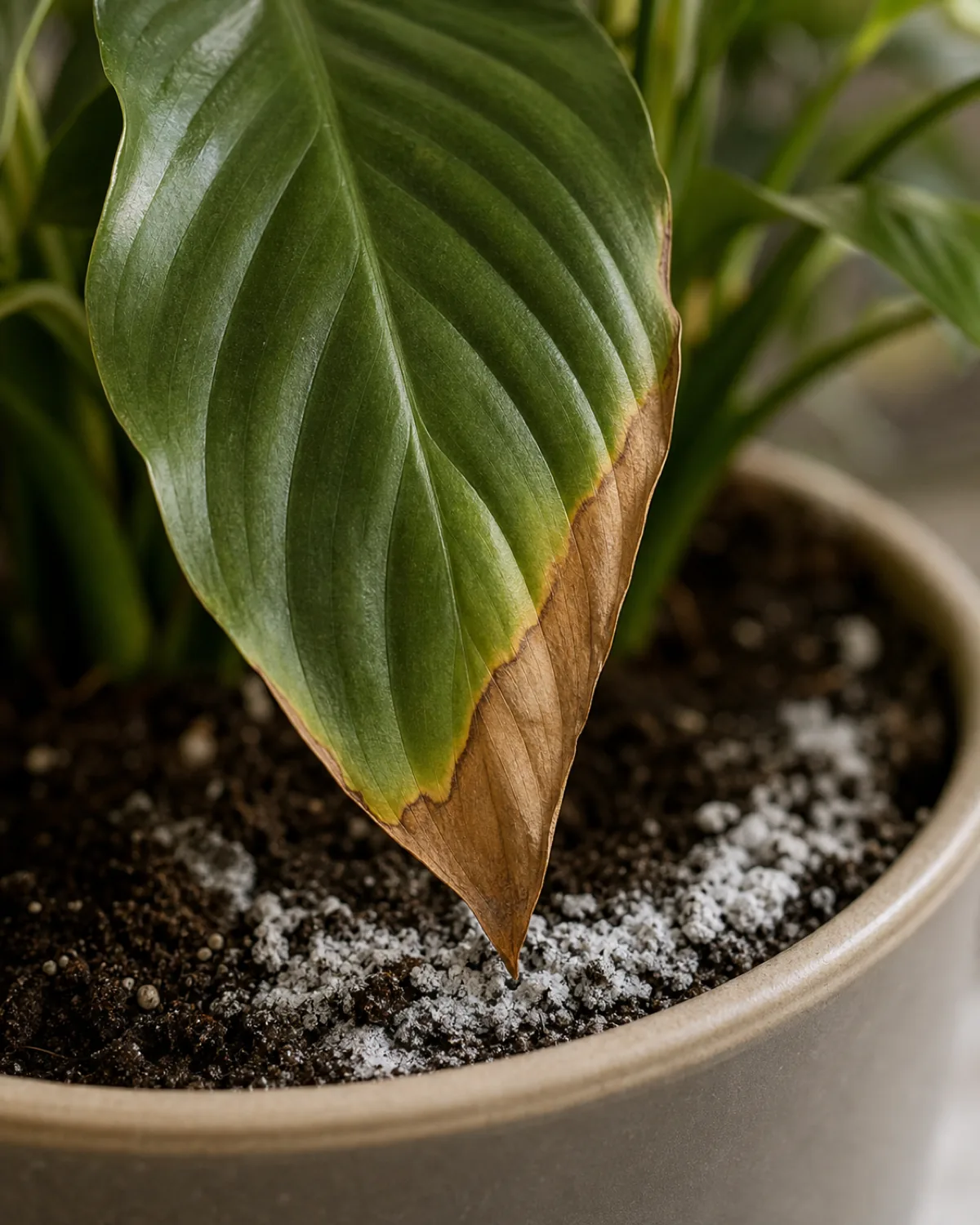
Crispy brown leaf-tip and leaf-margin scorch, a visible white or yellowish crust of mineral salts on the soil surface or pot rim, and sudden leaf drop shortly after a feeding are the tell-tale signs of too much fertilizer.
Burn is often mistaken for underwatering because the leaf edges crisp up in a similar way — the giveaway is timing: burn shows up shortly after a feeding, not gradually over weeks of dry soil.
- Crisp brown tips and margins, plus a white crust on the soil, point to fertilizer burn, not drought.
- Sudden leaf drop right after a feeding is a strong tell.
- Timing is the giveaway — burn appears shortly after feeding, drought stress builds up over weeks.
Signs a plant is actually hungry, not just slow-growing
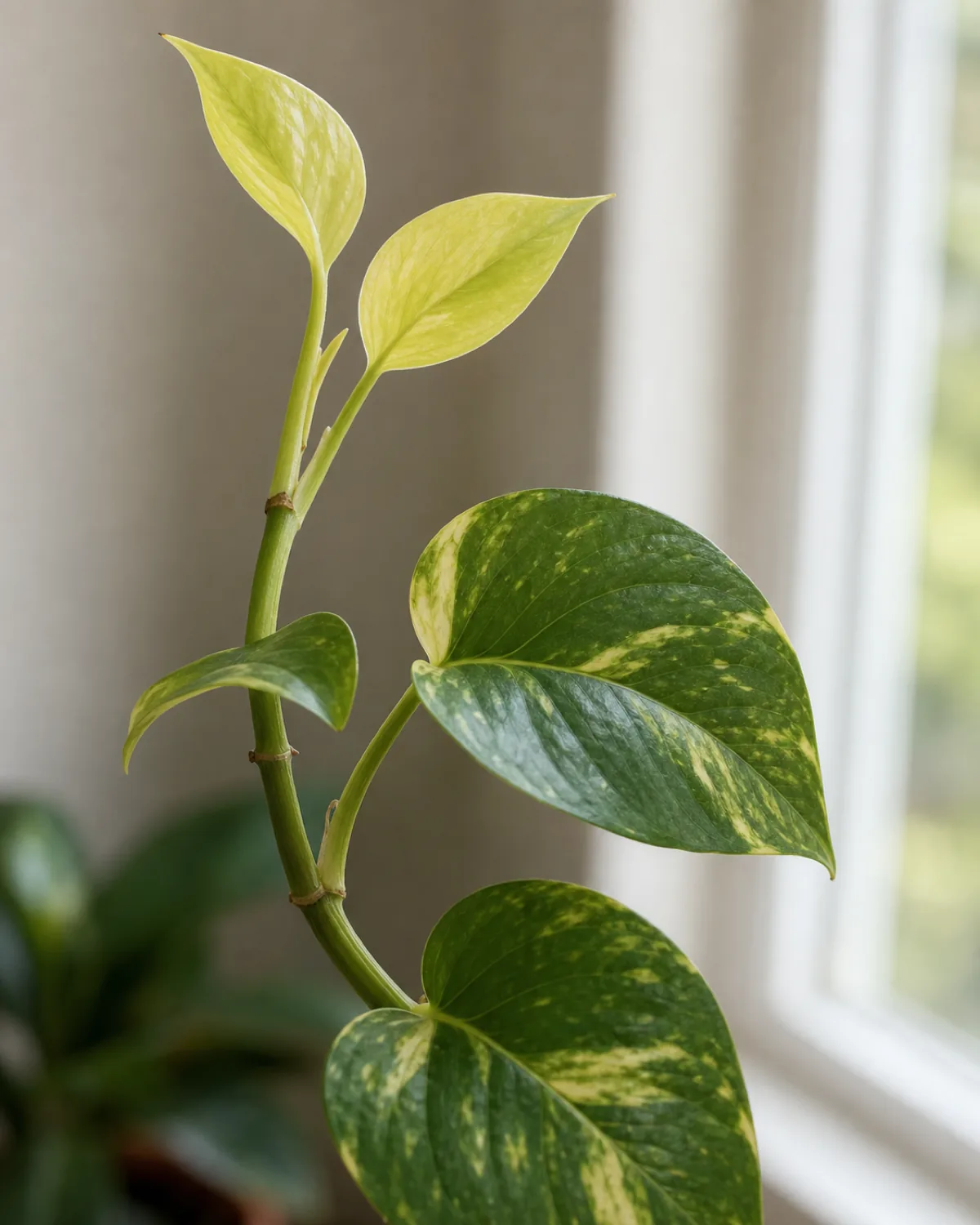
New leaves noticeably smaller and paler than older ones, longer gaps between new leaves without a light problem, and older leaves yellowing from the bottom up while the plant is otherwise getting enough light and water are the real signs it’s time to feed — not just impatience with a naturally slow grower.
- Smaller, paler new leaves compared to older growth signal a genuine nutrient shortage.
- Bottom-up yellowing with light and water otherwise fine points to feeding, not a care mistake elsewhere.
- A naturally slow grower isn’t automatically hungry — check these specific signs before assuming it needs food.
Fast growers need more, slow growers need almost none
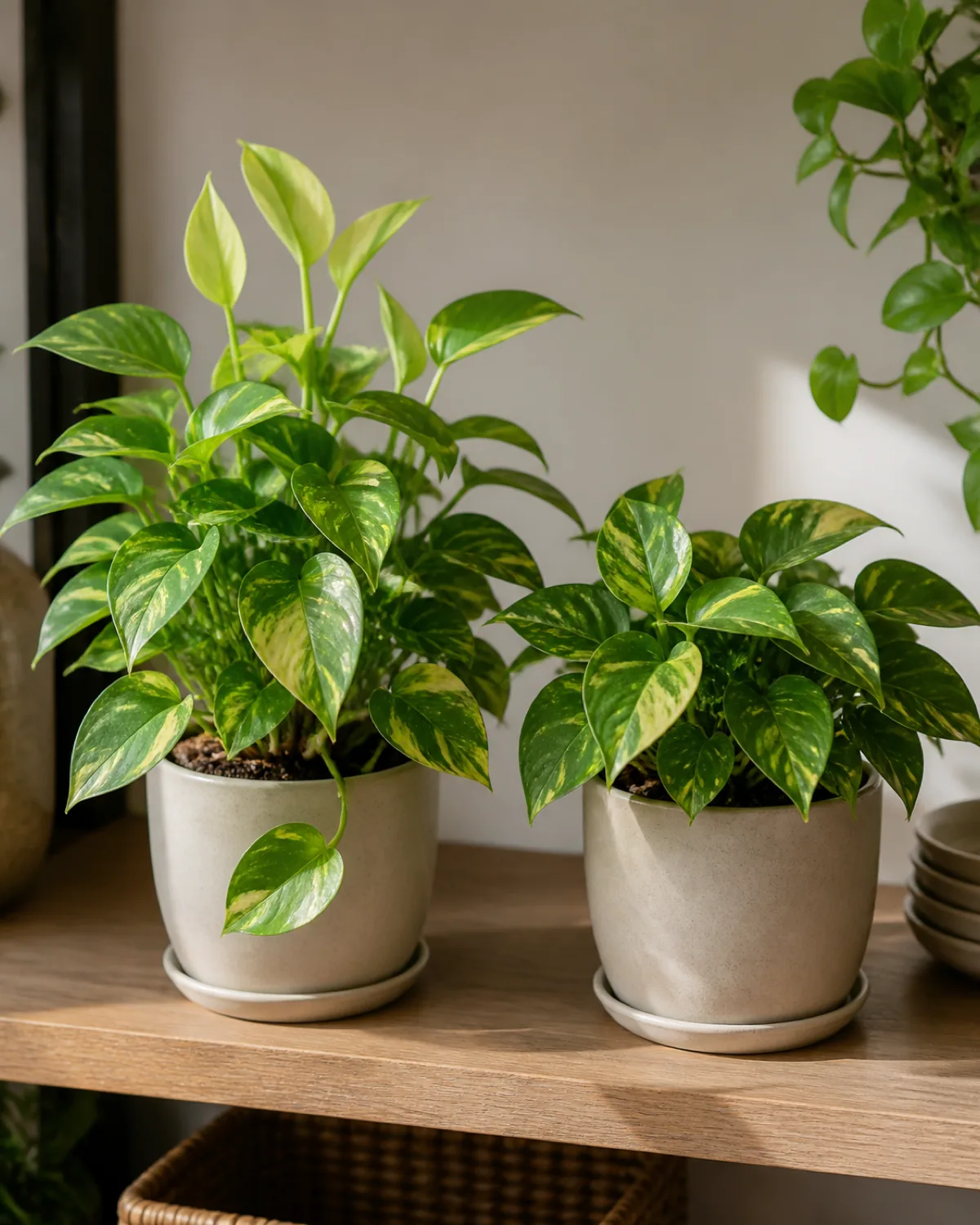
A plant that puts out new leaves every week or two during the growing season is actively using far more nutrients than one that produces a single leaf a month, so feeding frequency should scale to actual growth rate rather than a fixed calendar.
The zz plant care guide covers a plant that thrives on being fed the least, not the most — and a fast-growing statement plant like the fiddle leaf fig guide covers is exactly the kind of grower that benefits most from a fuller feeding schedule.
- Fast growers use more nutrients and can handle (and benefit from) more frequent feeding.
- Slow growers need very little, sometimes nothing for a full season.
- Scale feeding to observed growth rate, not a one-size schedule across every species you own.
Fertilizing Houseplants: The Quick Reference
- 1Fertilizer fuels growth, not survivalSoil nutrients run out in 2-3 months. Without feeding, a plant survives but stalls with smaller, paler new leaves.
- 2Water first, then feedFertilizer on dry soil concentrates around the roots. Water thoroughly first to dilute and distribute it.
- 3N-P-K: nitrogen, phosphorus, potassiumThe three label numbers, in that order, as a percentage. A balanced ratio like 10-10-10 works for most foliage plants.
- 4Feed during the growing season onlySpring through early fall, every 2-4 weeks diluted, is the general default for most common houseplants.
- 5Skip fall and winter feedingSemi-dormant plants aren’t using nutrients. Fertilizer just sits in the soil and builds up salts.
- 6“Weakly weekly” is the safest methodQuarter-strength every watering during the growing season is harder to overdo than a full-strength monthly dose.
- 7Fertilizer burn: crisp edges plus a white crustScorched leaf margins and a mineral crust on the soil surface, showing up shortly after a feeding.
- 8Hungry signs: small pale new leavesSmaller, paler new growth and bottom-up yellowing while light and water are otherwise fine.
- 9Match dose to growth rateWeekly new leaves need more feeding. Monthly (or no) new growth needs far less, sometimes none.
- 10Don’t feed a freshly repotted plantFresh mix already has nutrients, and the plant is recovering roots, not growing, for the first 4-6 weeks.
- 11Liquid, granular, or slow-releaseLiquid gives fast control. Granular feeds slowly. Slow-release pellets last 2-3 months with less precision.
- 12Flush salt buildup every 1-2 monthsRun plain water through the pot until it drains freely, several times, to clear residue before it burns.
- 13Synthetic is the more forgiving default indoorsIt’s easier to dose precisely. Organic options release slower but can smell stronger in a small indoor pot.
kultivy.com
Newly repotted or newly bought plants don’t need feeding yet
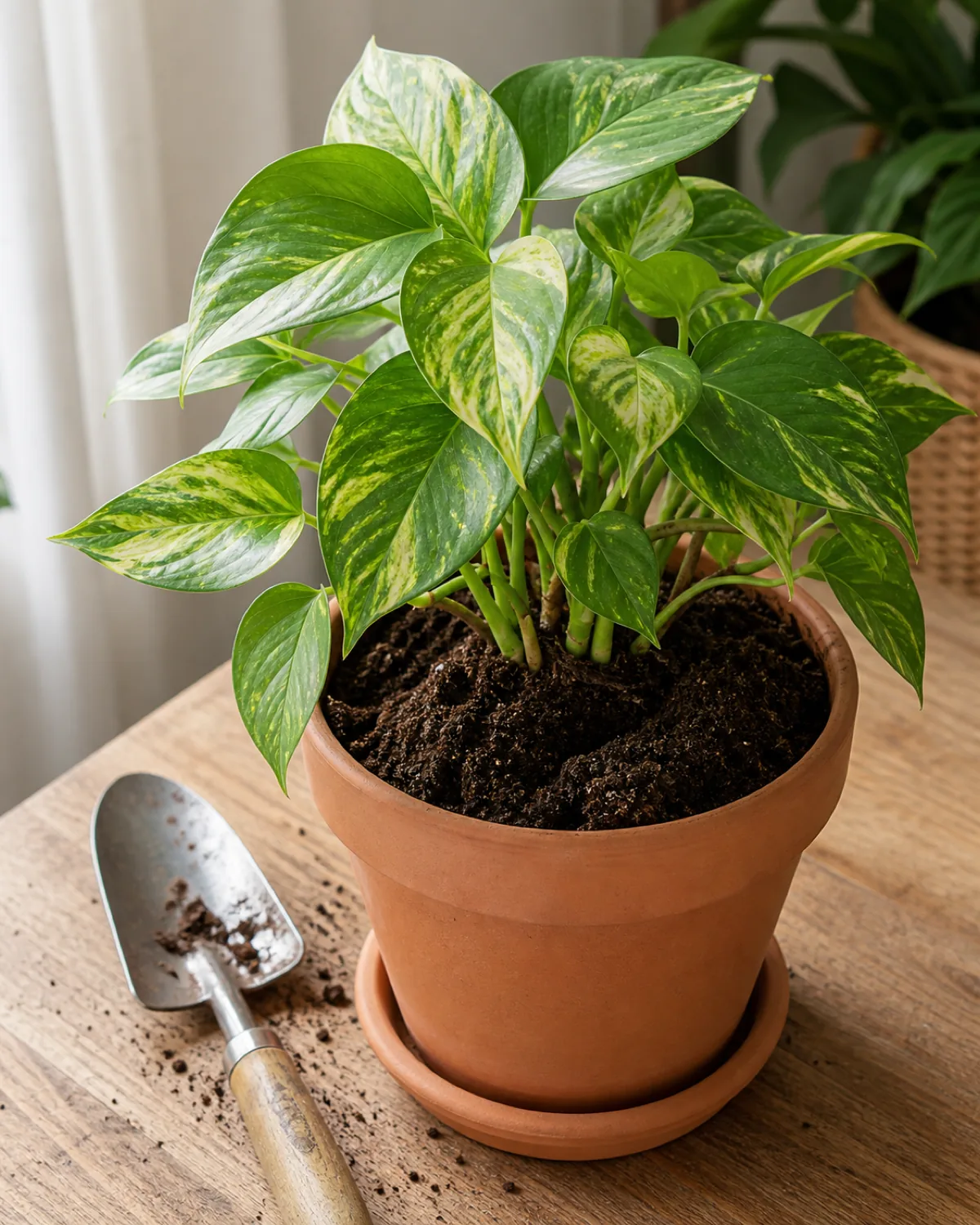
Fresh potting mix already contains a supply of nutrients, sometimes a slow-release starter charge, and a plant that’s just been repotted is focused on recovering root damage from the move, not putting on new growth. Feeding during this four-to-six-week settling window just adds unused salts on top of soil that’s already stocked.
- Fresh potting mix already has nutrients built in — feeding right away is redundant.
- A newly repotted plant is recovering roots, not growing — it isn’t using added nutrients yet.
- Wait 4-6 weeks after repotting before starting a feeding schedule.
Liquid, granular, and slow-release: which one for which situation
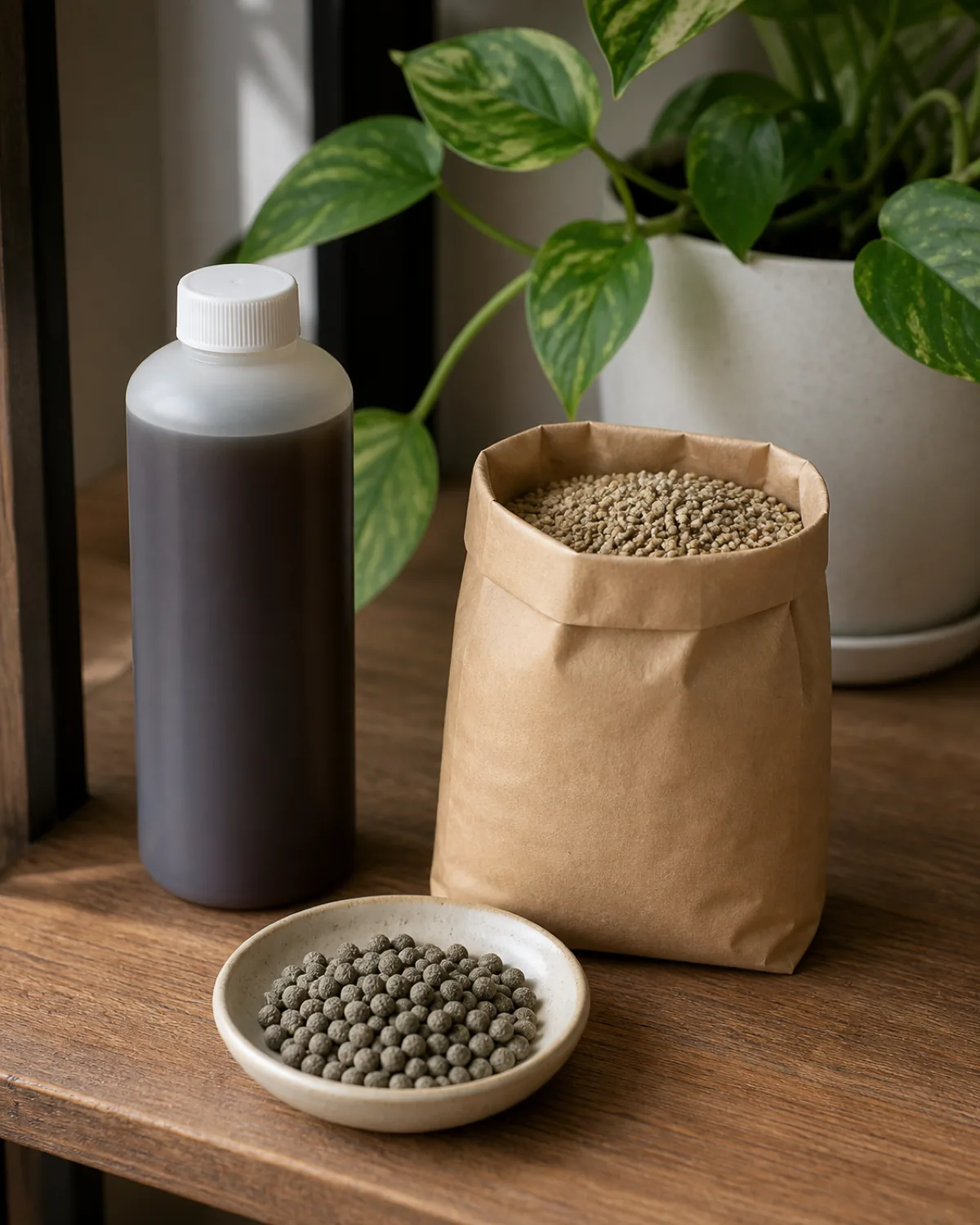
Liquid fertilizer diluted in water gives the fastest, most controllable results and suits most houseplant owners’ routine. Granular feeds slowly over weeks and suits plants that get inconsistent attention.
Slow-release pellets mixed into the soil surface last two to three months and suit people who want to feed once and mostly forget about it, at the cost of less precise control if a plant starts showing burn.
- Liquid = fastest and most controllable, the default choice for most people.
- Granular = slower release over weeks, forgiving for inconsistent routines.
- Slow-release pellets = feed once, last months, but harder to correct quickly if something goes wrong.
Salt buildup happens even with careful feeding — here’s the flush
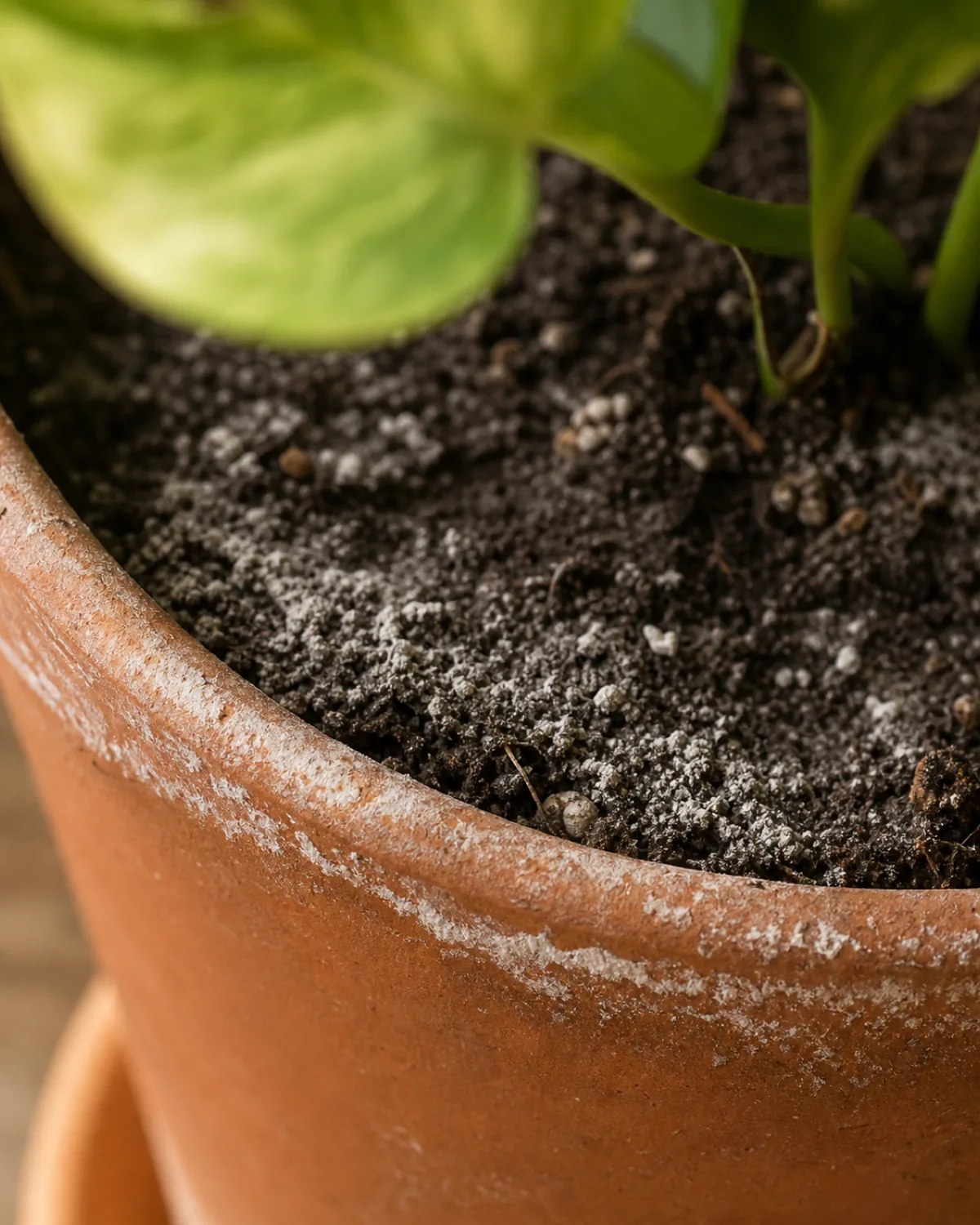
Every feeding leaves behind a small residue of mineral salts that regular watering doesn’t fully clear, and over months this shows up as a white crust on the soil surface or pot rim. Running plain water through the pot until it drains freely from the bottom, several times in a row, roughly every one to two months during the growing season clears this buildup before it reaches burn levels.
- Every feeding leaves some mineral residue behind, even when you dilute carefully.
- A white crust on the soil or pot rim is the visible sign it’s accumulating.
- Flush with plain water every 1-2 months during the growing season, several passes in a row, to clear it out.
Organic vs. synthetic fertilizer — the practical difference indoors
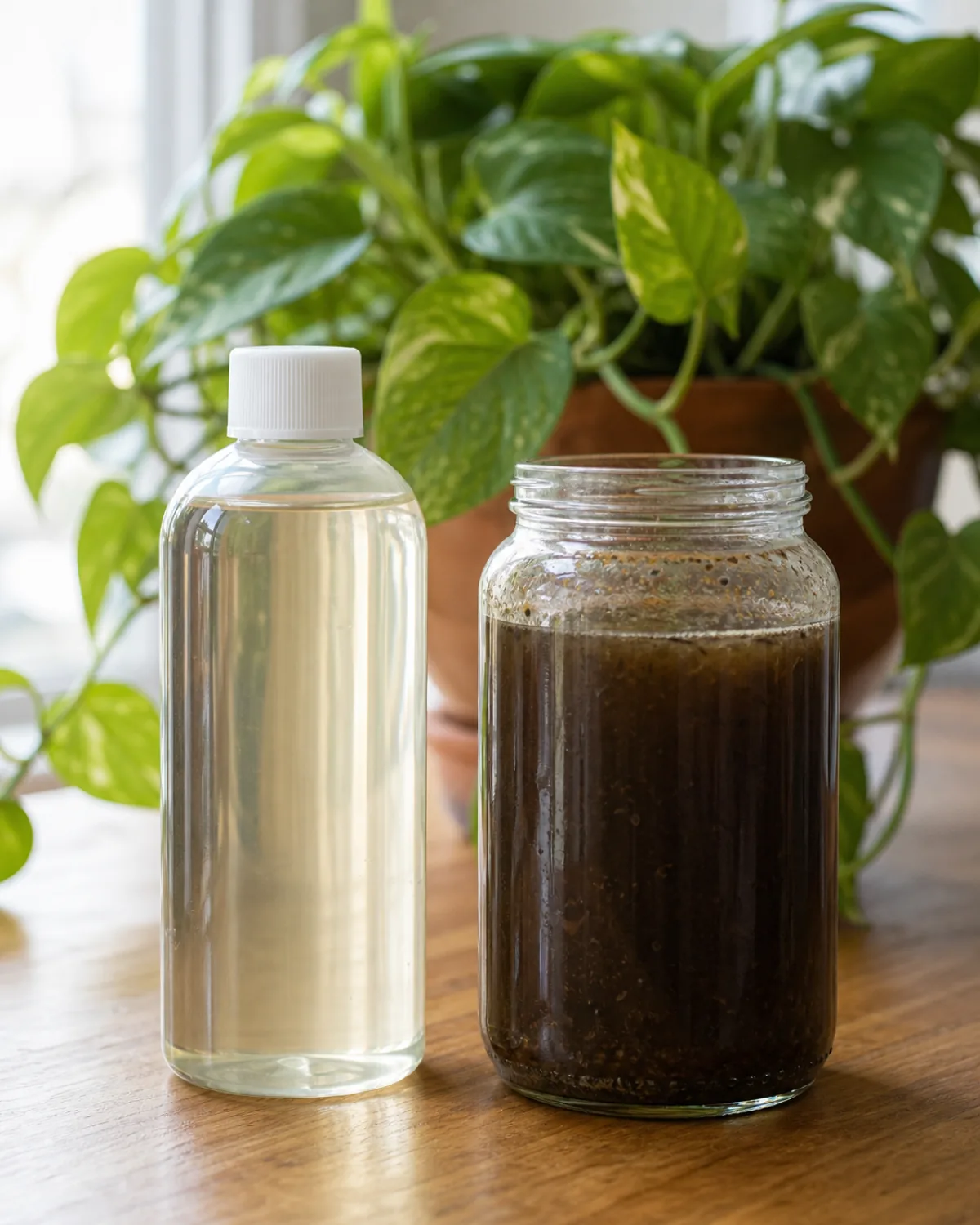
Synthetic fertilizers deliver nutrients immediately in a plant-ready form and make it easy to control exact strength, which is why they’re the more forgiving default for indoor container growing.
Organic options, like fish emulsion or compost tea, release more slowly and add beneficial microbes but can smell noticeably stronger indoors and are harder to dose precisely in a small pot — a tradeoff that matters more inside a house than out in a garden bed.
- Synthetic = immediate, plant-ready, easy to dose precisely — the more forgiving indoor default.
- Organic = slower release plus beneficial microbes, but stronger smell and harder precision in a small pot.
- Indoor conditions make the synthetic-vs-organic tradeoff sharper than it would be outdoors in a garden bed.

Mara Quinn edits Kultivy, where she shares houseplant care, propagation, beginner-friendly plant picks, and plant-styling ideas for anyone who wants their indoor plants to actually thrive. Every guide is image-led and reviewed for clarity, usefulness, image accuracy, and Pinterest-to-page alignment before it goes live. Visit the About page.