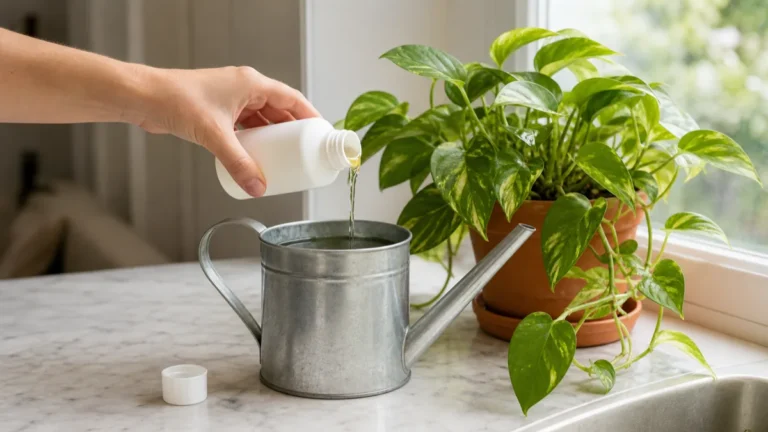
Almost every houseplant question that starts with “how often should I water this” is really a symptom of the same problem: a fixed schedule can’t account for light, pot material, or the season, so the same plant can dry out in five days one month and take three weeks the next.
This guide skips the generic “once a week” advice and covers the checks that actually tell you when a plant needs water, the real signs of overwatering versus underwatering, and the variables — pot material, light, season — that change the answer for every plant in your home.
Watering questions almost always come down to method, not a fixed number. The thirteen sections below cover the finger test, the real signs of over- and underwatering, and the variables — pot material, light, season — that change the answer for every plant in your home.
Why “water once a week” is bad advice for every plant
A fixed schedule ignores the three biggest variables that change how fast soil dries: light level, pot size or material, and season. The same plant can need water every five days in summer by a sunny window and every three weeks in winter in a dim corner. The habit worth building is checking the soil, not the calendar.
- Light, pot, and season all change drying speed — a fixed number can’t account for any of them.
- The same plant needs water on different schedules depending on where it sits and what time of year it is.
- Check the soil, not the calendar — that single habit replaces every generic watering rule.
The finger test: the one method that actually works
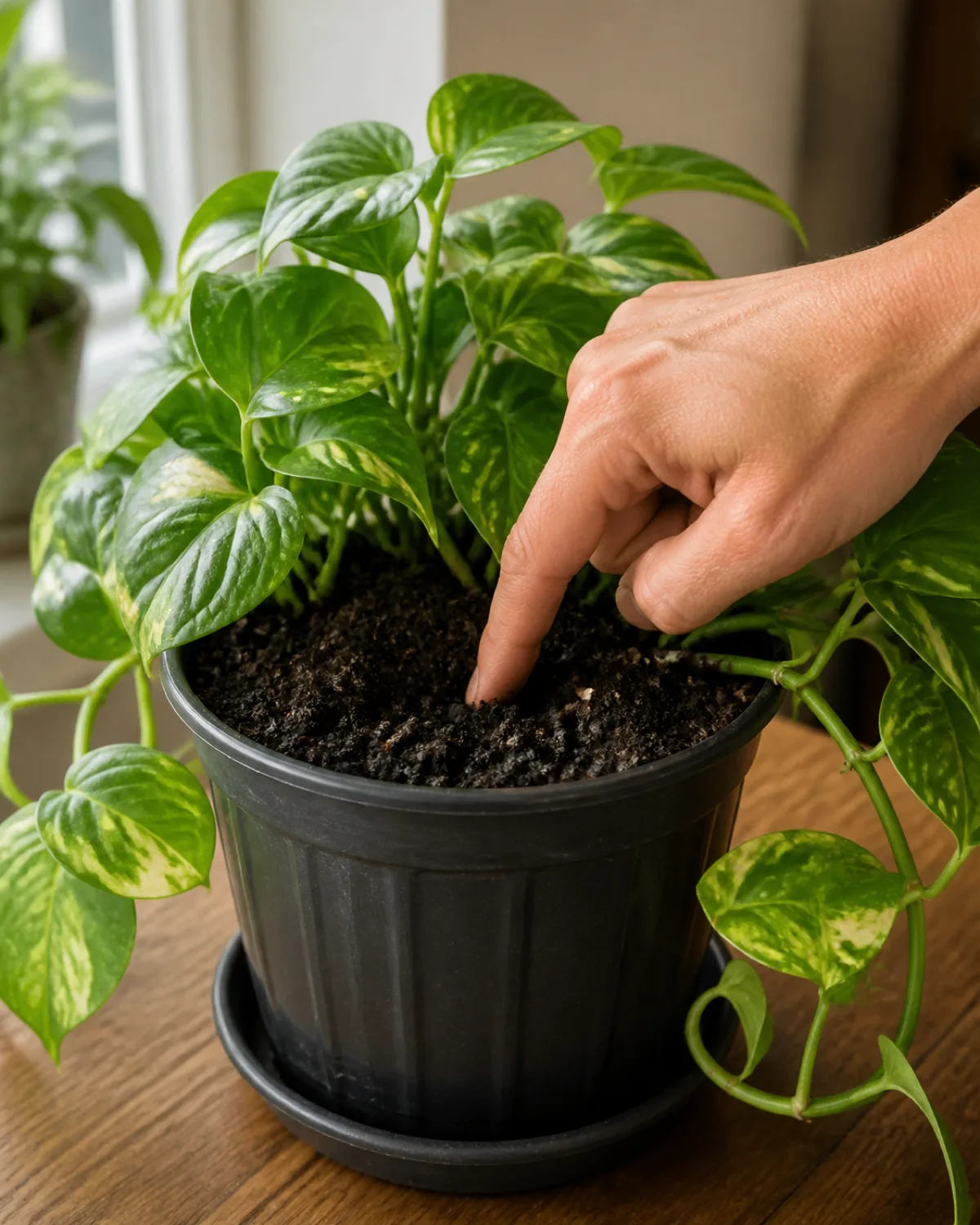
Push a finger about two inches into the soil. If it comes out with soil clinging to it and feels cool and damp, wait. If it comes out clean and dry, water. This ten-second check replaces every generic “water every X days” rule, and it works on any houseplant regardless of species. Try it on a pothos first — see the full pothos care guide for how that one responds.
- Two inches down, not the surface — surface soil dries faster and reads misleadingly dry even when the root zone is still wet.
- Damp and clinging means wait; clean and dry means water.
- Works on any species — no need to memorize a different rule for every plant.
The pot-weight trick for plants you don’t want to keep digging into
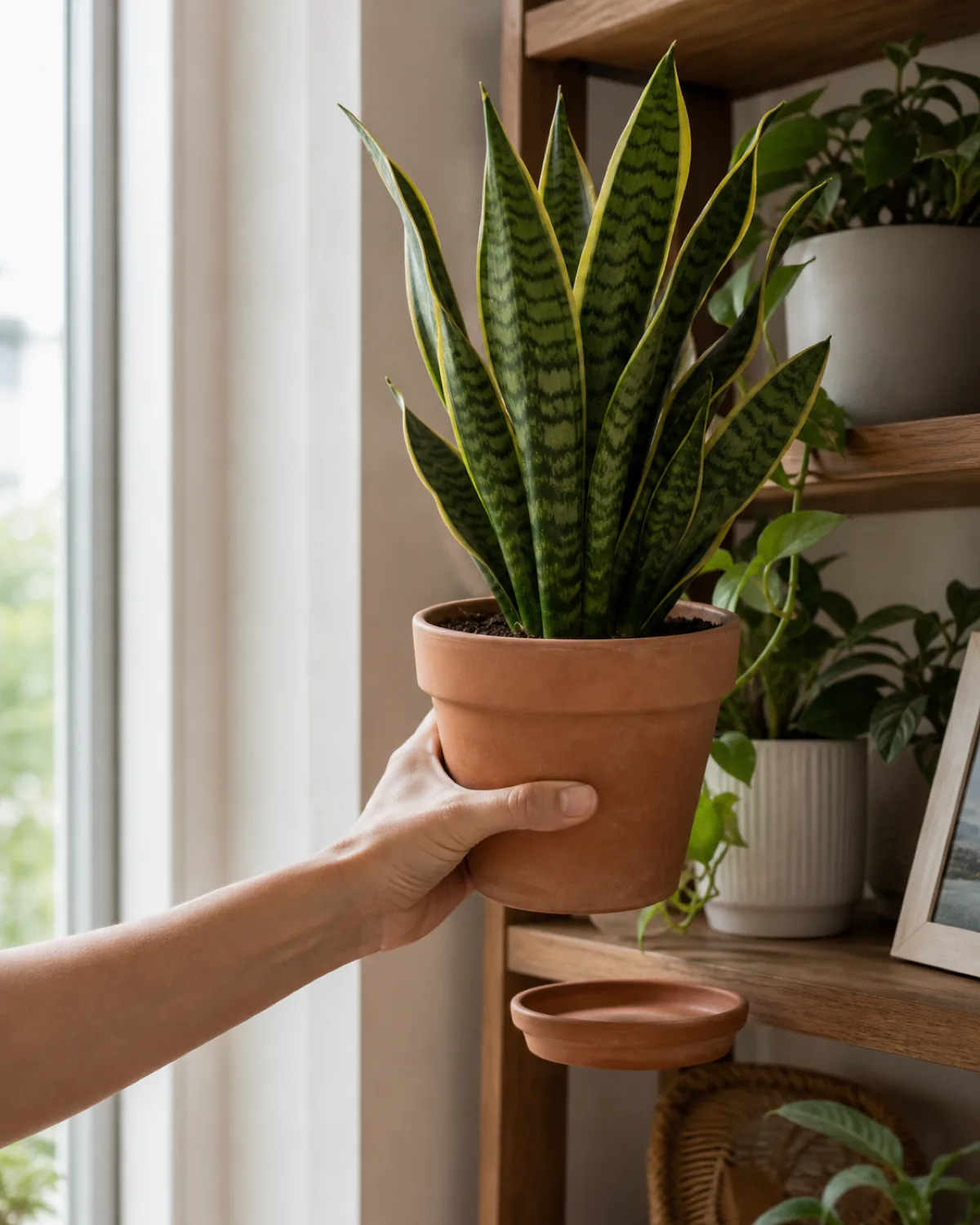
Lift the pot right after a thorough watering to feel how heavy fully saturated soil is, then lift it again before every future watering. A pot that feels noticeably lighter is dry through, no finger required. This works especially well for tall floor plants where reaching the actual soil surface is awkward.
- Learn the “just watered” weight once, then compare against it every time.
- A noticeably lighter pot means dry through, not just dry on top.
- Best for tall or hard-to-reach floor plants where the finger test is inconvenient.
Most watering questions trace back to one of four situations. Start with whichever one describes yours, then circle back to the rest later.
Signs of underwatering — and why they’re easy to fix
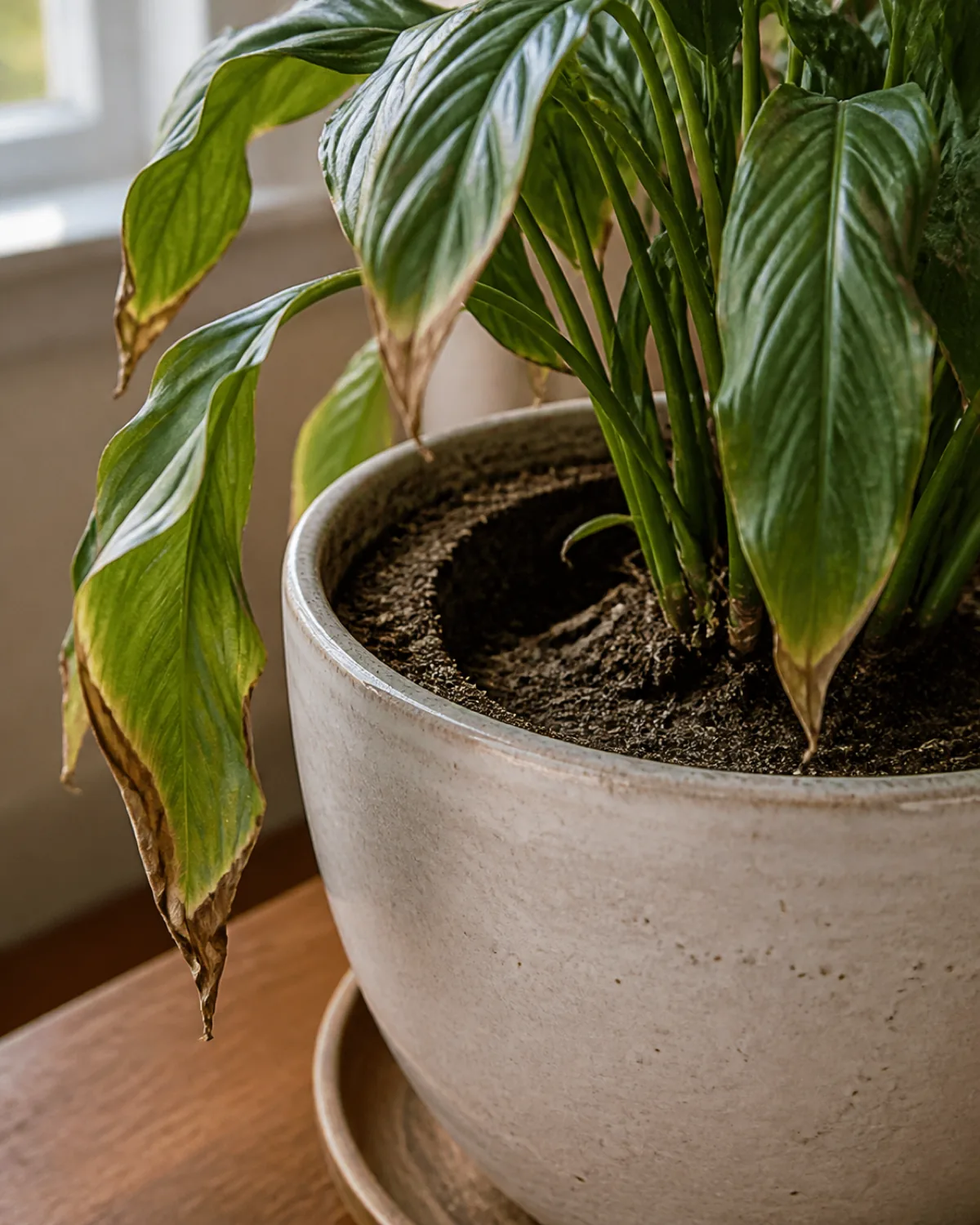
Leaves go limp and droopy, edges turn crispy and brown, and the soil pulls away from the pot’s edge leaving a visible gap. Underwatered plants almost always bounce back within a day of a thorough watering, which is why underwatering is the more forgivable of the two mistakes. The zz plant care guide covers a plant built to go weeks without this ever becoming a problem in the first place.
- Limp, droopy leaves with crispy brown edges are the clearest underwatering signal.
- A gap between the soil and the pot’s inner rim means the soil has shrunk from dryness.
- Most plants recover within a day of a single thorough watering.
Signs of overwatering — the mistake that actually kills plants
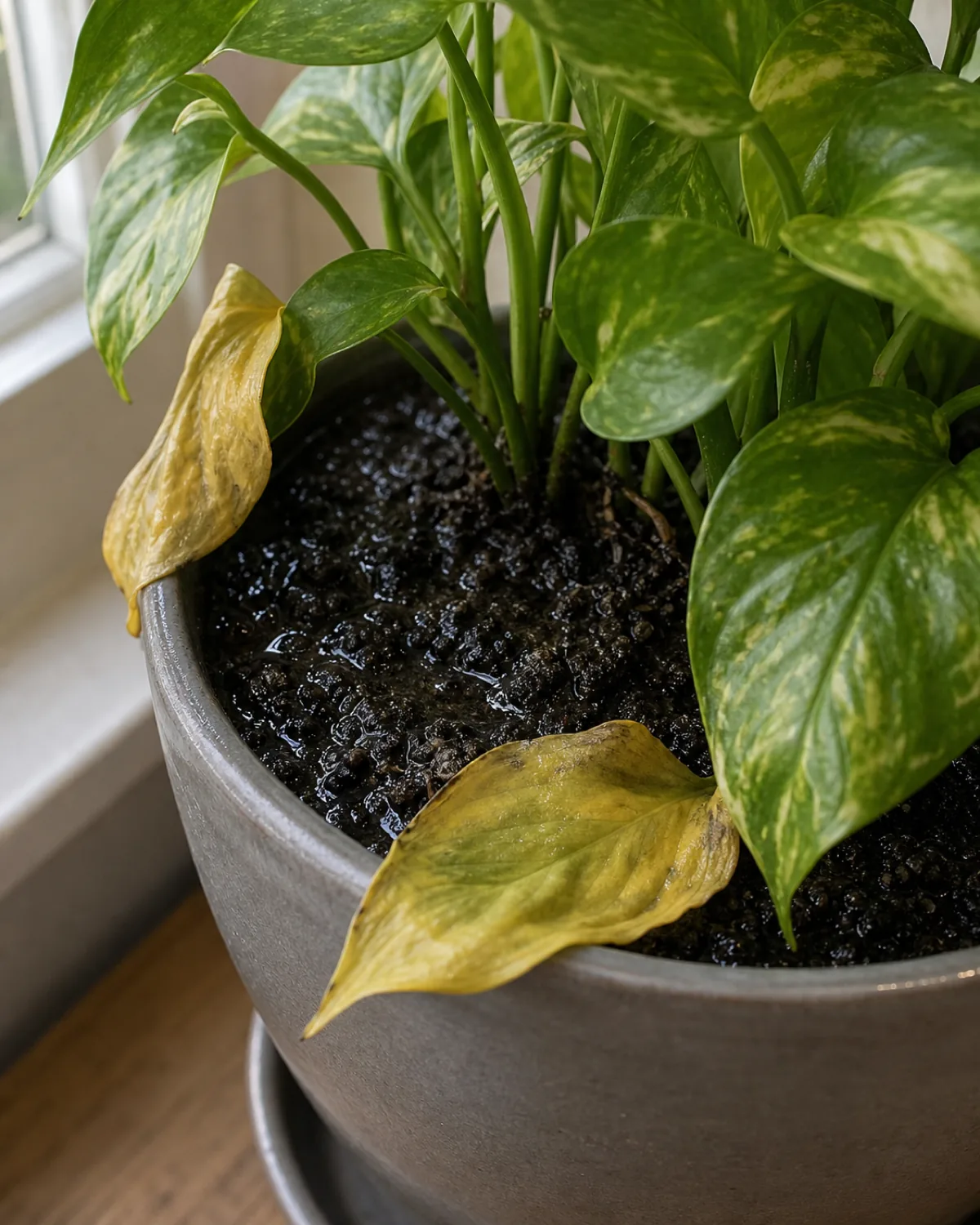
Lower leaves turn yellow and feel soft or mushy, not crispy, the soil stays wet for days after watering, and a sour smell or gnats hovering around the pot signal roots sitting in water and starting to rot. Unlike underwatering, root rot from overwatering often can’t be reversed once it’s advanced, which is why it’s the mistake that ends up killing plants.
- Yellow, soft, mushy lower leaves point to overwatering, not underwatering.
- Soil that stays wet for days, plus a sour smell or gnats, signals rot starting at the roots.
- Root rot is often irreversible once it’s advanced — this is the mistake to actually worry about.
Why pot material changes how often you need to water
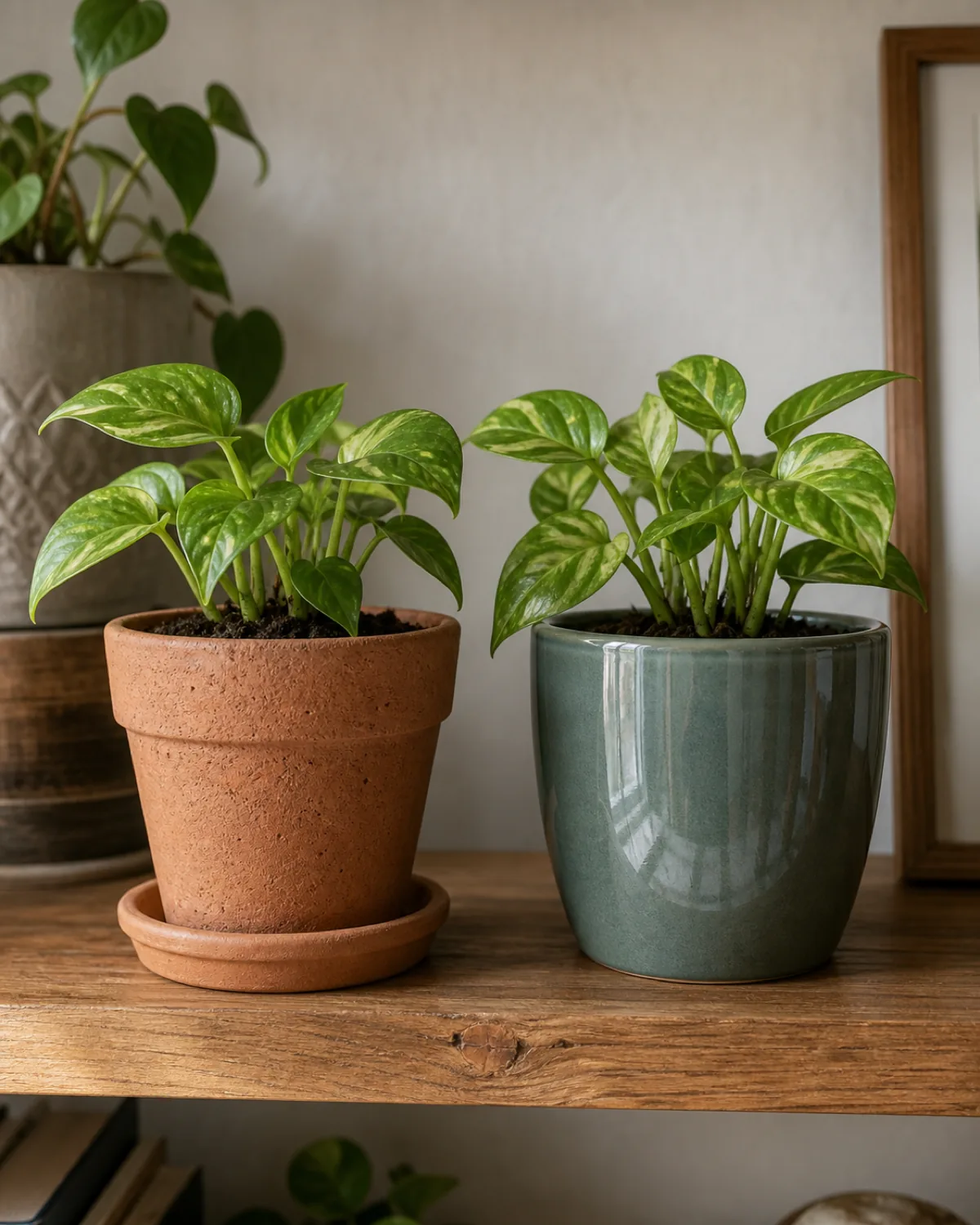
Unglazed terracotta is porous and lets moisture evaporate straight through the walls, so it dries noticeably faster than plastic, glazed ceramic, or resin, which hold moisture in. The same plant in a terracotta pot can need water twice as often as the same plant in a plastic nursery pot.
- Terracotta breathes and dries fast because the unglazed clay is porous.
- Plastic, glazed ceramic, and resin hold moisture and stretch out the time between waterings.
- The same plant can need water twice as often just from a pot-material swap.
Most watering mistakes trace back to one of four moves people skip. Hold these four and any houseplant gets watered on what it actually needs, not a guess.
Drainage holes are non-negotiable, and here’s the mechanism
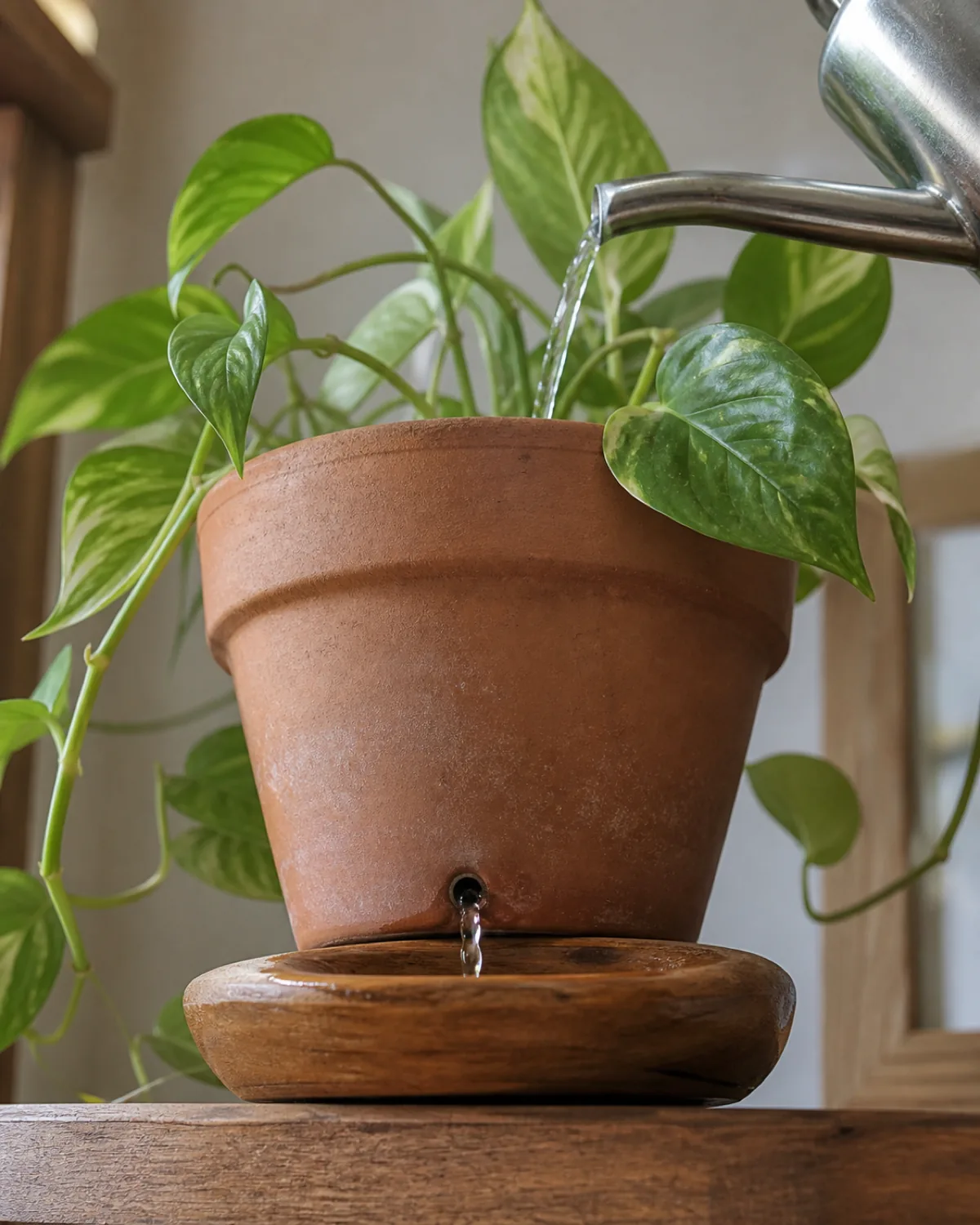
Without a hole, excess water has nowhere to go and pools at the bottom of the pot where roots sit in it continuously, which is the single most common cause of root rot regardless of how carefully you water. A decorative pot with no hole should always hold a separate drainable nursery pot inside it, not soil poured directly in.
- No drainage hole means excess water pools at the bottom with nowhere to go.
- Pooled water at the roots is the single most common cause of root rot, independent of how you water.
- Use a nursery pot inside a decorative one rather than potting directly into a hole-free container.
How light level changes watering frequency
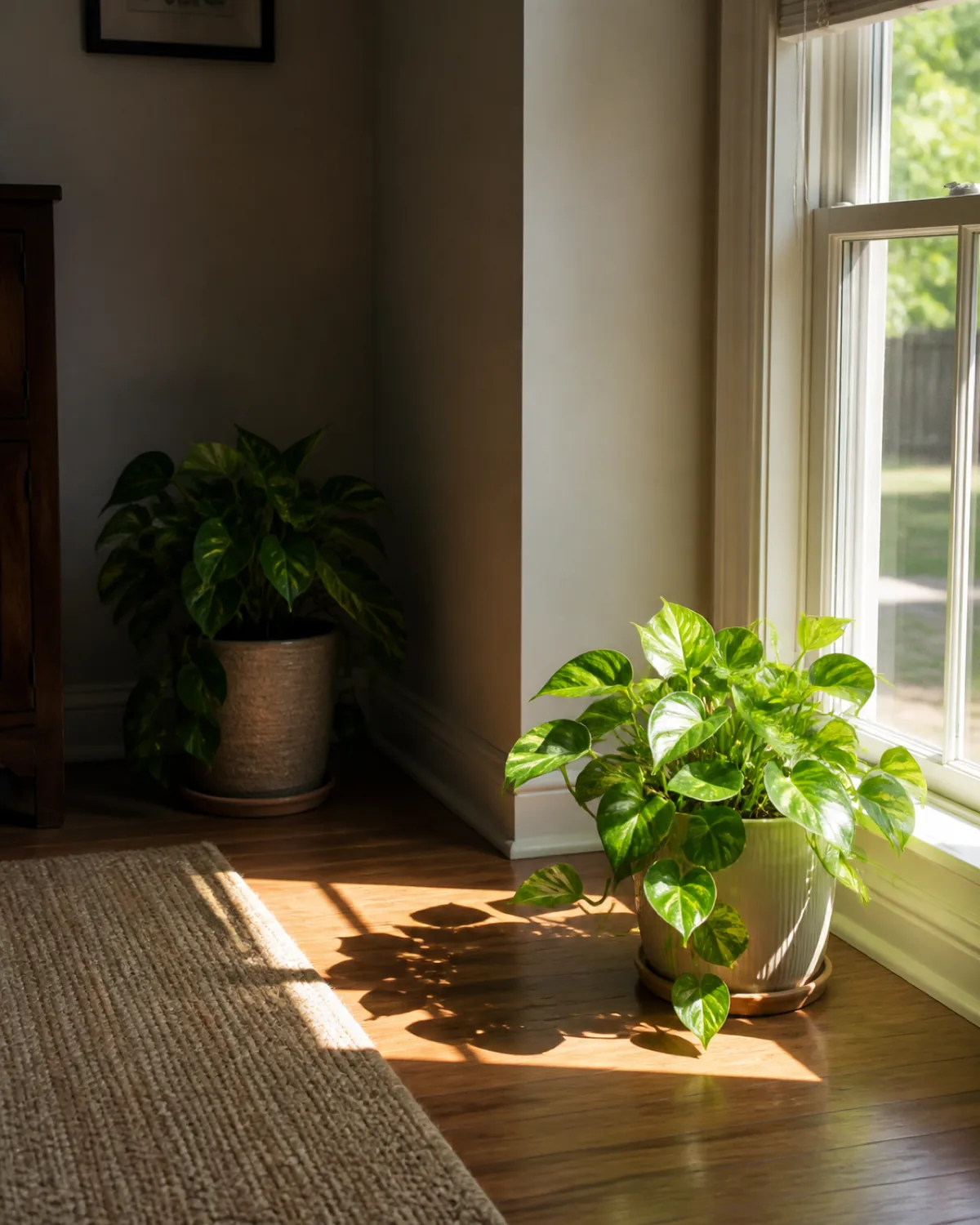
Brighter light drives faster photosynthesis and transpiration, which pulls water out of the soil faster, so a plant in a sunny south-facing window dries out and needs water more often than the same species sitting a few feet back from a north-facing one. Browse the low light plants roundup for picks that are built around needing less of both light and water.
- More light means faster transpiration, which pulls water out of the soil faster.
- The same species dries out at different rates depending on how bright its spot is.
- Low-light plants need less water by default, not just less light.
Bottom watering vs top watering — when each makes sense
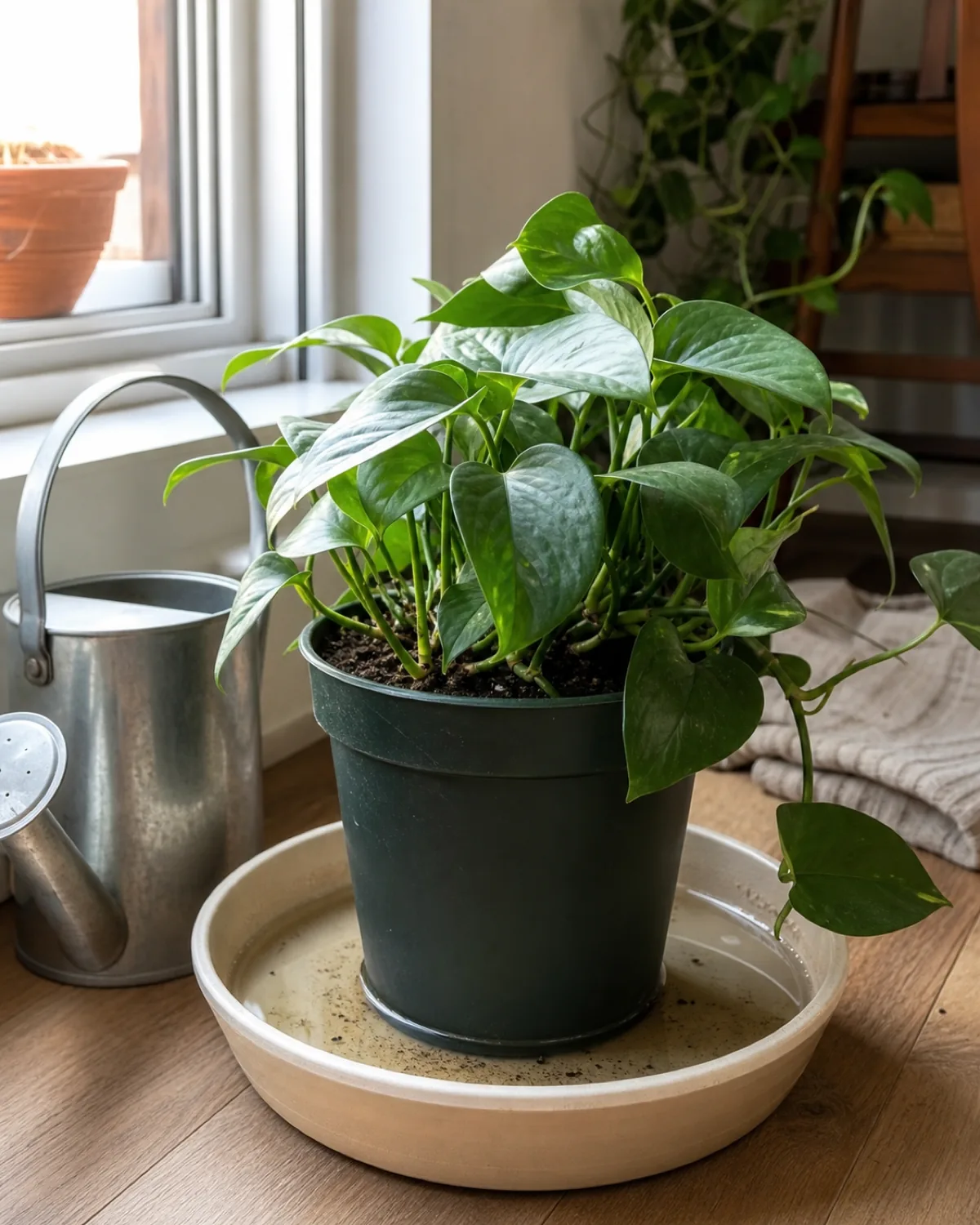
Top watering, pouring onto the soil surface until it drains out the bottom, flushes out mineral buildup and should be the default choice. Bottom watering, setting the pot in a tray of water for 20 to 30 minutes so it wicks up through the drainage hole, suits plants with rot-prone crowns or fuzzy leaves that shouldn’t get wet on top.
It should still be alternated with an occasional top watering, though, to prevent salt buildup at the soil surface.
- Top watering is the default — it flushes mineral buildup out through the drainage hole.
- Bottom watering suits rot-prone crowns or fuzzy leaves that shouldn’t get wet from above.
- Alternate the two so bottom watering alone doesn’t let salts build up at the surface.
Watering Indoor Plants: The Quick Reference
- 1Schedules fail because conditions changeLight, pot material, and season all change how fast soil dries. Check the soil, not the calendar.
- 2The finger test: two inches downDamp and clinging means wait. Clean and dry means water. Works on any species.
- 3The pot-weight trick for tall plantsLearn the just-watered weight once, then compare. A noticeably lighter pot is dry through.
- 4Underwatering: limp, crispy, and a soil gapDroopy leaves and a gap between soil and pot rim. Most plants bounce back within a day.
- 5Overwatering: yellow, soft, and wet soilMushy lower leaves plus soil that stays wet for days. Root rot from this is often irreversible.
- 6Pot material changes drying speedTerracotta dries twice as fast as plastic or glazed ceramic holding the same plant.
- 7Drainage holes are non-negotiableNo hole means pooled water at the roots — the single most common cause of root rot.
- 8Brighter light means more frequent wateringFaster transpiration in bright light pulls water out of soil faster than in a dim corner.
- 9Top watering is the defaultBottom watering suits rot-prone crowns and fuzzy leaves, but alternate with top watering to avoid salt buildup.
- 10Misting isn’t a substitute for wateringIt raises humidity for minutes and does nothing for a dry root ball inches down.
- 11Tap water is fine for most plantsA few species are genuinely mineral-sensitive — know which of yours is the exception.
- 12Adjust for the seasonSoil that dries in a week in summer can take three weeks in winter. Don’t carry the old schedule over.
- 13Check room by room, not just by speciesA kitchen sill, a hallway nook, and a bathroom shelf all call for different watering rhythms.
kultivy.com
Humidity is not a substitute for watering
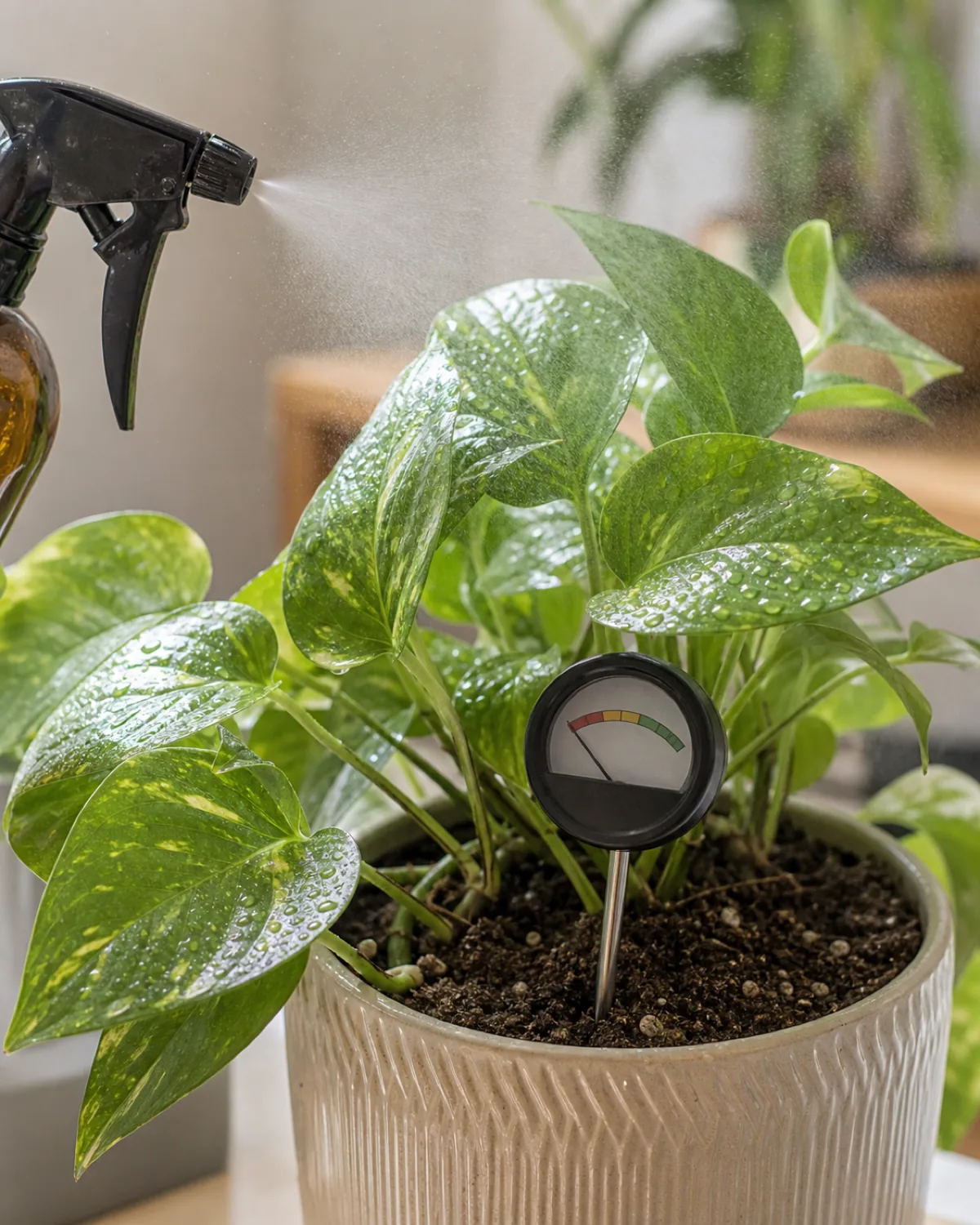
Misting the leaves raises humidity around the plant for a few minutes at most and does nothing for a dry root ball several inches down. Beginners who mist daily but skip checking the soil often end up with a plant that’s simultaneously dry at the roots and prone to fungal spotting on wet leaves.
- Misting affects the air for minutes, not the soil several inches down.
- Daily misting without a soil check can leave a plant dry at the roots while its leaves stay wet.
- Wet leaves plus dry soil is a recipe for both root stress and fungal spotting.
Most tap water is fine — but a few plants are the exception
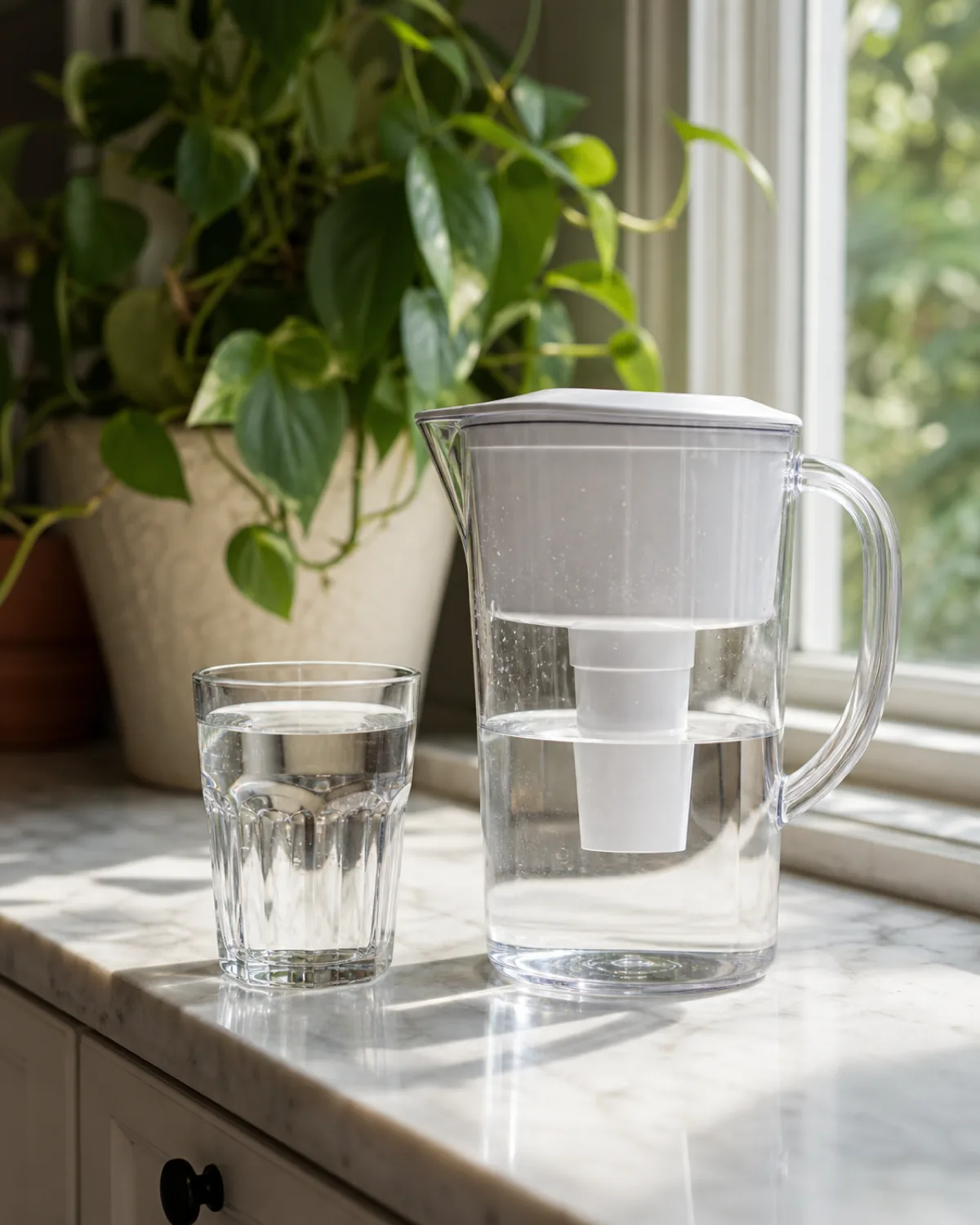
For the vast majority of houseplants, regular tap water is completely fine, and letting it sit out for a few hours only matters cosmetically. A few specific species are the genuine exception, where mineral sensitivity actually shows up as visible damage. See the dracaena marginata guide for the one houseplant on this site where tap water itself is the problem.
- Tap water is fine for most houseplants — resting it a few hours is cosmetic, not essential.
- A few species are genuinely mineral-sensitive, and it shows up as visible leaf damage.
- Know which of your plants is the exception before assuming water quality is never worth a second thought.
Adjusting for the seasons
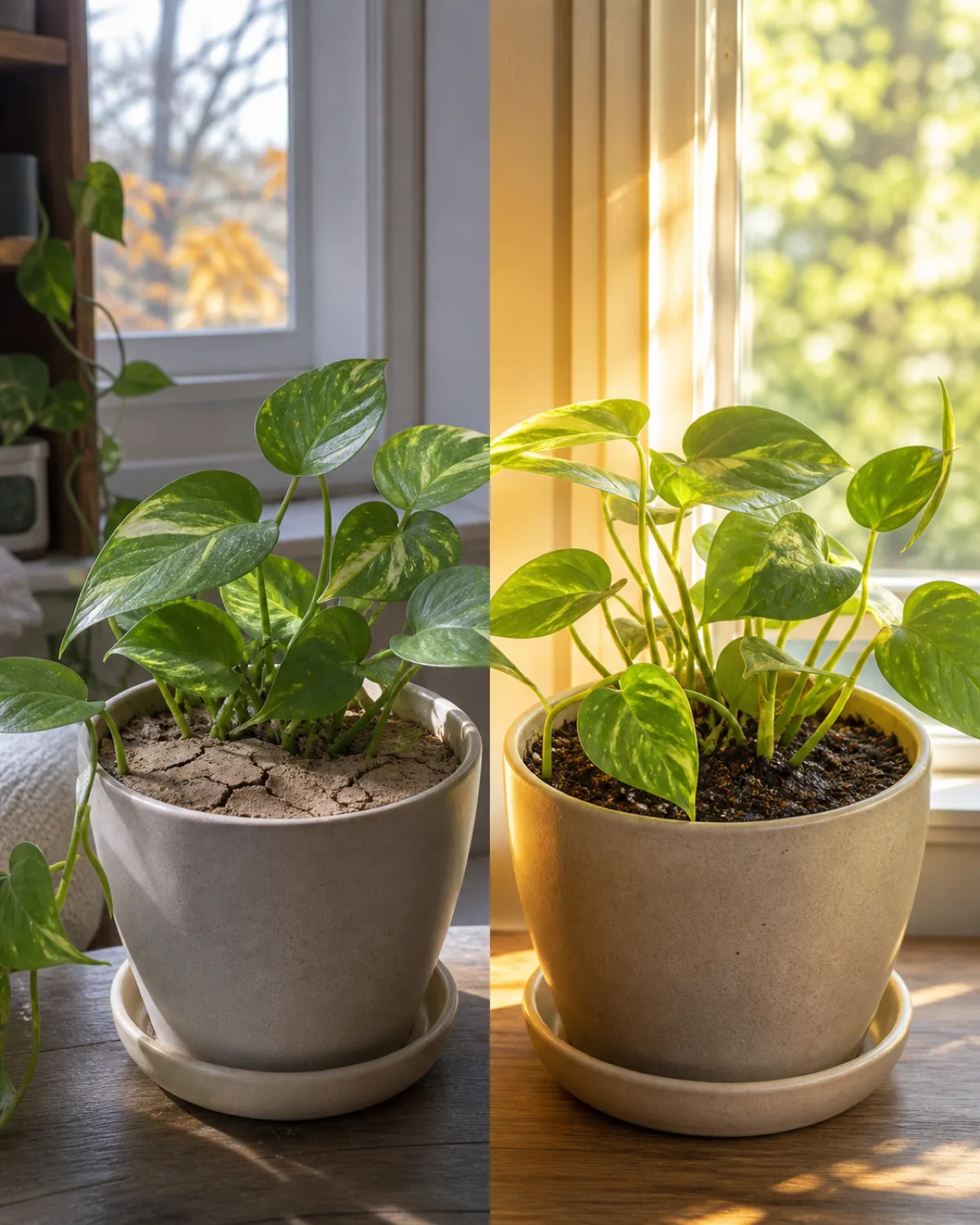
Growth slows or stops in fall and winter as light hours drop, so soil that dried out in a week during summer might take three weeks to dry the same amount in winter. Watering on the old summer schedule straight through winter is one of the most common causes of cold-season root rot.
- Growth slows as light hours drop in fall and winter, and water use slows with it.
- A week-to-dry summer schedule can stretch to three weeks in winter.
- Carrying a summer schedule into winter is a common, avoidable cause of root rot.
A simple room-by-room reality check
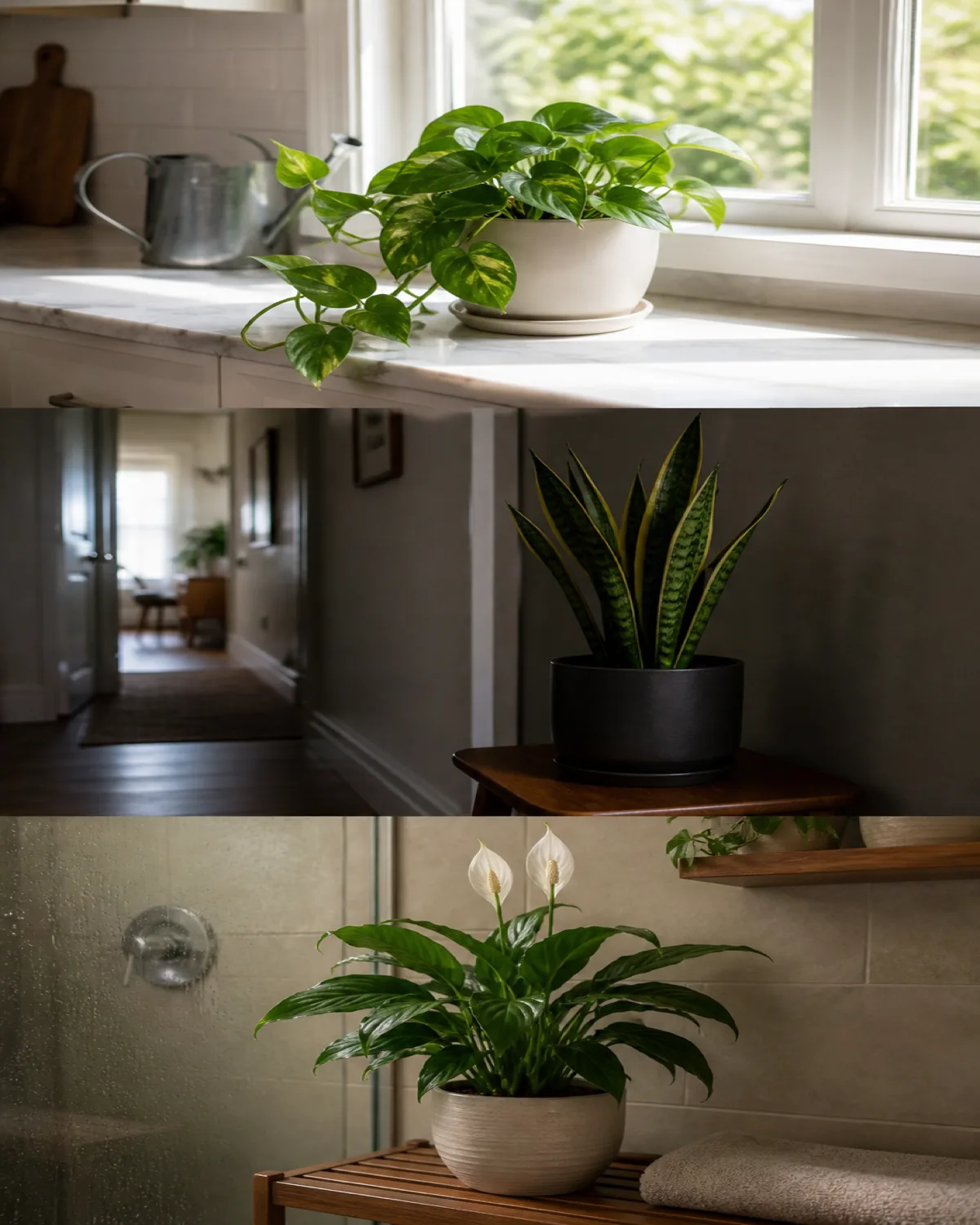
A plant on a bright kitchen windowsill, one in a dim hallway, and one in a humid bathroom will all need genuinely different watering rhythms even if they’re the exact same species. That’s the real case for the finger test over memorizing a number: the number changes by room, and the finger test doesn’t.
- Room lighting and humidity change the watering rhythm, even for identical plants.
- A kitchen sill, a hallway nook, and a bathroom shelf can all call for different frequencies.
- The finger test travels between rooms; a memorized number doesn’t.

Mara Quinn edits Kultivy, where she shares houseplant care, propagation, beginner-friendly plant picks, and plant-styling ideas for anyone who wants their indoor plants to actually thrive. Every guide is image-led and reviewed for clarity, usefulness, image accuracy, and Pinterest-to-page alignment before it goes live. Visit the About page.