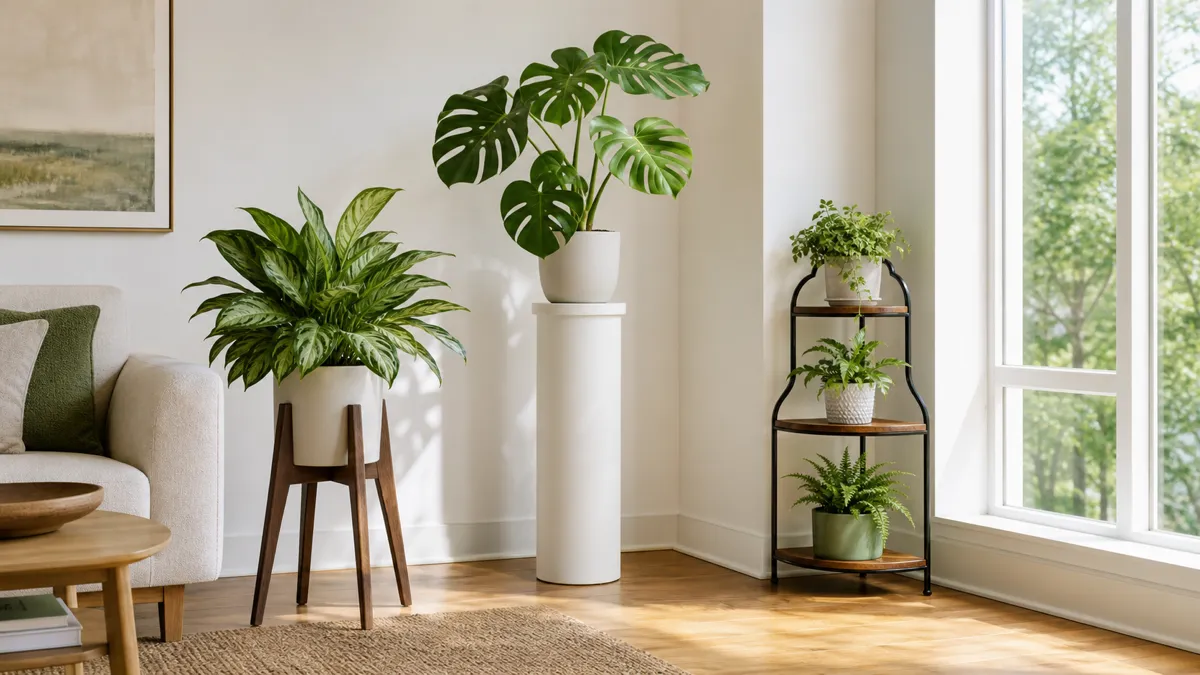
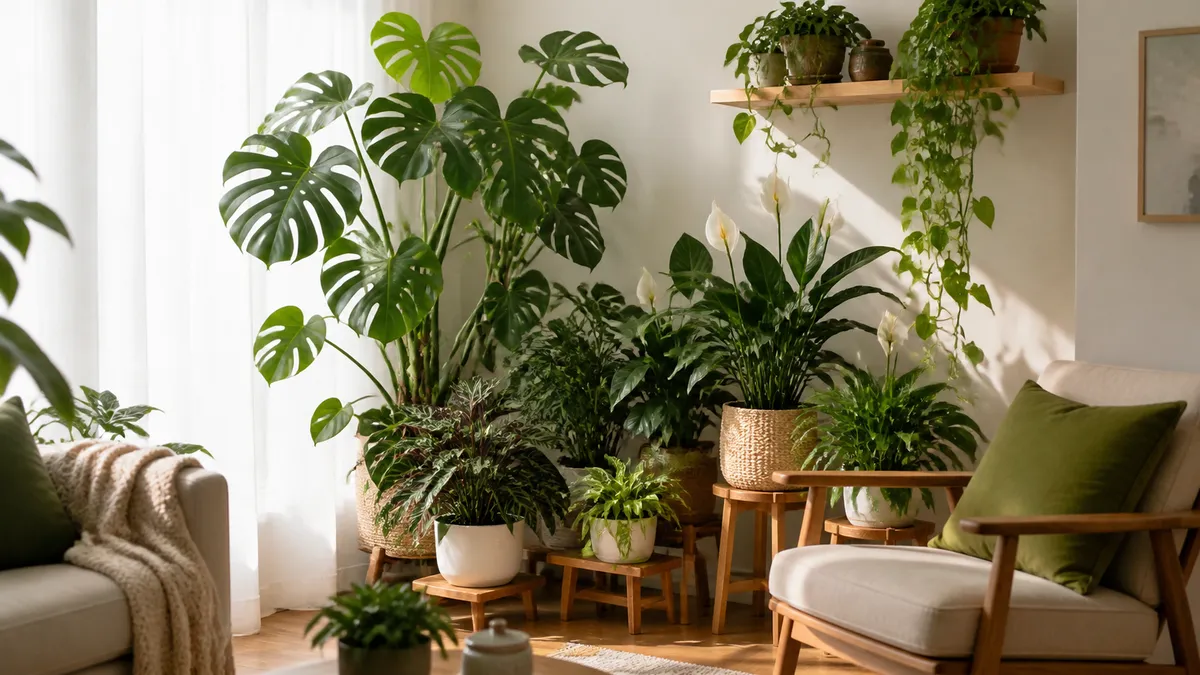
Every room has a corner that collects dust, a jacket, or nothing at all. Two walls meet, the angle feels awkward, and you walk past it without a second thought.
That corner is the easiest win in plant styling. A tall anchor, one trailing vine, and a mid-height accent turn dead space into a display people actually notice.
These plant corner ideas start with the space you have and build from there.
- 1The bright window corner
- 2The low-light hallway corner
- 3The staircase landing corner
- 4The reading nook corner
- 5The bathroom corner
- 6The empty fireplace corner
- 7The bedroom dresser corner
- 8The kitchen window corner
- 9The floating shelf corner stack
- 10The minimalist single-plant corner
- 11The rotating seasonal corner
The Bright Window Corner
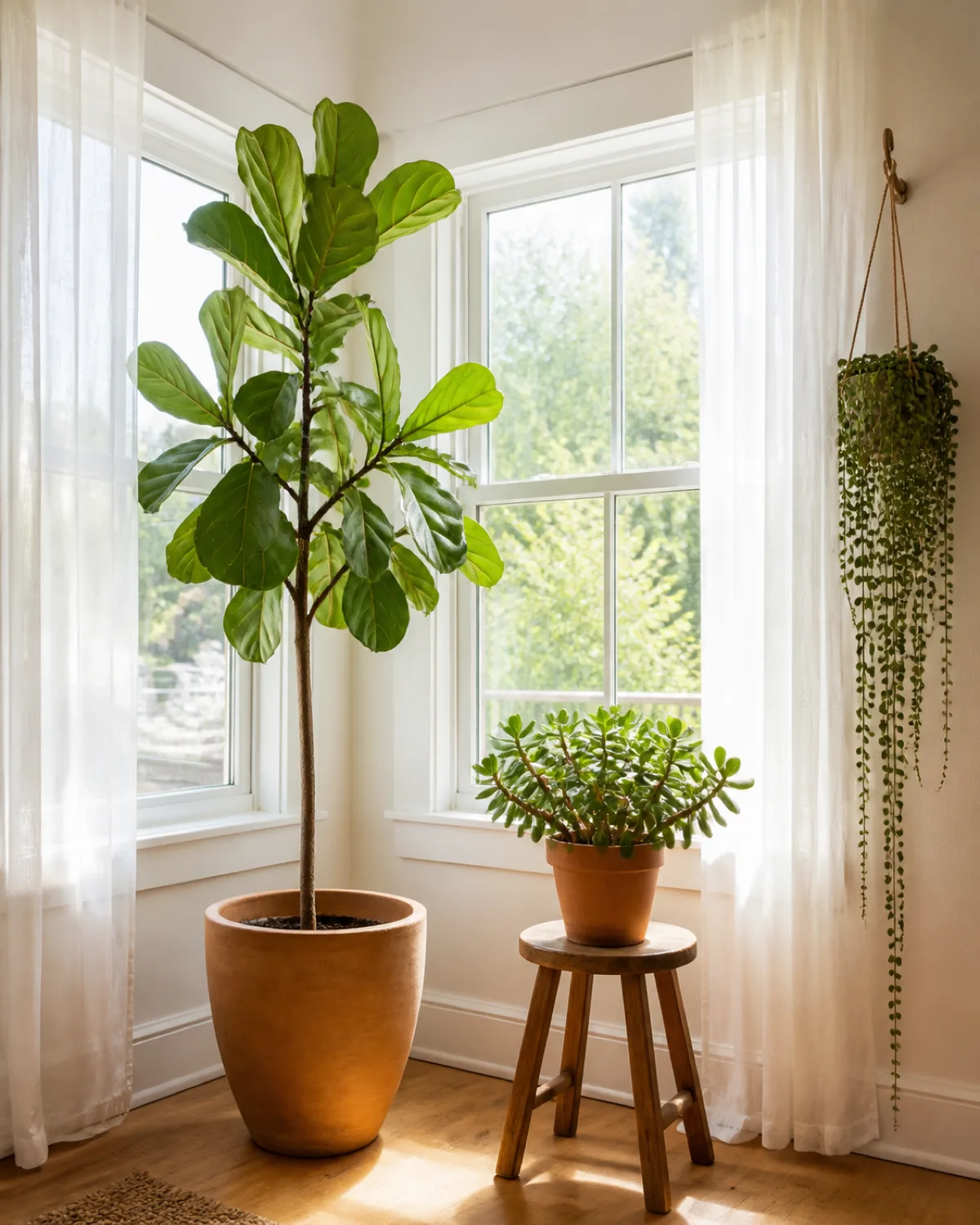
A corner where two windows meet is the most valuable real estate in any room for plants. The dual light source creates a flood of brightness that most single-window spots cannot match, sometimes reaching 800 to 1,000 foot-candles during peak hours.
This is the spot for your most light-hungry plants — the ones that struggle everywhere else indoors.
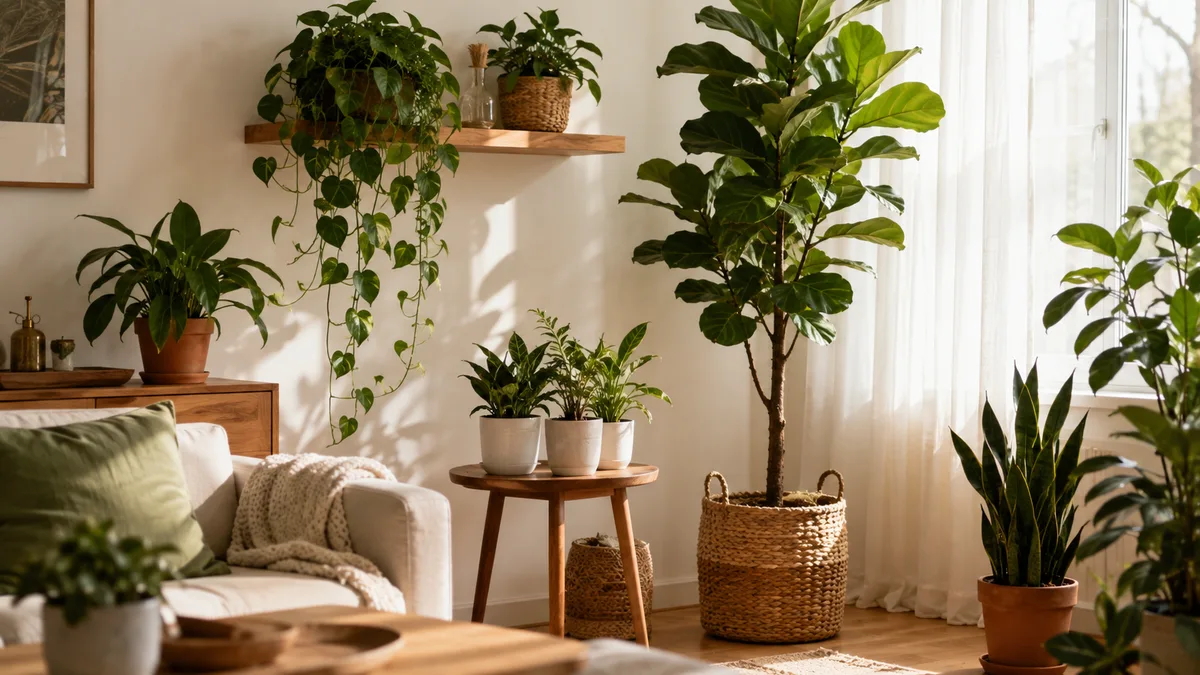
- Floor anchor: A fiddle-leaf fig in a large matte pot, positioned so the canopy catches light from both windows without pressing against the glass
- Mid-height surface: A jade plant on a low wooden stool, getting the direct sun its compact succulent leaves demand
- Trailing element: String of pearls hanging from a wall hook near the window frame, cascading downward and filling the vertical gap between shelf and floor
The three-height layering principle matters here: floor, surface, and overhead. Each level catches its own share of light. Stacking everything at one height leaves half the corner empty and wastes the double-window advantage.
Rotate the floor plant a quarter turn each month. Even with two windows, the side facing the wall will stretch toward the brighter side if left in place.
The Low-Light Hallway Corner
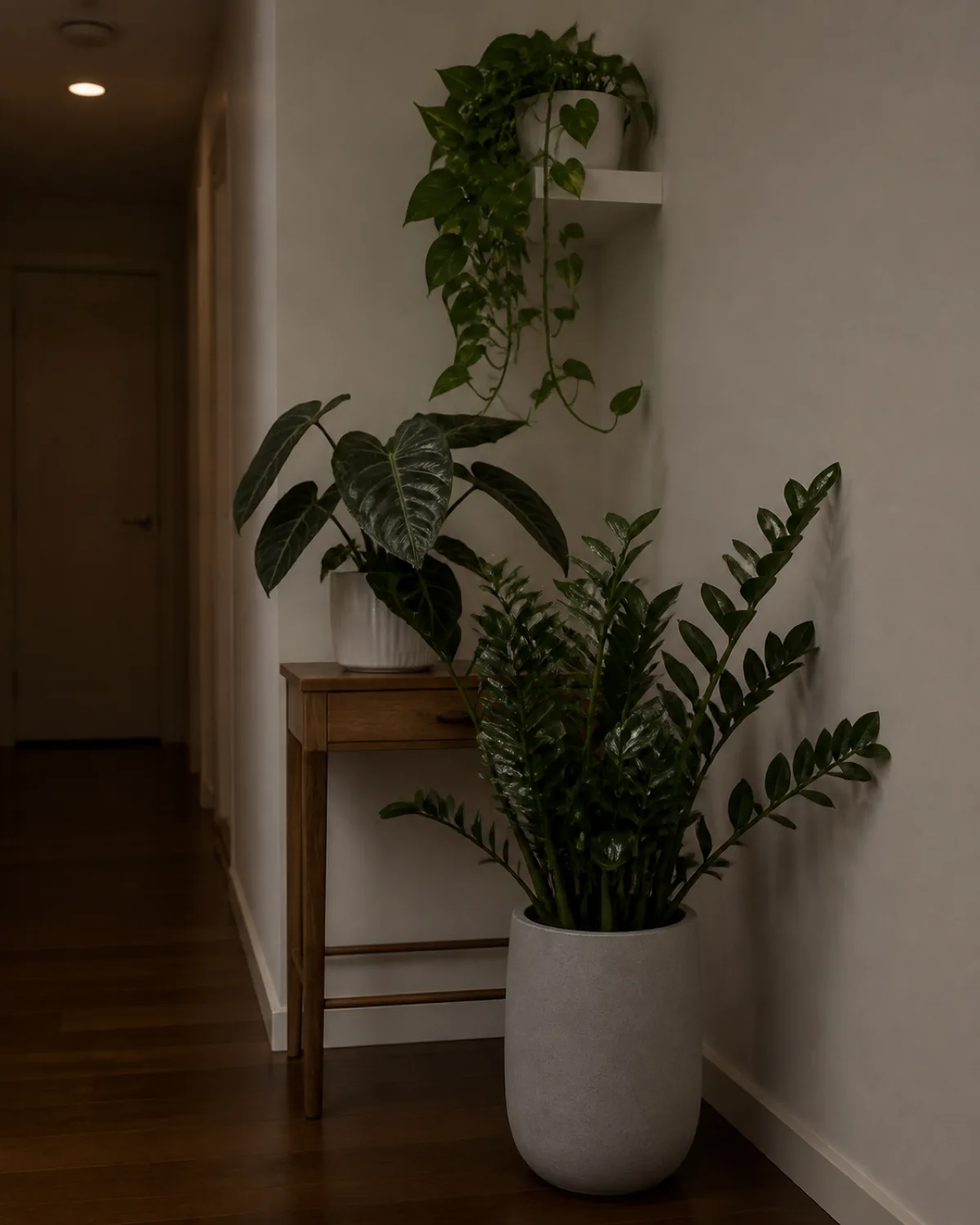
Most hallway corners get less than 50 foot-candles of light — well below what the average houseplant needs. Putting a sun-loving plant here is a slow death sentence.
The handful of species that genuinely tolerate this level of darkness share a common trait: they evolved under dense tropical canopies where direct sunlight never reaches the forest floor.
- Floor anchor: A ZZ plant stores energy in underground rhizomes, so it can survive weeks of near-darkness between whatever ambient light drifts in
- Surface level: A cast iron plant (Aspidistra) earns its name — nearly impossible to kill in low light, and its broad dark leaves actually look healthier in shade than in brightness
- Overhead trailing: Pothos on a wall-mounted shelf, trailing downward to fill the vertical space
Use light-colored pots — white, cream, pale gray — to bounce whatever ambient light exists. In a dark hallway, the planters themselves become visual anchors. A dark pot against a dark wall disappears entirely.
The Staircase Landing Corner
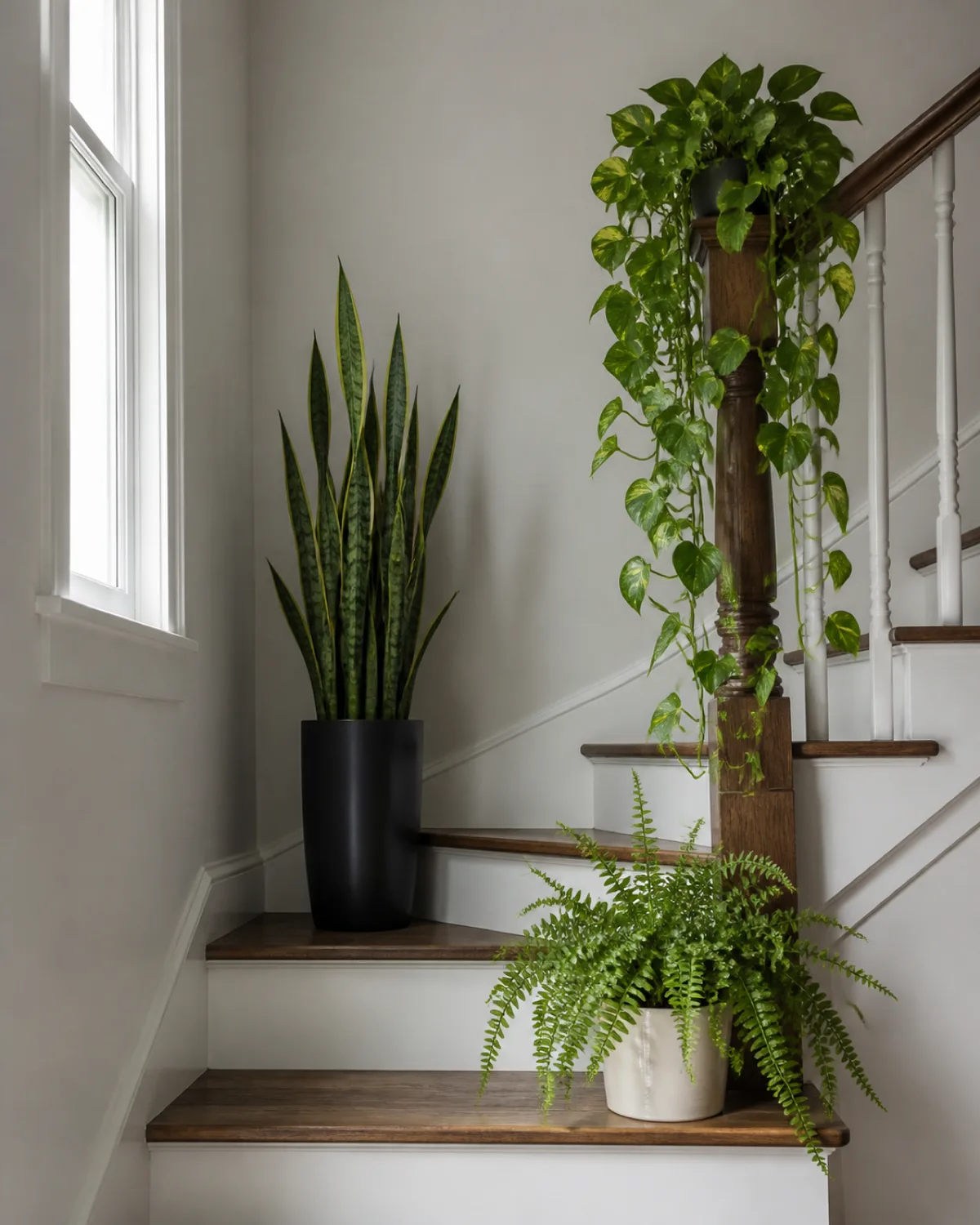
Staircase landings offer something no other corner in the house has: vertical height without ceiling constraints. The open space between floors turns a single snake plant into a dramatic column visible from both levels.
The practical constraint is foot traffic. People walk past this corner dozens of times a day, often carrying laundry baskets or groceries. Every plant and pot needs to stay clear of the path.
- Narrow-profile anchor: A tall snake plant with sword-like upright leaves that grow vertically, not outward — it occupies minimal floor width while commanding height
- Trailing cascade: Pothos in a pot on the railing post or a high shelf, trailing downward along the stairwell to connect the upper and lower levels visually
- Step accent: A compact Boston fern on a wide step or landing ledge, adding texture without blocking foot traffic
Choose lightweight pots — fiberglass or high-quality plastic — rather than heavy ceramic. A knocked-over terracotta pot on a staircase is a safety hazard. Keep the pot diameter under 25 percent of the available landing width.
The Reading Nook Corner
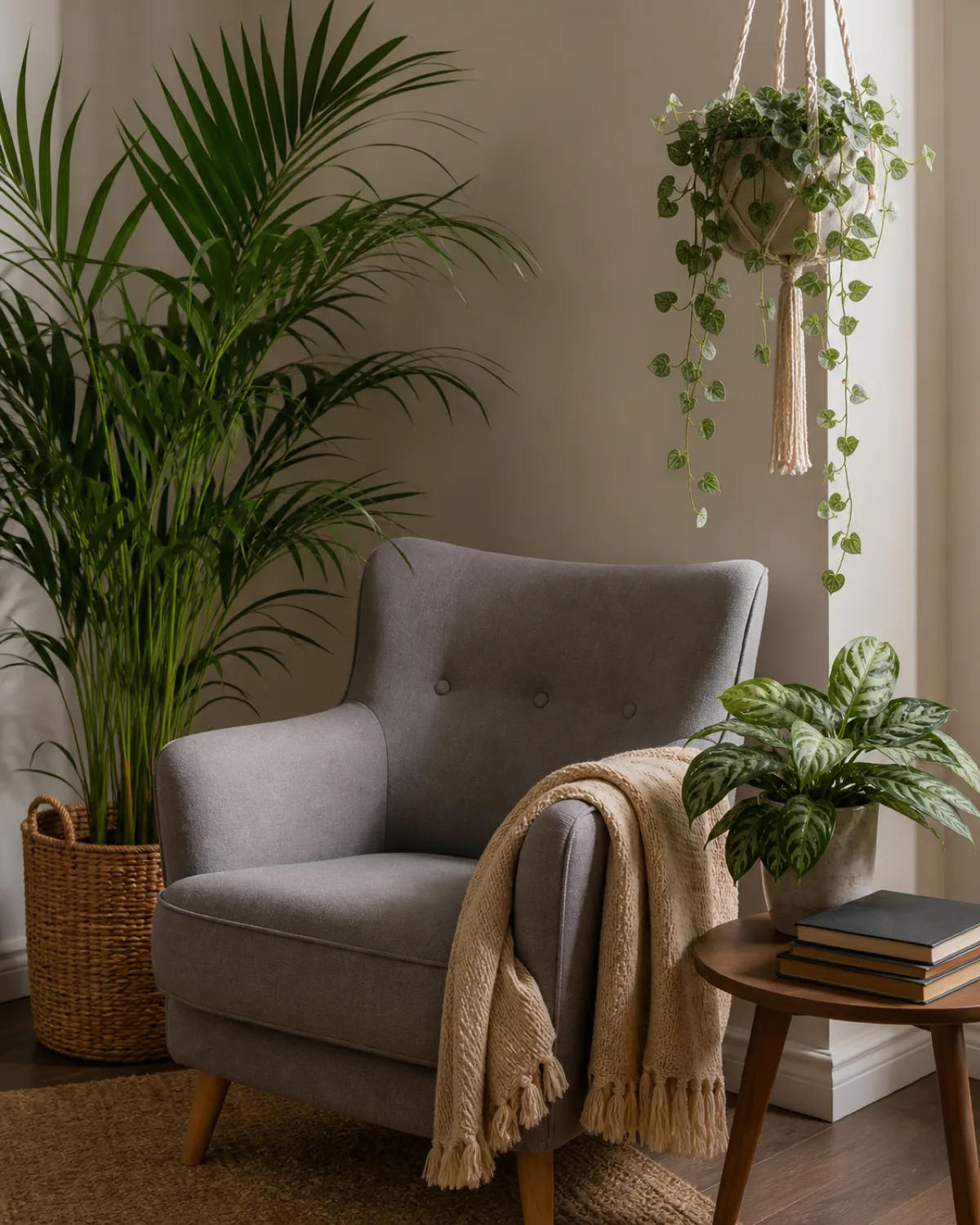
A reading corner already has a purpose — sitting, focusing, relaxing. Plants in this space should enhance the atmosphere without competing for attention or blocking the reading light.
The key constraint is position relative to the seated person. Plants that sit at eye level on the same surface as a book or lamp get in the way. Plants that rise above or rest below the sightline become living backdrop.
- Background screen: An areca palm behind the chair in a woven rattan basket, its feathery fronds creating a green canopy overhead
- Low surface accent: A Chinese evergreen with silver-green patterned leaves on the side table — compact enough to share space with a cup and a book
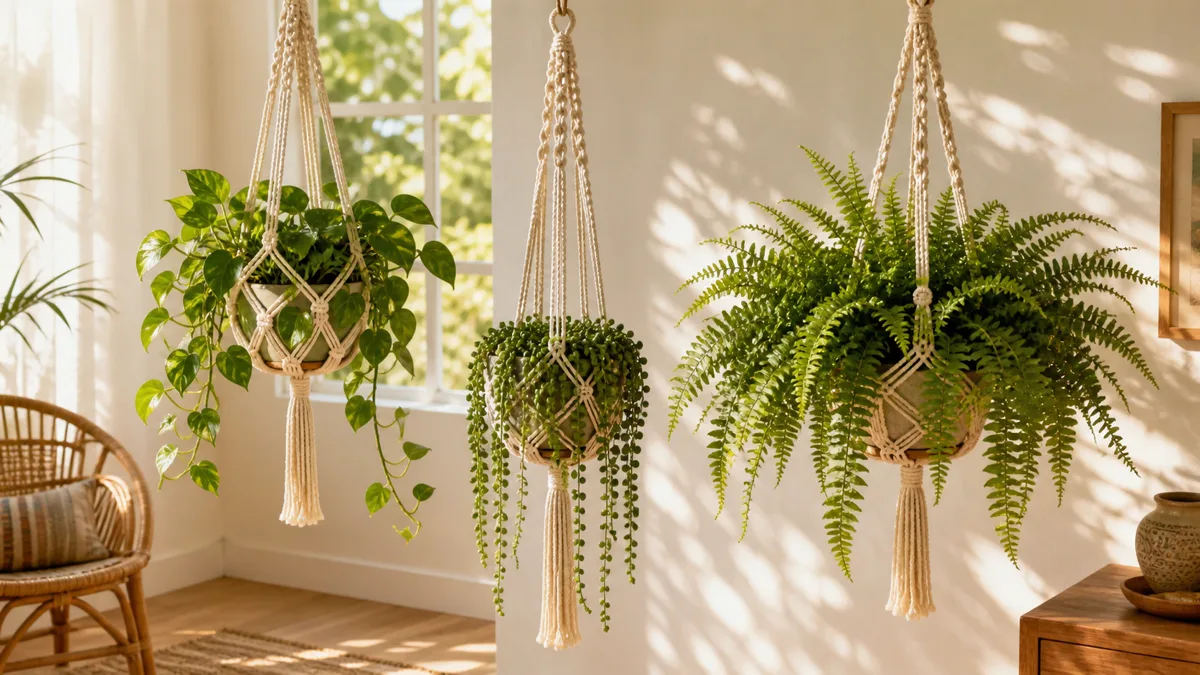
- Overhead trailing: String of hearts in a macrame hanger, its delicate cascading vines adding movement without mass
Stick with soft, rounded leaf shapes for this corner. Spiky or rigid plants — cacti, agave, large-toothed aloe — clash with the relaxed energy of a reading space. Match pot colors to the room's soft furnishings (cushion, throw, rug) for a cohesive look.
The Bathroom Corner
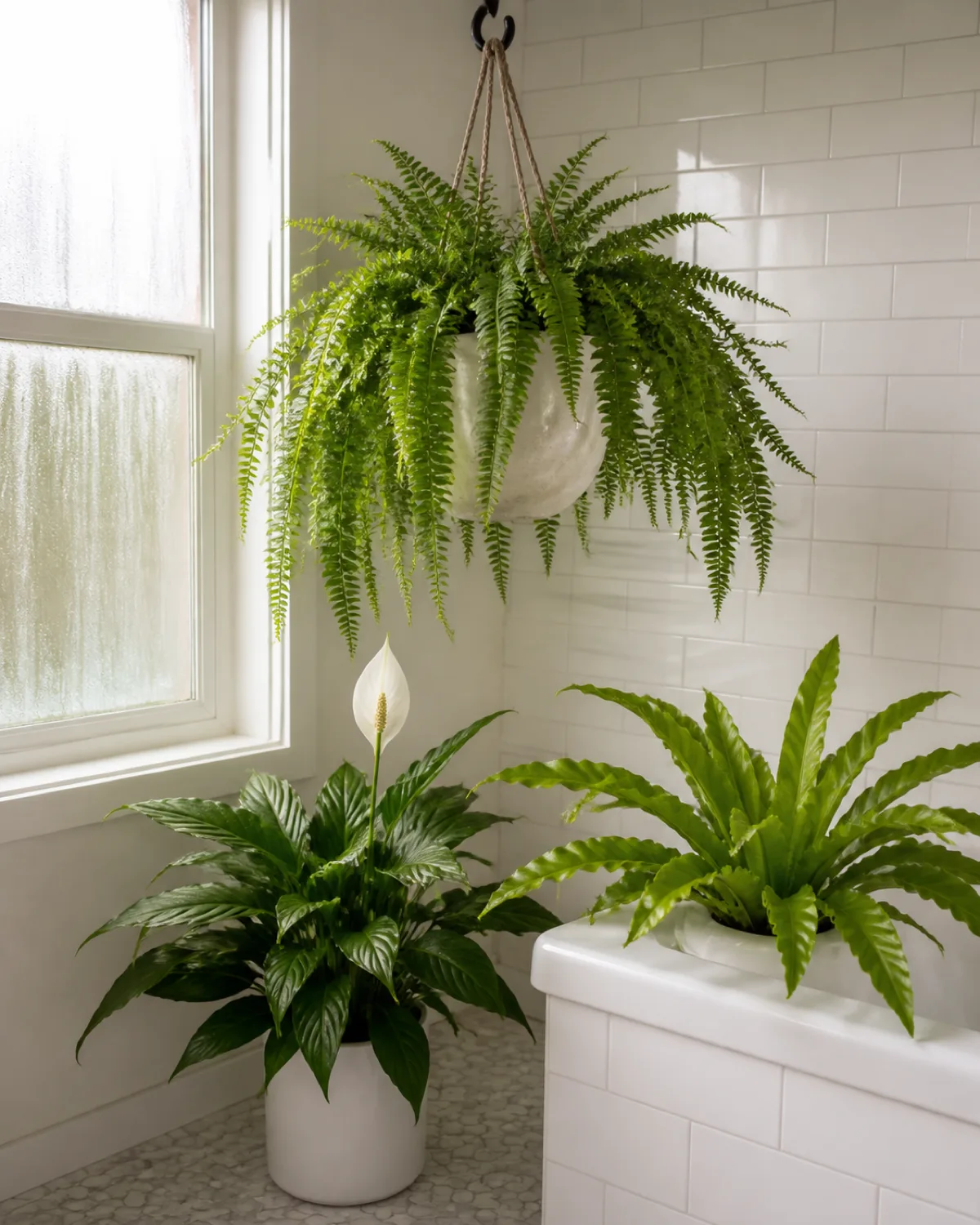
The corner of a bathroom replicates conditions most tropical houseplants evolved in: warm temperatures, humidity between 60 and 80 percent, and filtered light. This makes bathroom corners one of the lowest-effort plant spots in any home.
Species that struggle in dry living rooms — ferns, calatheas, prayer plants — often recover and thrive once moved to a bathroom corner where daily showers keep the air consistently moist.
- Hanging focal point: A Boston fern suspended from a ceiling hook, its fronds cascading downward in the steamy air — this plant visibly perks up in high humidity
- Floor anchor: A peace lily that tolerates low light and rewards bathroom conditions with more frequent blooms
- Surface accent: A bird's nest fern with crinkled bright green rosette leaves on the bathtub ledge or a small shelf
Raise pots off the floor with a plant stand or tray to keep drainage holes clear and prevent standing water underneath. Choose pots with drainage — sealed decorative pots in a steamy room are a recipe for root rot no matter how careful you are with watering.
The Empty Fireplace Corner
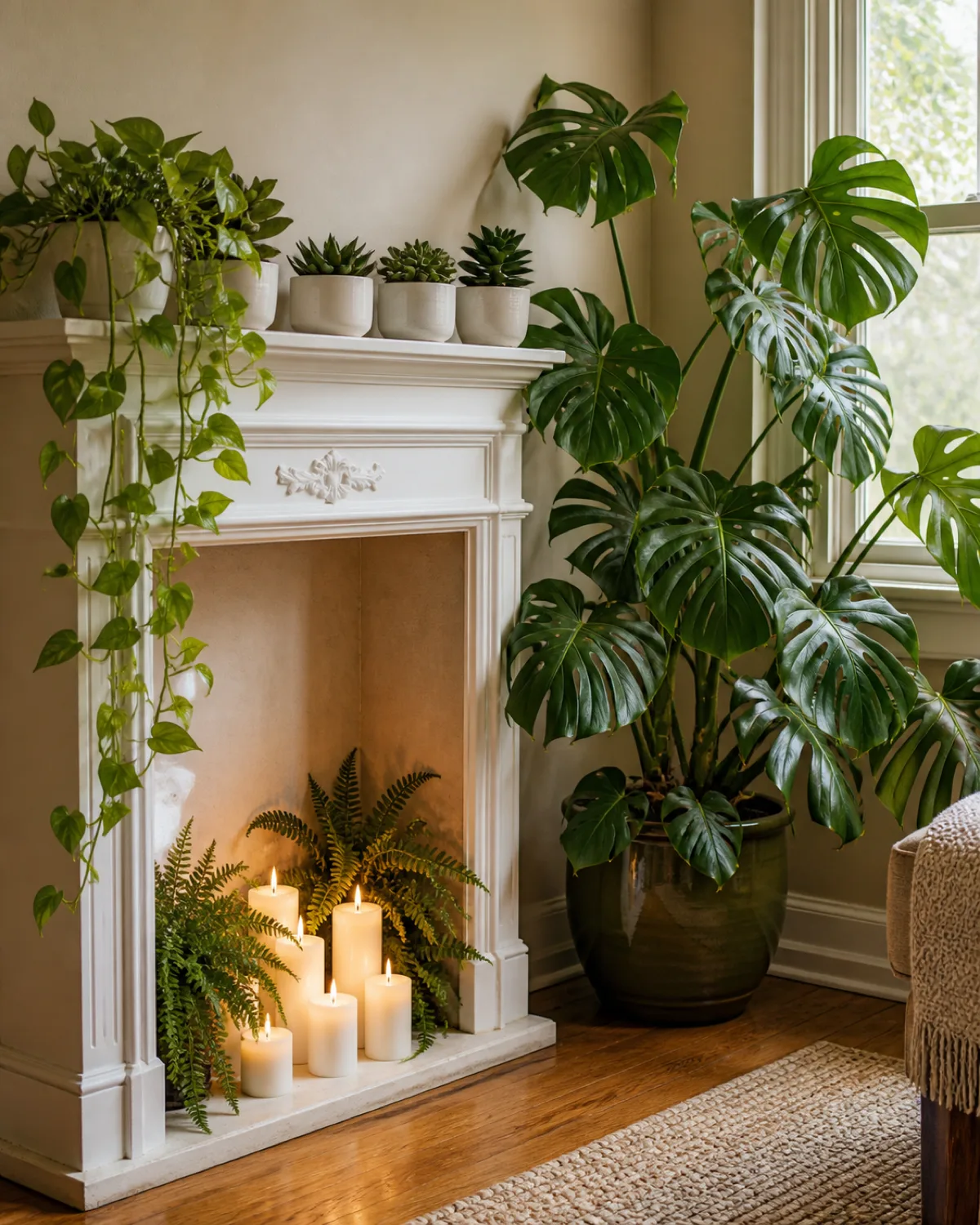
A fireplace is already the architectural focal point of a room. The corner next to it borrows that visual gravity — people's eyes are drawn to the fireplace area automatically, so any plant placed beside it gets noticed without effort.
The mantelpiece and the space inside an unused firebox offer two bonus display zones that most rooms simply do not have.
- Statement piece beside the hearth: A monstera in a large pot, its fenestrated leaves creating bold silhouettes against the wall — choose a pot that clears the mantel height by at least two-thirds to avoid looking dwarfed
- Mantel display: Small succulents in matching pots across the mantelpiece, spaced evenly for a gallery effect
- Inside the firebox (non-use season): A cluster of pillar candles surrounded by small ferns turns the empty cavity into a green-and-candlelight installation
Scale matters more than species here. A plant that reaches only halfway up the mantel looks timid beside a fireplace. Aim for a main plant that stands at least as tall as the mantel shelf for proper visual weight.
The Bedroom Dresser Corner
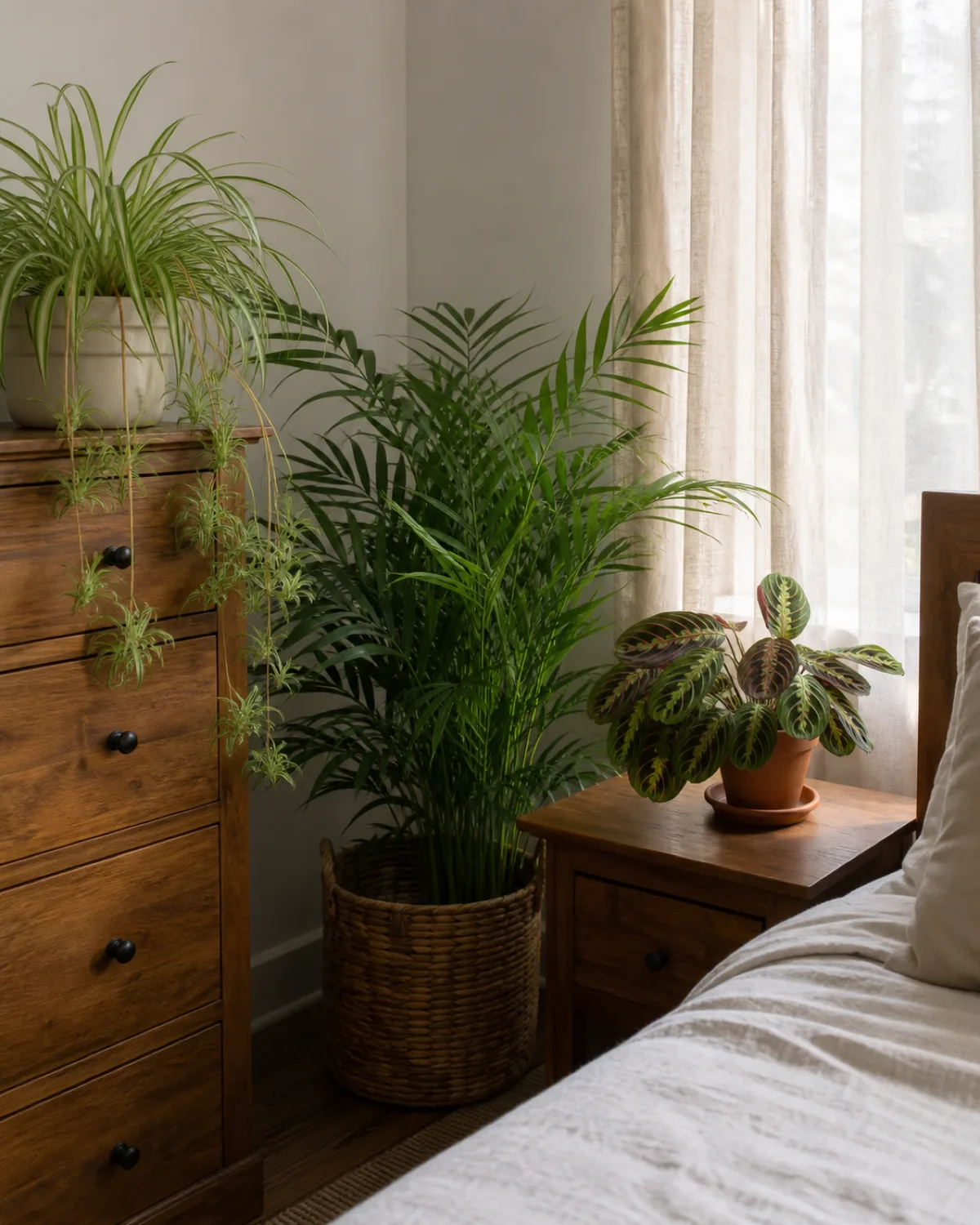
Bedroom corners sit within arm's reach while you sleep — six to eight hours a night. The first design constraint here is not light or humidity, but safety.
If you have cats, dogs, or young children, every plant in the bedroom needs to be ASPCA non-toxic. A curious cat chewing a toxic philodendron at 3 AM is not a risk worth taking for aesthetics.
- Dresser-top: A spider plant — non-toxic, produces dangling baby plantlets that add visual interest, and fits the informal feel of a dresser surface
- Nightstand accent: A prayer plant — non-toxic, and its leaves fold upward at night in a nyctinastic response that gives the bedroom a living, breathing quality after dark
- Floor filler: A parlor palm — non-toxic, soft arching fronds, stays compact enough to fit between the dresser and the bed frame
Choose lightweight, stable-base pots for any surface a pet or child can reach. A top-heavy ceramic planter on a nightstand is one tail-swipe away from a midnight crash.
The Kitchen Window Corner
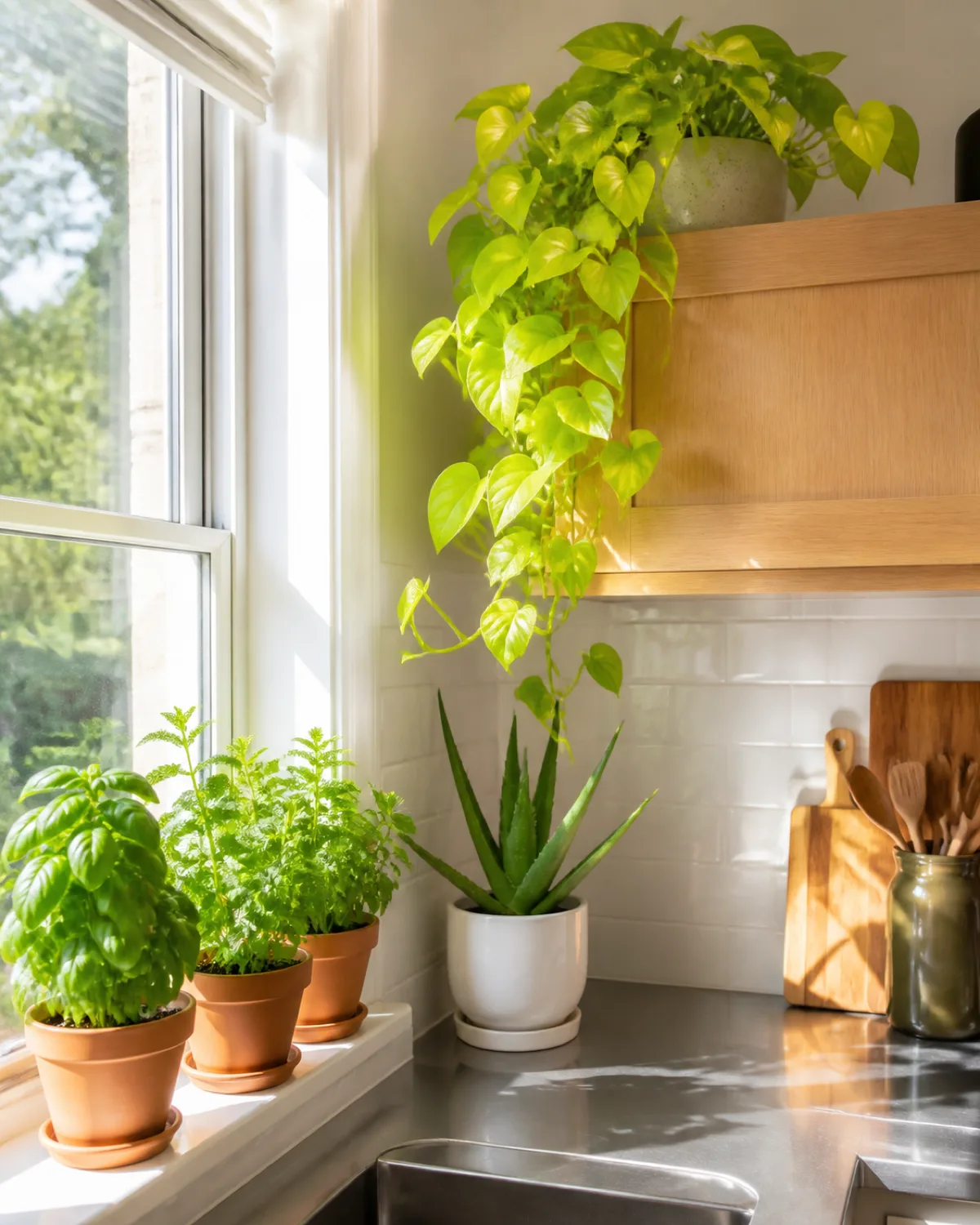
Kitchen corners deal with conditions no other room produces: cooking fumes, grease film, heat blasts from the oven, and steam from the stove. These factors limit your species choices in specific ways.
Glossy-leaved plants handle kitchen air better than fuzzy or textured-leaf varieties. Grease particles settle on every surface near the stove, and a smooth leaf (pothos, Chinese evergreen) wipes clean in seconds. A fuzzy leaf (African violet) traps grease in its hairs permanently.
- Windowsill herbs: Basil and mint in small terracotta pots catching direct sunlight — the only plant corner ideas that feed you back
- Countertop corner: An aloe vera in a compact white pot — occasional gel harvest for minor burns makes it functional beyond decoration
- Upper cabinet trail: Pothos draped from a pot on top of the upper cabinets, its vines cascading along the cabinet face
Keep at least one edible or useful plant in the kitchen corner. A purely decorative arrangement in a kitchen misses the room's defining advantage — it is the one space where a plant can serve a practical purpose every day.
The Floating Shelf Corner Stack
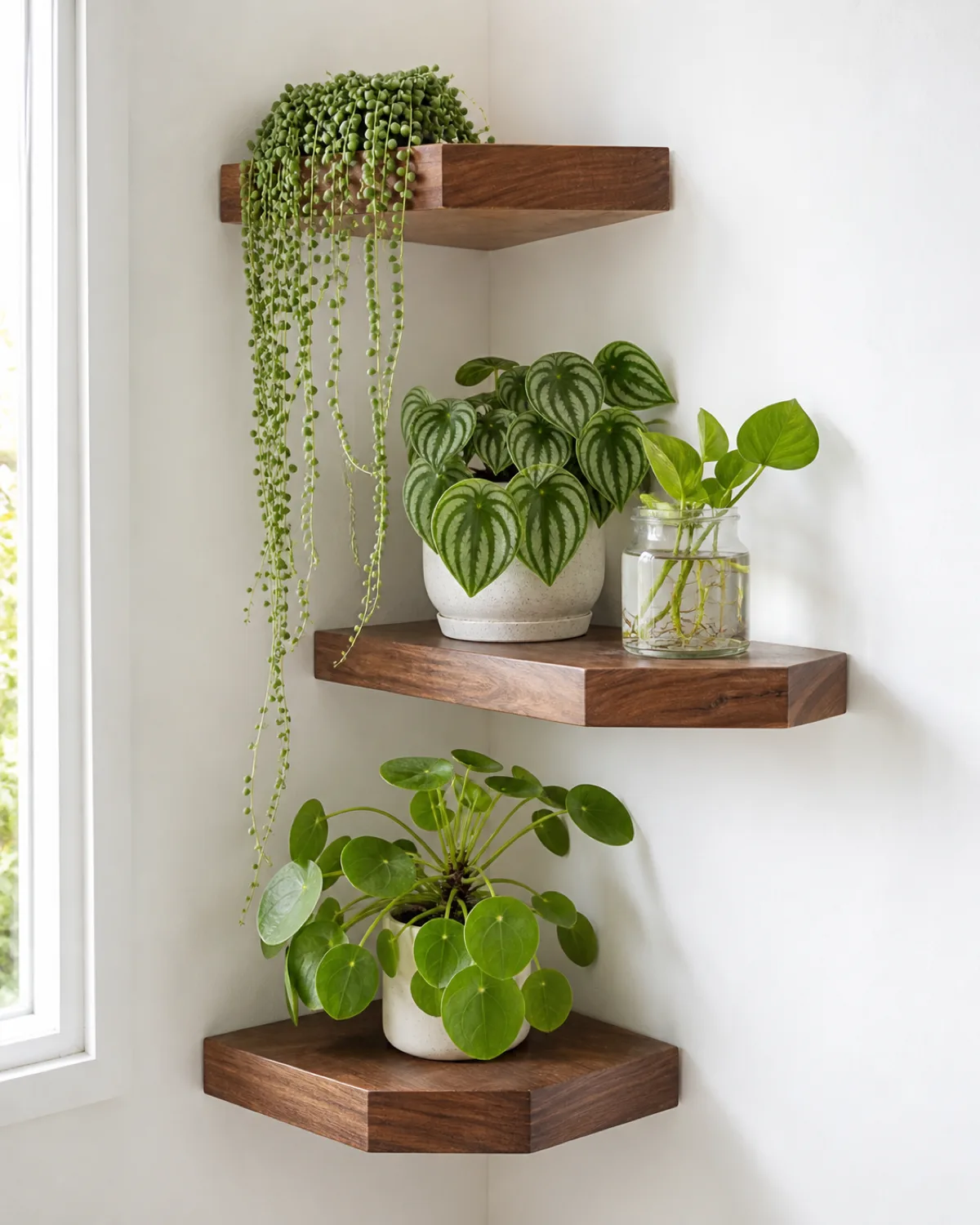
Floating shelves in a corner convert a zero-use vertical surface into a gallery-style display. Two or three shelves at staggered heights create the visual density of a bookcase without any floor-level furniture.
The 90-degree angle where walls meet provides natural structural support for brackets, and the corner position keeps the shelves out of traffic paths.
- Top shelf: String of pearls trailing downward toward the middle shelf, bridging the gap between levels
- Middle shelf: A compact peperomia alongside a small propagation jar with pothos cuttings rooting in water — mixing live plants with propagation projects adds visual variety
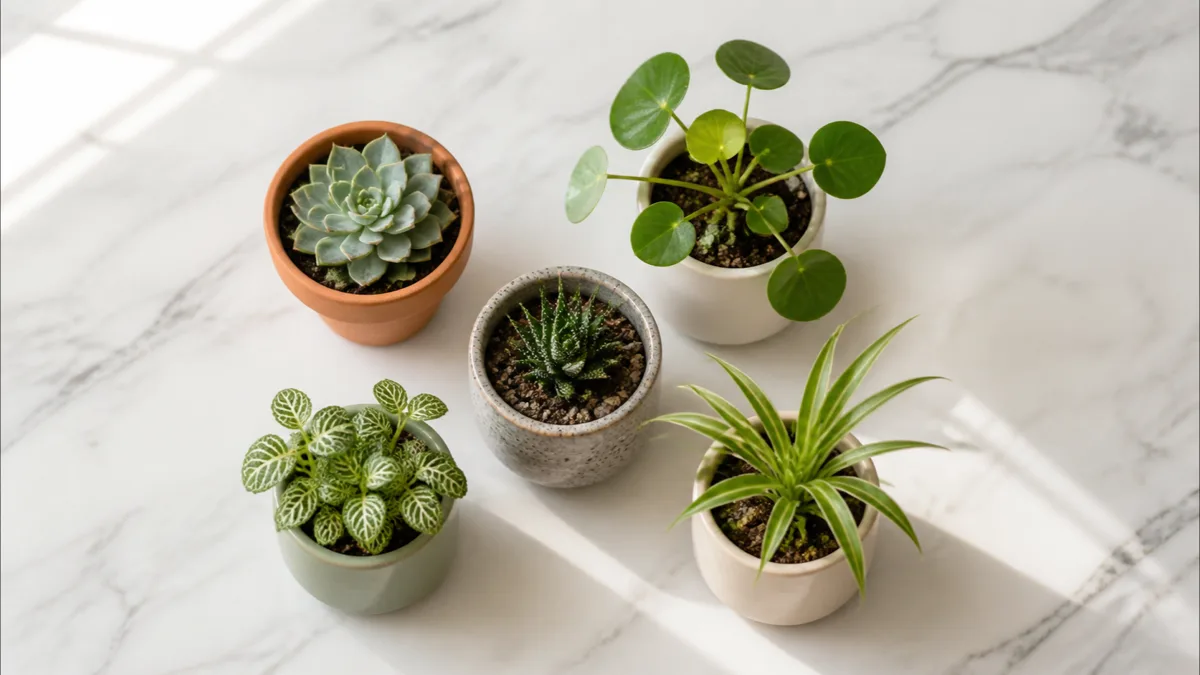
- Bottom shelf: A pilea peperomioides with its distinctive round pancake leaves, positioned where it catches the most ambient light from the room
Space shelves 12 to 16 inches apart. Tighter spacing blocks light to lower shelves and makes watering nearly impossible without removing every pot. Keep the highest shelf at or below eye level — a shelf you cannot see is a shelf you will forget to water.
Save this corner checklist
- 1Bright window cornerFiddle-leaf fig + jade plant + string of pearls. Three heights, dual window light, quarter-turn rotation monthly.
- 2Low-light hallway cornerZZ plant + cast iron plant + pothos. Light-colored pots to bounce ambient light in dark spaces.
- 3Staircase landing cornerSnake plant + trailing pothos + compact fern. Lightweight pots, narrow profiles, clear the walking path.
- 4Reading nook cornerAreca palm + Chinese evergreen + string of hearts. Plants above and below sightline, never at eye level.
- 5Bathroom cornerBoston fern + peace lily + bird's nest fern. High humidity is a feature here, not a problem.
- 6Fireplace cornerMonstera + mantel succulents + firebox fern cluster. Plant height must match or exceed mantel height.
- 7Bedroom dresser cornerSpider plant + prayer plant + parlor palm. All ASPCA non-toxic, lightweight stable-base pots.
- 8Kitchen window cornerHerbs + aloe vera + trailing pothos. At least one edible or useful plant in every kitchen corner.
- 9Floating shelf corner stackString of pearls + peperomia + pilea. Shelves 12-16 inches apart, highest shelf at or below eye level.
- 10Minimalist single-plant cornerOne large statement plant, oversized pot, nothing else. The empty space is the design element.
- 11Rotating seasonal cornerTwo matched pot sets, swap by season. Grow light in winter, outdoor-summered plants in warm months.
kultivy.com
The Minimalist Single-Plant Corner
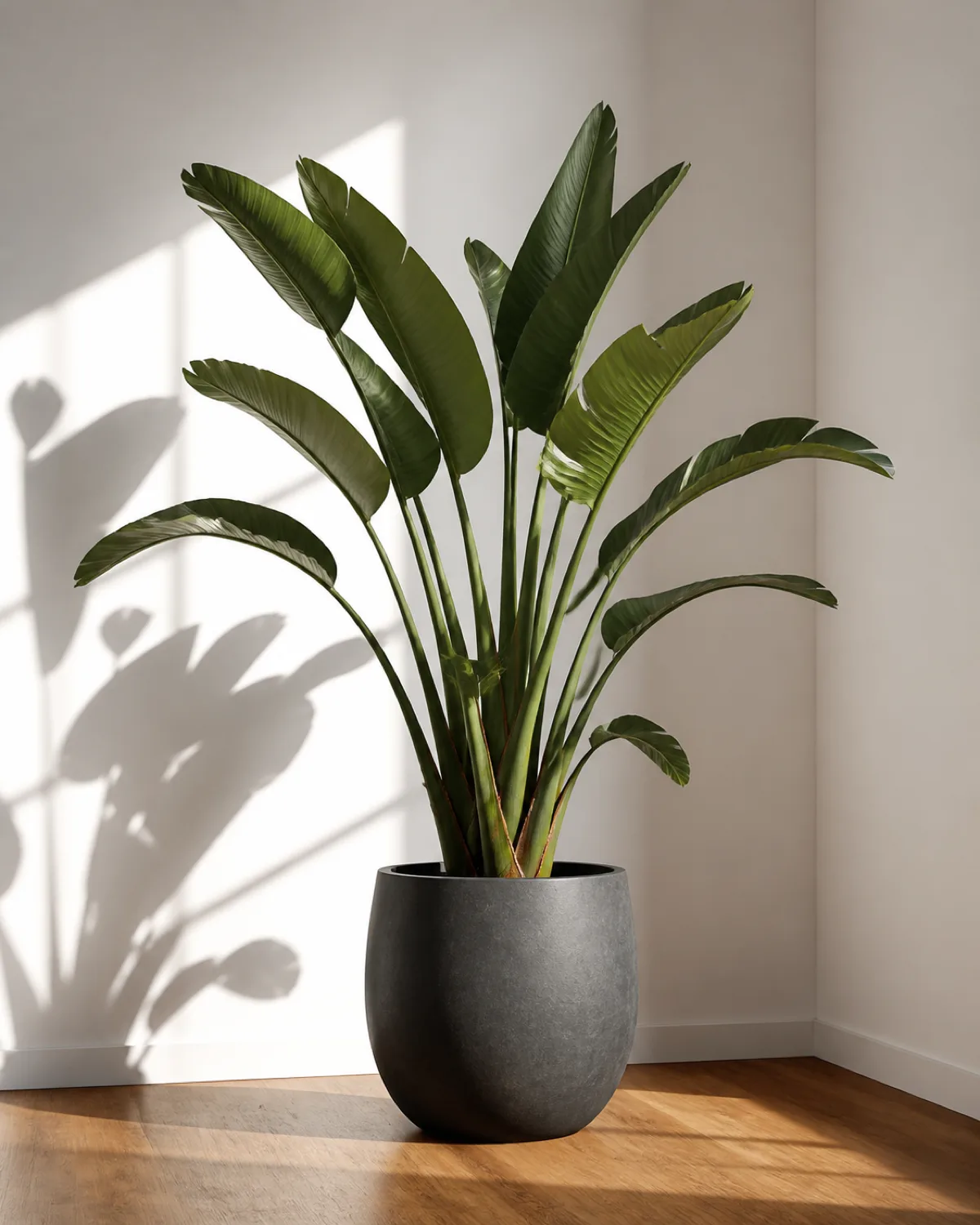
Sometimes one plant is enough. A single large specimen in an otherwise empty corner becomes a living sculpture — and the negative space around it is what makes the statement work.
The 90-degree angle of the corner walls acts as a natural frame, the same way a gallery frames a painting with empty wall on either side. Adding more plants to this setup dilutes the effect.
Choose a species with a strong silhouette:
- Bird of paradise: Broad paddle leaves fanning outward create the boldest shape in any room — the plant equivalent of a floor-to-ceiling artwork
- Fiddle-leaf fig: Large violin-shaped leaves on a single trunk, casting dramatic shadows on adjacent walls when side-lit
- Monstera: Fenestrated leaves let light pass through the holes, creating complex shadow patterns that change throughout the day
Pick one. Do not mix.
The pot matters as much as the plant in a minimalist setup. Use an oversized matte ceramic — the pot diameter should be at least 60 percent of the plant's canopy width. Solid color, no pattern. The pot is a design element here, not just a container.
The Rotating Seasonal Corner
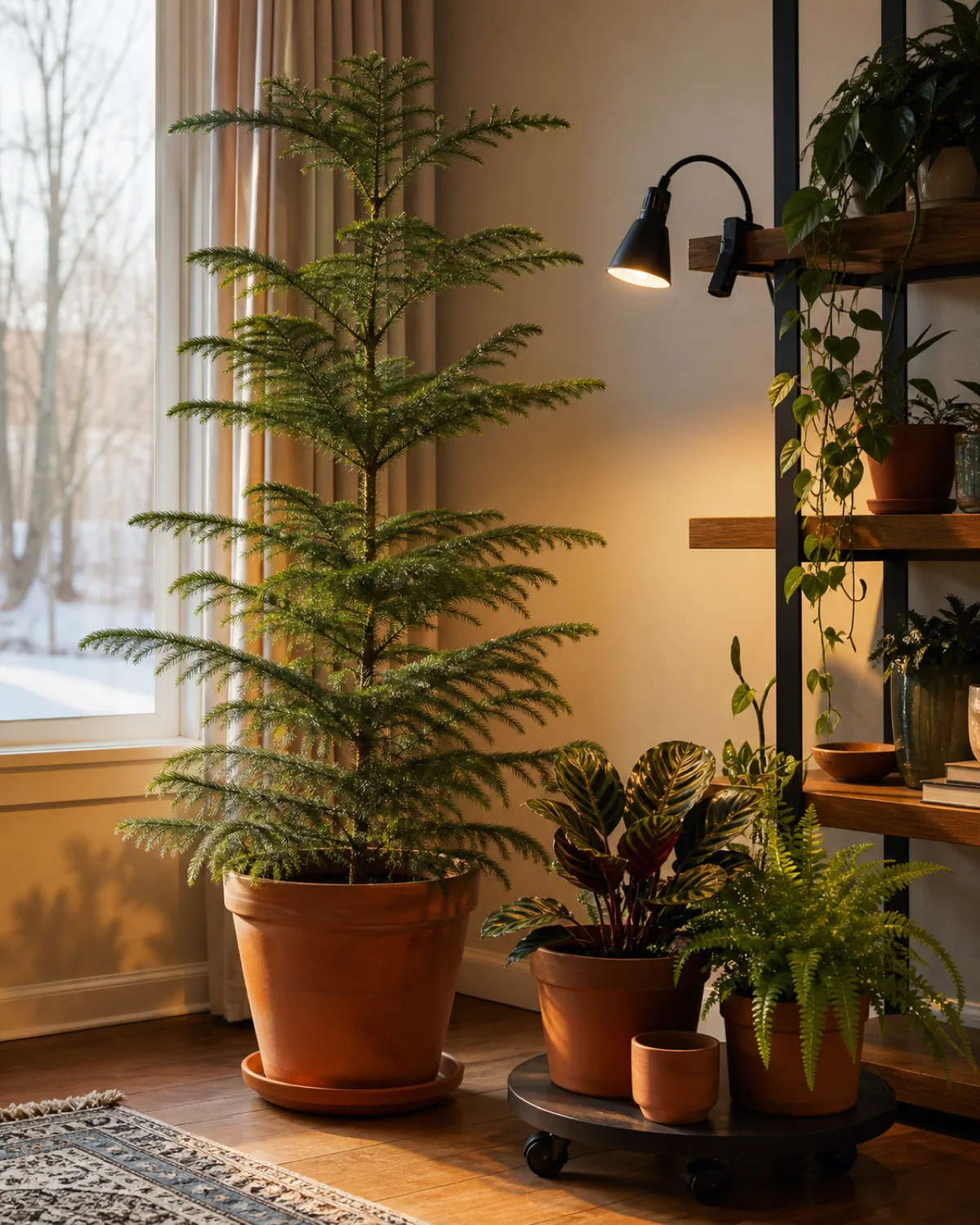
Most plant corner setups assume the arrangement stays fixed year-round. In practice, some plants need more light in winter, others benefit from outdoor time in summer, and a few go dormant entirely. A rotating corner embraces this instead of fighting it.
The concept is simple: treat the corner as a display slot, not a permanent home. Prepare two sets of plants in matched pots, and swap them by season.
- Winter set: A Norfolk Island pine or snake plant paired with a grow light clipped to a nearby shelf, compensating for shorter daylight hours
- Summer set: Tropical plants that spent the summer outdoors — calathea, fern, prayer plant — brought back inside before temperatures drop below 55°F, refreshed and vigorous from months of natural humidity and filtered sun
Keep both pot sets in the same style and color palette so the corner looks intentional regardless of which set is on display. The reserve set stays in a backup location — a utility room, a shaded patio, a guest bedroom — recovering or resting until its season returns.
Inspect every plant for hitchhiker pests before bringing outdoor-summered specimens back to the corner. Spider mites, aphids, and mealybugs ride indoors on foliage and can spread to every plant in the house within weeks.

Mara Quinn edits Kultivy, where she shares houseplant care, propagation, beginner-friendly plant picks, and plant-styling ideas for anyone who wants their indoor plants to actually thrive. Every guide is image-led and reviewed for clarity, usefulness, image accuracy, and Pinterest-to-page alignment before it goes live. Visit the About page.