Bird of paradise is the plant people buy when they want their living room to look like a tropical resort. The wide paddle leaves, the towering stems, the sheer scale of it — nothing else in the houseplant world delivers the same visual impact.
Then it starts leaning sideways, the leaves split apart, and it never produces those famous orange flowers.
The problem is almost always light. This plant evolved under the full South African sun, and most indoor spaces simply cannot match that intensity.
What makes bird of paradise a true statement plant
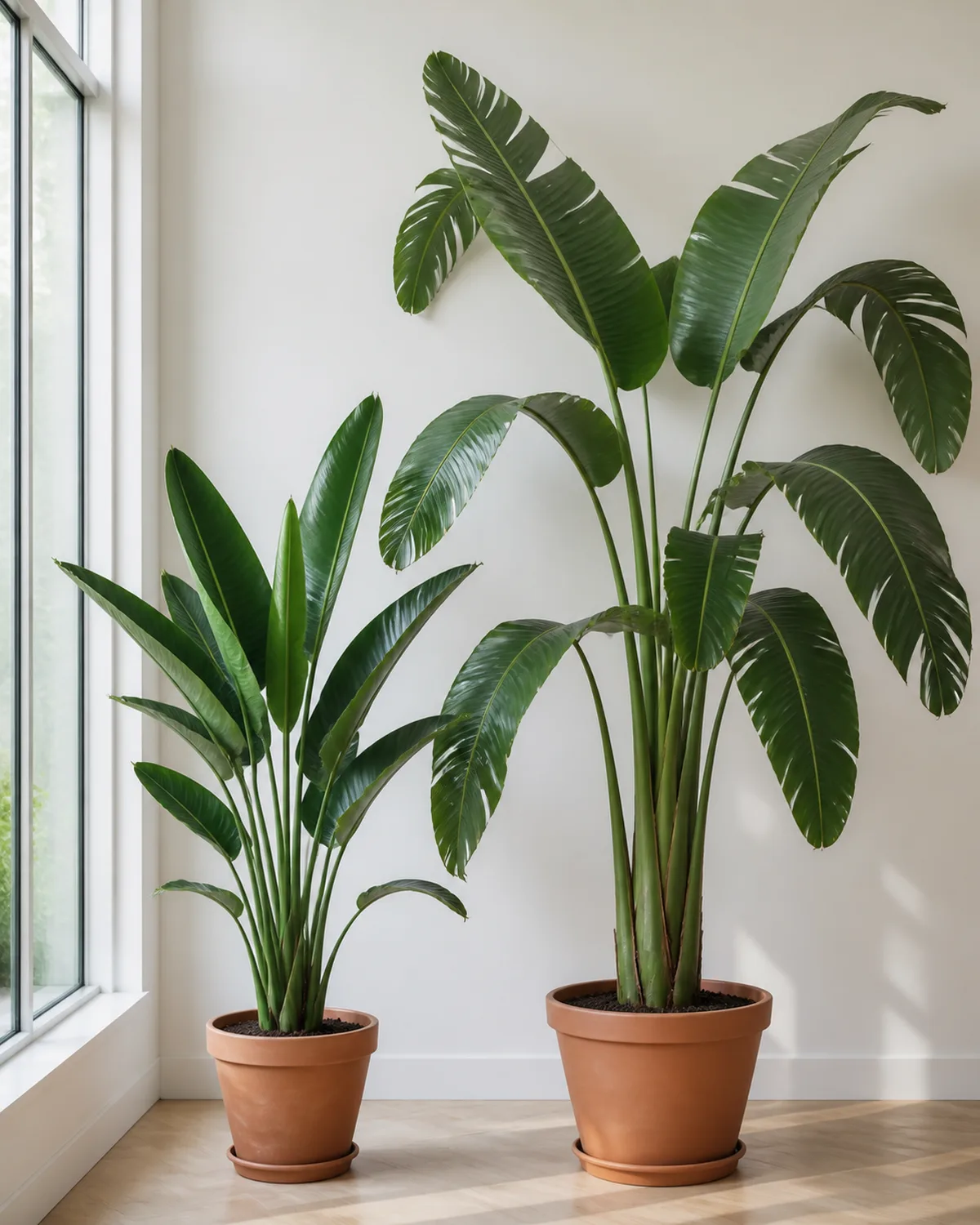
The bird of paradise you see at a garden center is one of two species, and telling them apart before you buy saves months of confused expectations.
Strelitzia reginae — the orange bird of paradise — stays compact at four to six feet. Its leaves are stiff, upright, paddle-shaped, and held on thick petioles. This is the species that produces the iconic orange-and-blue crane-shaped flower, and the one with the best (still slim) chance of blooming indoors.
Strelitzia nicolai — the giant white bird of paradise — is the one most commonly sold as a houseplant despite being far larger. It reaches six to eight feet indoors and up to 30 feet outdoors, with enormous banana-like leaves that can span three to four feet across. Its flower is white and purple, dramatic but almost never seen in indoor cultivation.
- Family: Strelitziaceae — only five species in the entire family, an extremely isolated botanical lineage
- Origin: South Africa — subtropical coastal scrubland and riverbanks, not tropical rainforest
- Growth habit: clump-forming from underground rhizomes, each "stem" is a pseudostem of tightly rolled leaf bases
- New leaves: emerge from the center as tightly rolled spears that slowly unfurl over days to weeks
Both species deliver the banana-leaf tropical aesthetic without being an actual banana plant. They are hardier, more architectural, slower growing, and do not fruit. For a comparison with other tall indoor plants that serve as floor-level statement pieces, that guide covers the full height range.
Two species, four situations — pick the one that fits your light, room size, and household.
Light: the single factor that makes or breaks this plant
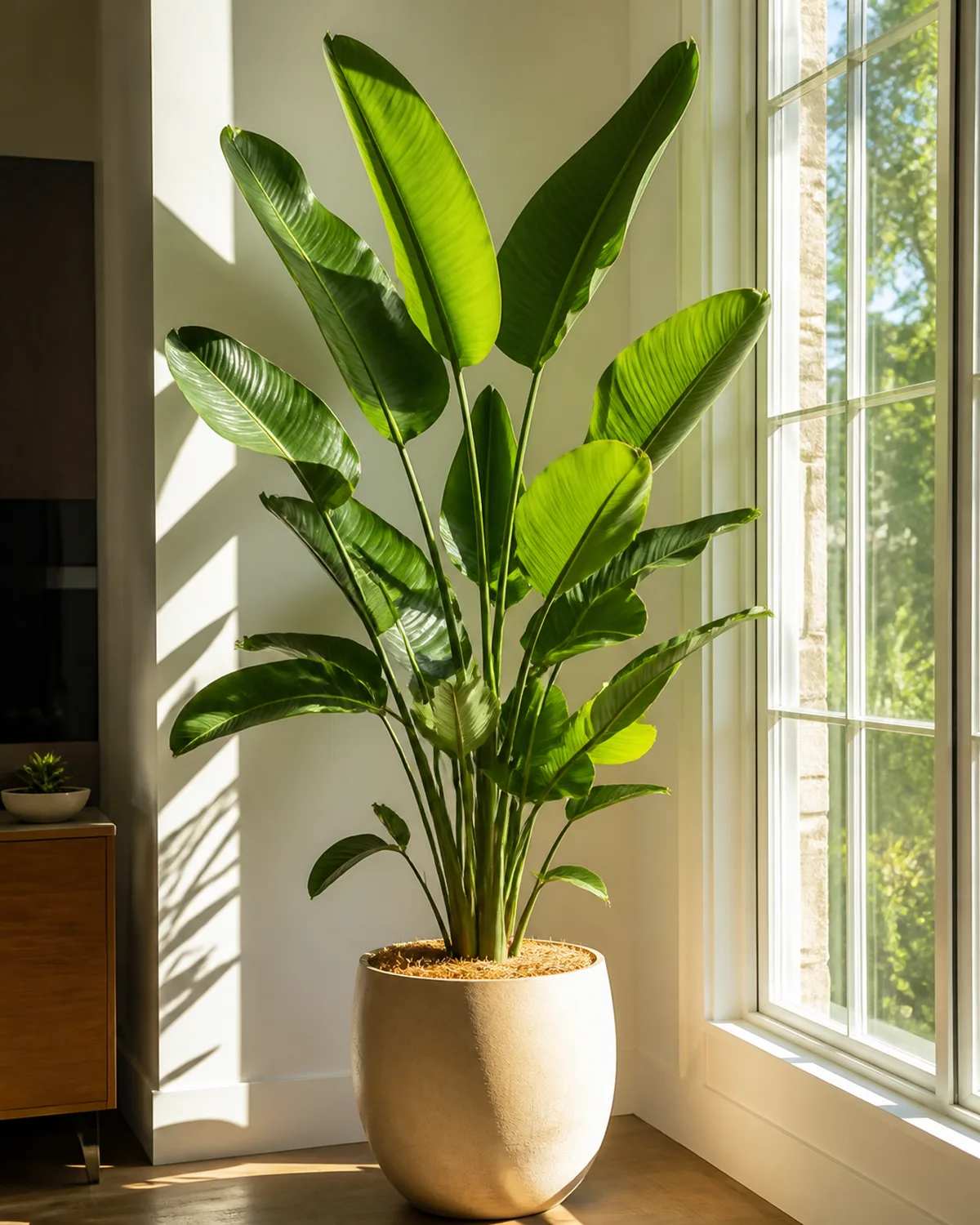
Bird of paradise is one of the most light-hungry houseplants on this entire site. It evolved under the full intensity of the South African sun, and the gap between what it wants and what most living rooms deliver is enormous.
The minimum is six or more hours of bright indirect light daily. The ideal is two to four hours of direct sun — an unobstructed south or west window — with bright indirect light the rest of the day. Nicolai tolerates slightly less than reginae, but both need far more light than most tropical houseplants.
Low light symptoms appear within weeks:
- Dramatic leaning toward the nearest window
- Each new leaf smaller than the one before it
- Leggy, stretched petioles with wide gaps between leaves
- Loss of the upright architectural silhouette that makes the plant worth growing
The indoor reality check is straightforward: most homes do not have enough natural light for bird of paradise to truly thrive. A grow light supplement makes a real difference for any plant positioned more than three to four feet from a bright window.
Rotate the pot 90 degrees every two weeks to maintain symmetrical growth. These plants lean hard toward their light source and will develop a permanent tilt if left in one position.
Outdoor summer placement transforms this plant entirely — three to four months of real outdoor sun produces growth that months of indoor light cannot match. For a deeper look at matching any houseplant to your window direction and intensity, see the light requirements guide.
Watering and humidity: heavy drinker in bright light, rot risk in low
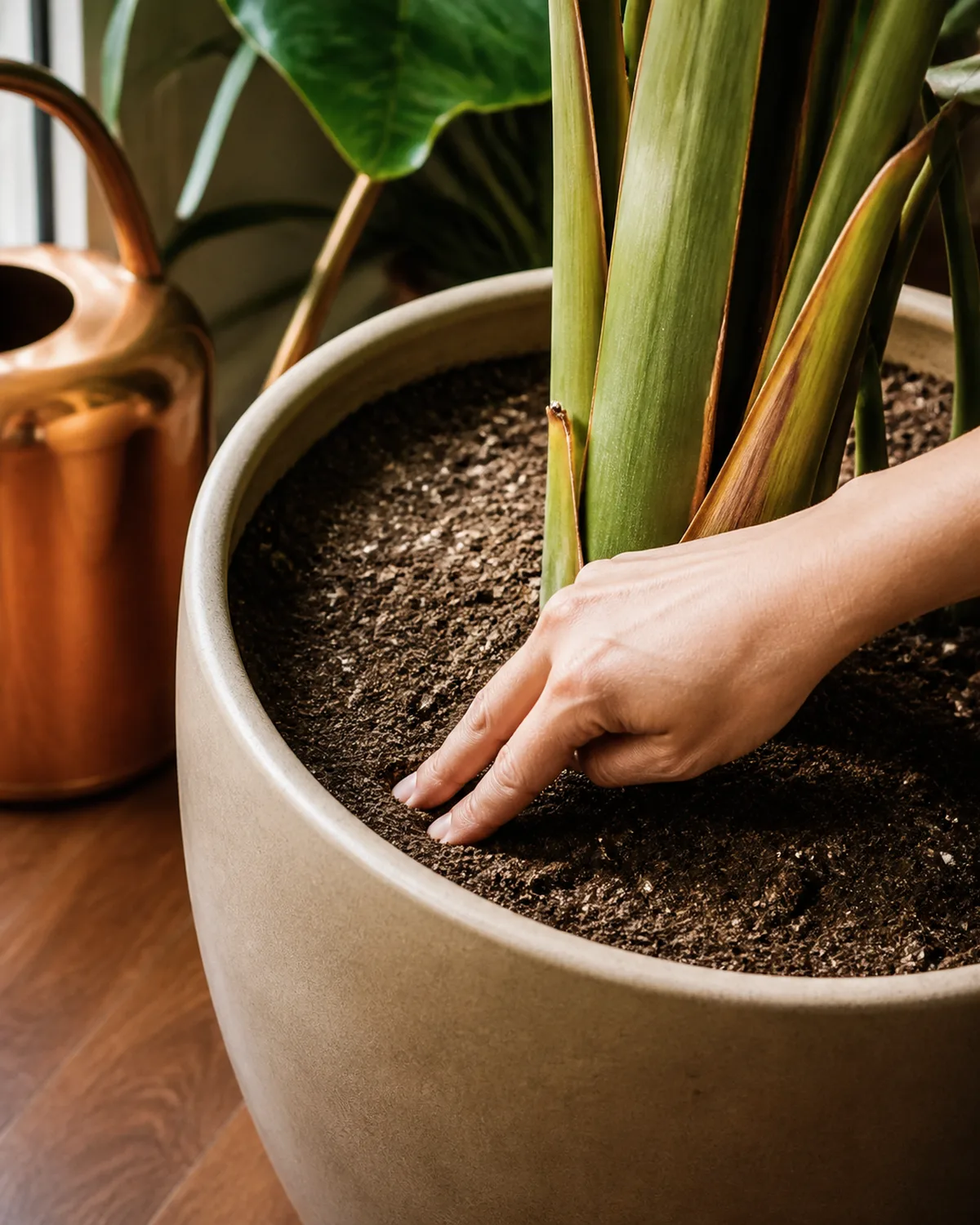
Water bird of paradise thoroughly when the top two inches of soil dry out. During active growth in bright conditions, this means roughly every five to seven days. In winter or lower light, stretch to every 10 to 14 days.
The key principle is that water demand tracks light exposure directly:
- Bright direct sun = fast soil drying = frequent watering
- Dim interior spot = slow drying = infrequent watering
- Schedule-based watering is where most people fail — watering every Tuesday regardless of soil moisture is how this plant gets overwatered in winter
Signs to watch for:
- Overwatering: yellowing lower leaves, mushy stem base, soil staying wet for more than a week
- Underwatering: leaf edges browning and curling inward, leaves splitting more than normal along the midrib, soil pulling away from pot edges
Humidity sits comfortably at 50 to 60 percent, but bird of paradise handles average home humidity better than calatheas or ferns. It is subtropical, not a tropical rainforest species. Misting does almost nothing for a plant this large — the leaf surface area is too vast for a few sprays to matter. A humidifier near the base is more effective during dry winter months.
For the complete watering framework across all houseplant types, see the watering guide.
Why bird of paradise needs a heavy pot and a slightly cramped root ball
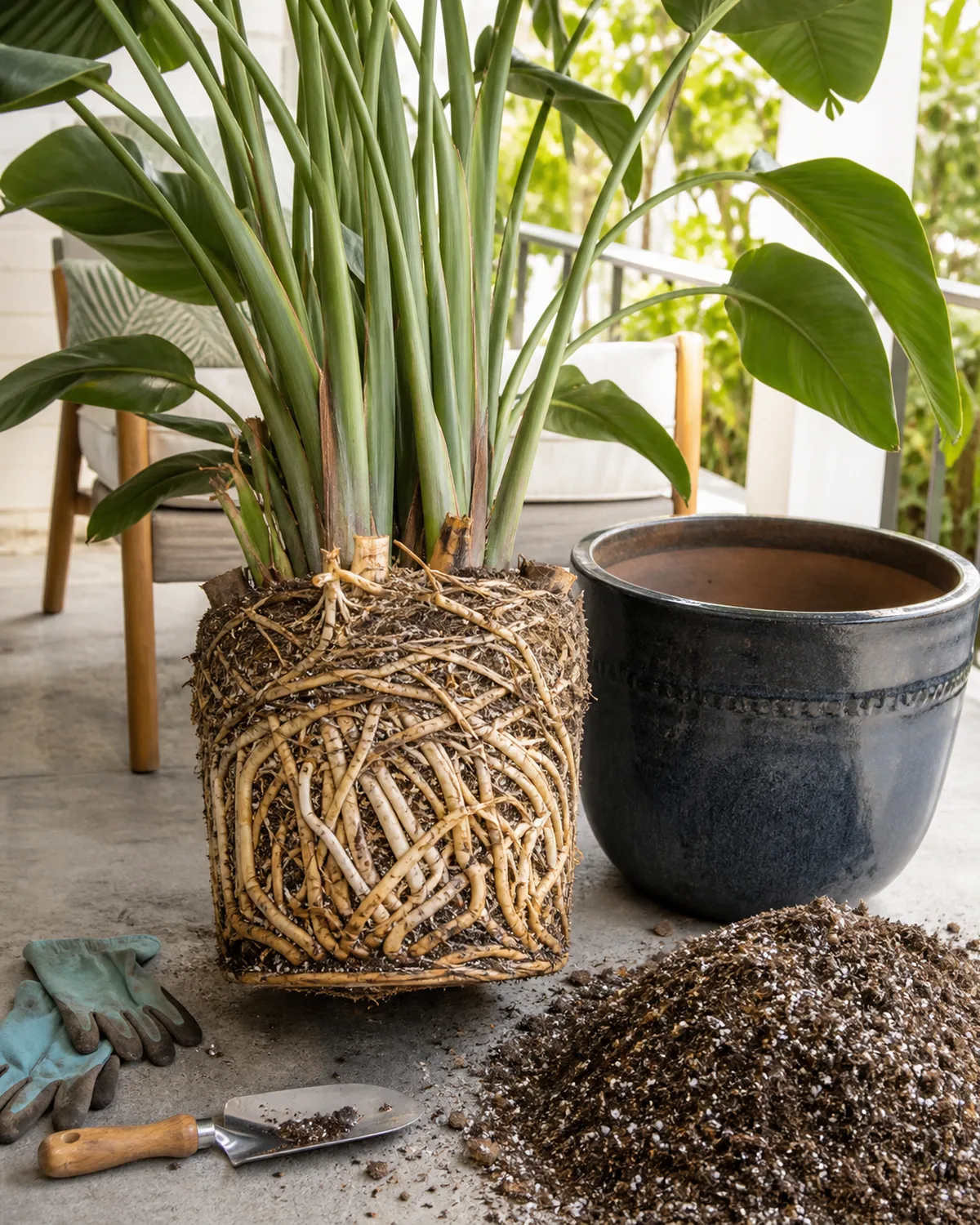
Bird of paradise grows from underground rhizomes that form aggressive woody clumps. When you pull this plant from its pot during repotting, you will find a dense mass of thick, tangled roots and rhizomes — not the soft fibrous system of most tropical housplants. Mature clumps can crack plastic pots and deform thin terracotta from internal pressure alone.
This root behavior drives three potting decisions:
- Heavy containers are non-negotiable — a mature bird of paradise is extremely top-heavy. A lightweight plastic pot will tip over, potentially damaging the plant and your floor. Ceramic, concrete, or heavy terracotta with enough mass at the base to anchor the canopy is essential.
- Go up only one to two inches in diameter when repotting. Slightly root-bound conditions in reginae actually encourage blooming — the mild stress signals the plant to reproduce rather than expand.
- Repotting frequency: every two to three years for young plants, every three to four years for mature specimens. Early spring, just before active growth begins, is the best timing.
The soil itself should be rich and well-draining:
- Standard indoor potting soil blended with 20 to 30 percent perlite
- Slightly acidic to neutral pH, 6.0 to 7.0
- Organic matter like compost or worm castings benefits long-term growth — these are heavy feeders that deplete soil nutrients faster than most houseplants
Feeding for foliage versus feeding for flowers
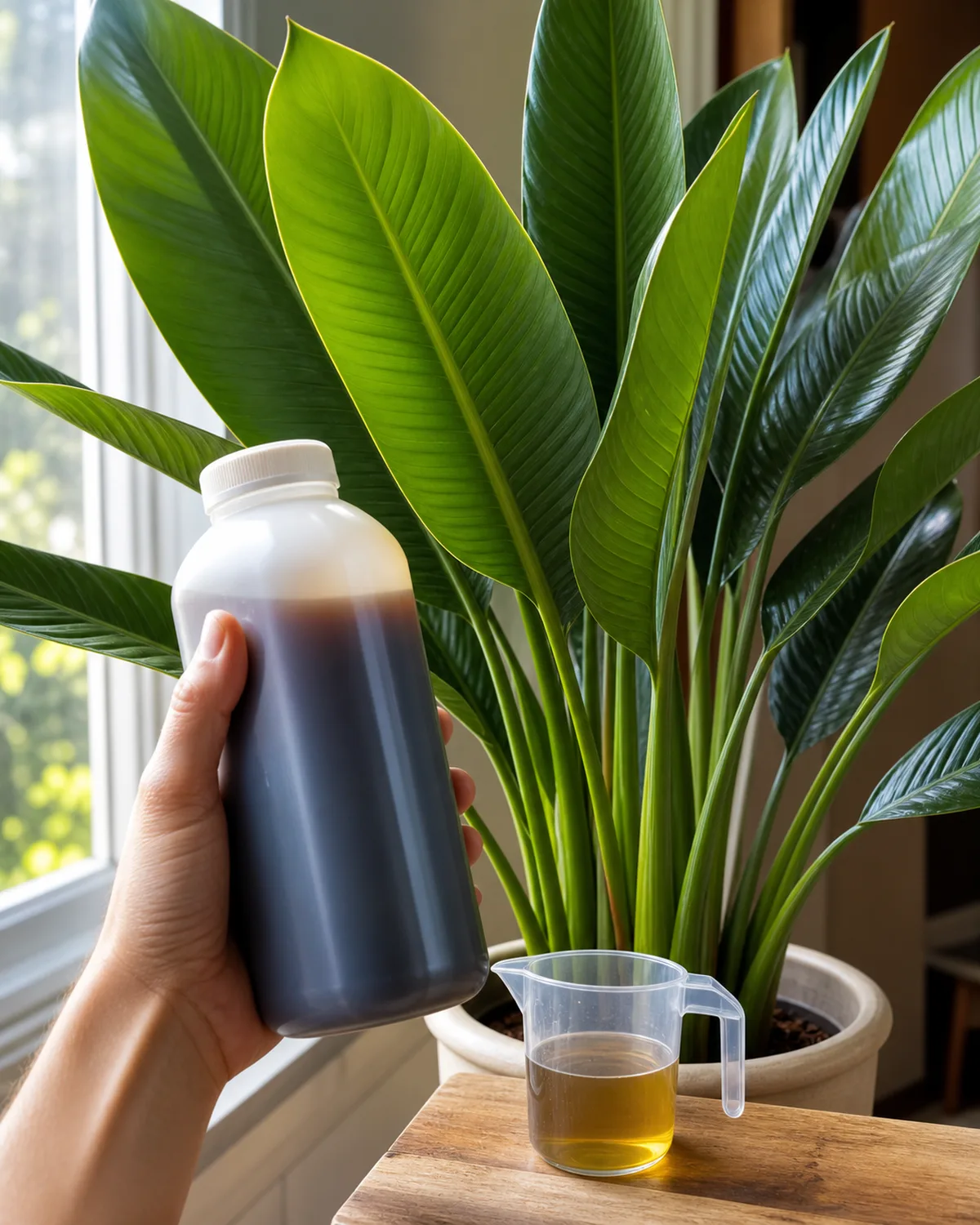
Bird of paradise is a heavy feeder during its active growing season from spring through early fall. The type of fertilizer you choose depends on what you are growing it for.
For foliage growth — which is what most indoor growers are realistically aiming for — use a balanced liquid fertilizer (10-10-10 or 20-20-20) diluted to half strength every two weeks during the growing season.
For encouraging bloom in reginae — use a high-phosphorus formula (something like 10-30-20) during spring and summer. Phosphorus promotes flower bud formation. This only matters if the plant is mature, getting direct sun, and slightly root-bound.
Seasonal feeding rules:
- Spring through early fall: fertilize every two weeks at half the label rate
- Winter: stop completely — growth slows dramatically, and nutrients accumulate as salts in the soil
- Flush the soil every two to three months by running water through the pot for two to three minutes to prevent salt buildup
Warning signs of feeding problems:
- Deficiency: overall pale green color, slow growth despite good light, new leaves noticeably smaller than previous ones
- Over-fertilization: brown leaf edges from salt burn, white crusty deposits on the soil surface
For the complete framework on fertilizing houseplants, including the weakly-weekly dilution method and organic versus synthetic options, see that guide.
Why your bird of paradise probably won't bloom indoors
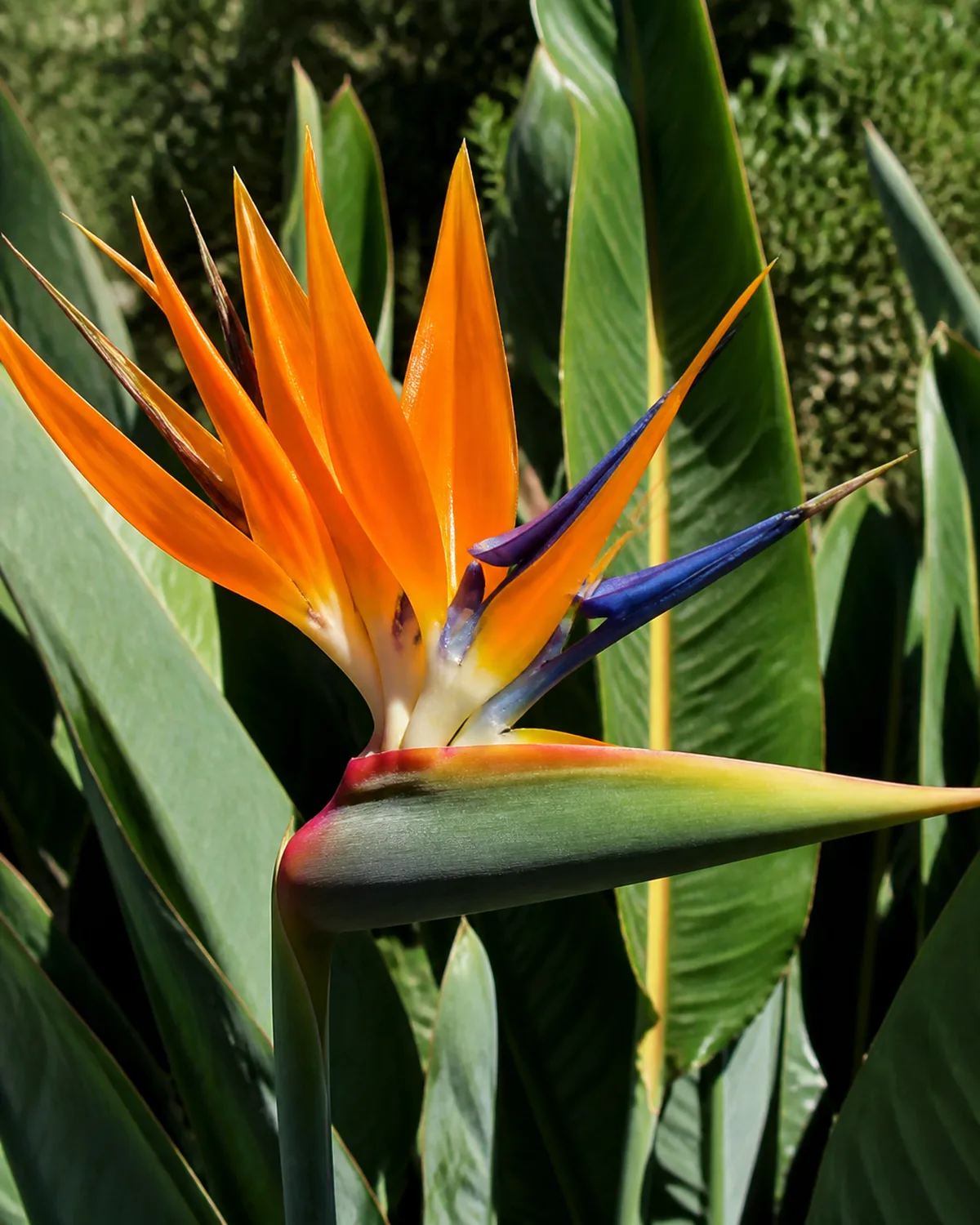
This is the honest answer most care guides leave out: S. reginae rarely blooms indoors, and S. nicolai almost never does.
Reginae blooming requires every one of these conditions to be met simultaneously:
- Maturity: the plant must be at least four to five years old from division, or seven or more years from seed
- Direct sunlight: four to six hours daily of actual sun rays hitting the leaves — not just bright indirect light
- Root-bound stress: slightly cramped in its pot, which signals the plant to shift energy from vegetative growth to reproduction
- Consistent feeding: regular fertilizing during the growing season with a phosphorus emphasis
- Cool winter rest: nighttime temperatures of 55 to 60°F for several weeks, simulating the South African subtropical winter
Even when all conditions are met, some indoor plants simply never bloom — and that is a normal outcome, not a care failure.
Nicolai indoors has virtually no chance of flowering. The plant needs to reach near-maturity at 10 to 15 feet minimum and receive tropical-intensity light before it will even consider producing a bloom stalk.
The flower itself is extraordinary:
- Reginae: the iconic orange-and-blue crane shape, one of the most recognizable flowers in horticulture, emerging on long stalks from the leaf axils
- Nicolai: a dramatic white-and-dark-purple flower, equally striking but rarely photographed because it almost never appears in cultivation
- Both last for weeks and are pollinated by sunbirds in the wild
The consolation is real: bird of paradise is worth growing purely for its foliage. The architectural paddle leaves are the show — the flower is a bonus that even professional growers in temperate climates struggle to achieve indoors.
Splitting and dividing: the only reliable propagation method
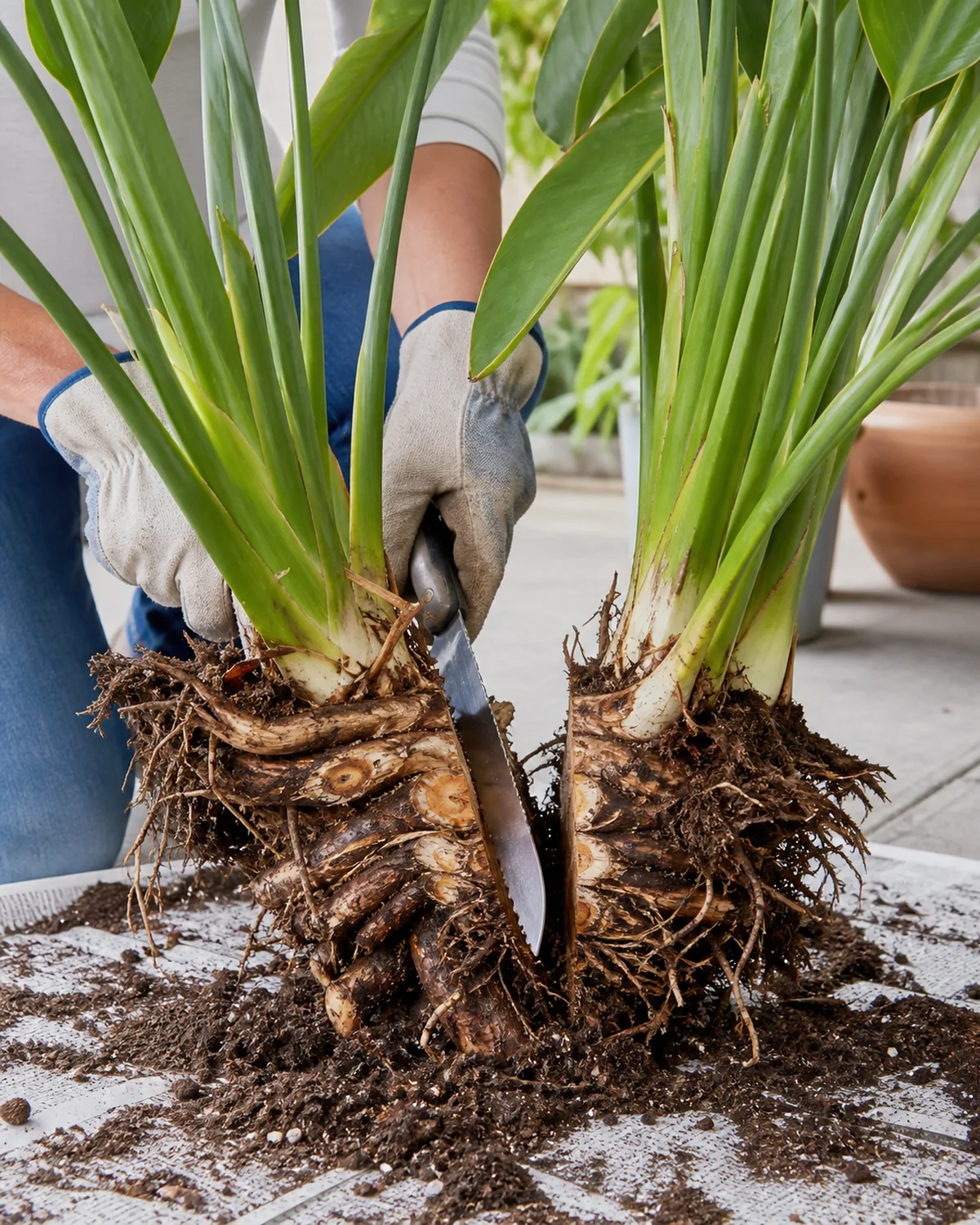
Seed propagation takes five to ten years to produce a plant worth looking at. Division of an established clump is the only practical method for home growers.
When to divide: the clump has four or more fans (pseudostems) and the pot is densely packed with rhizomes — typically every four to five years. Best timing is early spring before active growth begins.
Tools required: a serrated knife, pruning saw, or even a reciprocating saw for very large mature clumps. The rhizomes are woody and dense — nothing like the soft divisions of prayer plants or ferns. This is closer to the root work in bonsai care than typical houseplant propagation.
The division process:
- Remove the entire plant from its pot and shake or hose off as much soil as possible to expose the rhizome structure
- Identify natural division points where separate fans connect via rhizome
- Cut through the rhizome with a clean blade, ensuring each division has at least two to three fans with intact roots
- Let cut surfaces dry for 24 hours before potting to prevent rot at the wound
- Pot each division in fresh soil in a container just large enough for the root mass
Divisions will look stressed for four to eight weeks — drooping leaves, no new growth, general sadness. This is transplant shock, not death. Keep divisions in bright indirect light (not direct sun) until new growth appears, then transition back to their normal high-light position.
For the complete propagation guide covering all methods from stem cuttings to division, see that framework.
Four bird of paradise mistakes that stunt growth
- 1Placing it in a dim corner because it looks tropicalBird of paradise needs direct sun, not the low light most tropicals tolerate. It will lean, stretch, and lose its architectural form within months in anything less than a bright south or west window.
- 2Watering on a schedule instead of reading the soilWater demand changes dramatically between summer and winter, bright spots and dim ones. Water when the top two inches dry out, not every Tuesday. Schedule watering is how this plant gets root rot in winter.
- 3Panicking over split leavesLeaf splitting is a natural wind-resistance adaptation, especially in nicolai. Indoor splitting from dry air or physical contact is cosmetic, not a health crisis. The plant functions perfectly with split leaves.
- 4Repotting into a lightweight plastic potMature plants are extremely top-heavy and will tip over lightweight containers. Use a heavy ceramic or concrete pot with enough mass at the base to anchor the tall, wide canopy above it.
kultivy.com
Leaf splitting and curling: what your plant is telling you
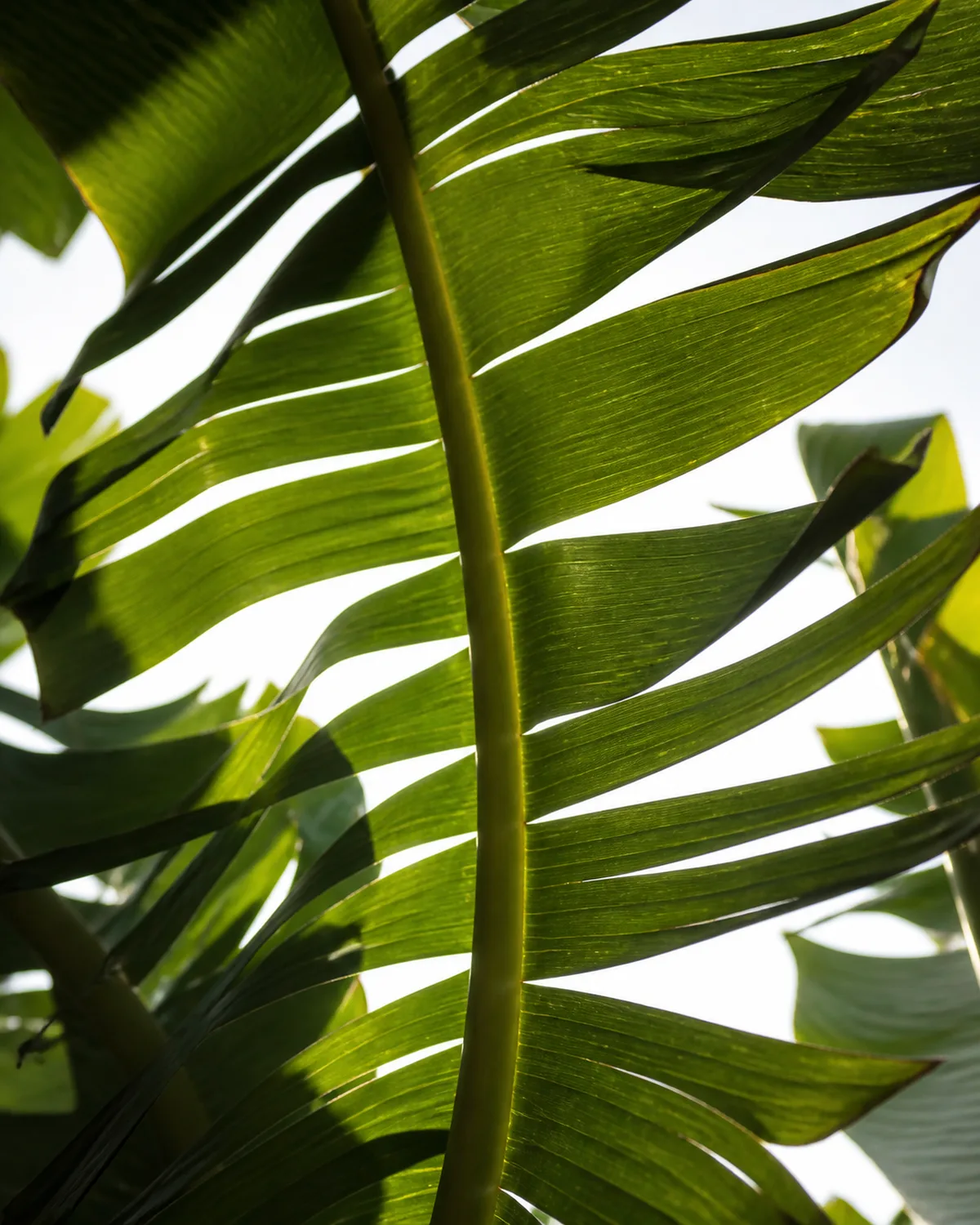
Leaf splitting is the number one question new bird of paradise owners ask — and in most cases the answer is: it is completely normal.
Nicolai especially produces enormous leaves that naturally split along lateral veins as a wind-resistance adaptation. In the wild, an intact broad leaf would catch wind and snap the pseudostem. Splitting reduces wind drag while preserving photosynthetic surface area.
The mechanism is similar to monstera fenestration but driven by physical tearing along natural weak points rather than genetically programmed holes.
Indoor causes of excessive splitting beyond what is natural:
- Very low humidity makes leaf tissue brittle and prone to tearing at the slightest disturbance
- Physical contact with walls, furniture, curtains, or people brushing past
- Direct airflow from heating or cooling vents hitting the leaves repeatedly
- Rough handling during rotation, cleaning, or moving the plant
Other leaf signals and what they mean:
- Curling inward along the midrib: almost always underwatering or very low humidity — the plant conserves moisture by reducing exposed leaf surface area
- Yellowing lower leaves: normal shedding of the oldest leaves as the plant grows taller — each fan drops its bottom leaves over time. Only concerning if multiple leaves yellow simultaneously.
- Brown edges: underwatering, low humidity, fluoride or chlorine in tap water, or salt buildup from fertilizer
- New leaf stuck rolled tight: insufficient light or humidity for the new spear to expand — mist the emerging spear daily and increase light exposure
The dry-air spider mite cycle that targets large paddle leaves
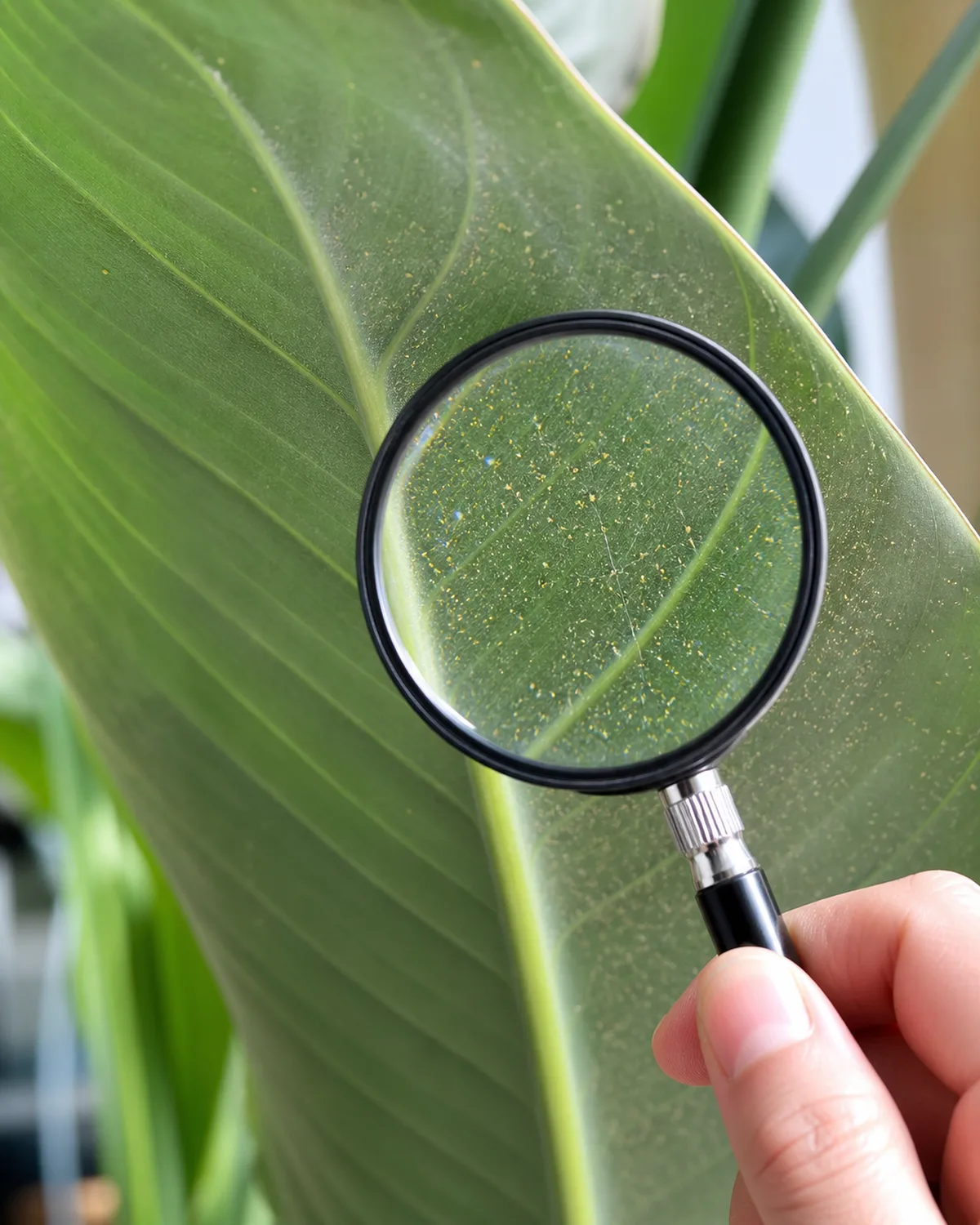
Spider mites are the number one pest for bird of paradise. The broad, smooth leaf surfaces combined with the dry indoor air these plants often sit in create ideal breeding conditions.
The cycle works like this: dry air weakens the leaf surface → mites colonize the undersides → they feed by piercing cells and sucking contents → stippled yellowing spreads → fine webbing appears between veins → by the time you notice visible damage, the population has been growing for weeks.
Detection and treatment:
- Check leaf undersides weekly with a magnifying glass or phone camera zoom — look for tiny moving dots and the faint webbing that catches light at certain angles
- Prevention: wipe both sides of every leaf with a damp cloth at least monthly. This physically removes mites, eggs, and dust while improving the leaf's ability to photosynthesize.
- Treatment: blast leaves with a strong shower spray to knock off mites, then apply neem oil weekly for three consecutive weeks to break the reproductive cycle
Other pests to watch for:
- Scale insects: brown bumps along leaf veins and petioles, scrape off manually and treat with rubbing alcohol or horticultural oil
- Mealybugs: white cottony clusters in leaf axils and at petiole bases, treat with rubbing alcohol on a cotton swab
- Root rot: the result of overwatering in low light — mushy brown roots, foul smell from the soil, softening at the pseudostem base. Prevention is always the answer: match water to light, use well-draining soil, and ensure the pot has drainage holes.
For the complete pest identification and treatment framework, see the houseplant pests and diseases guide.
Seasonal care and outdoor time
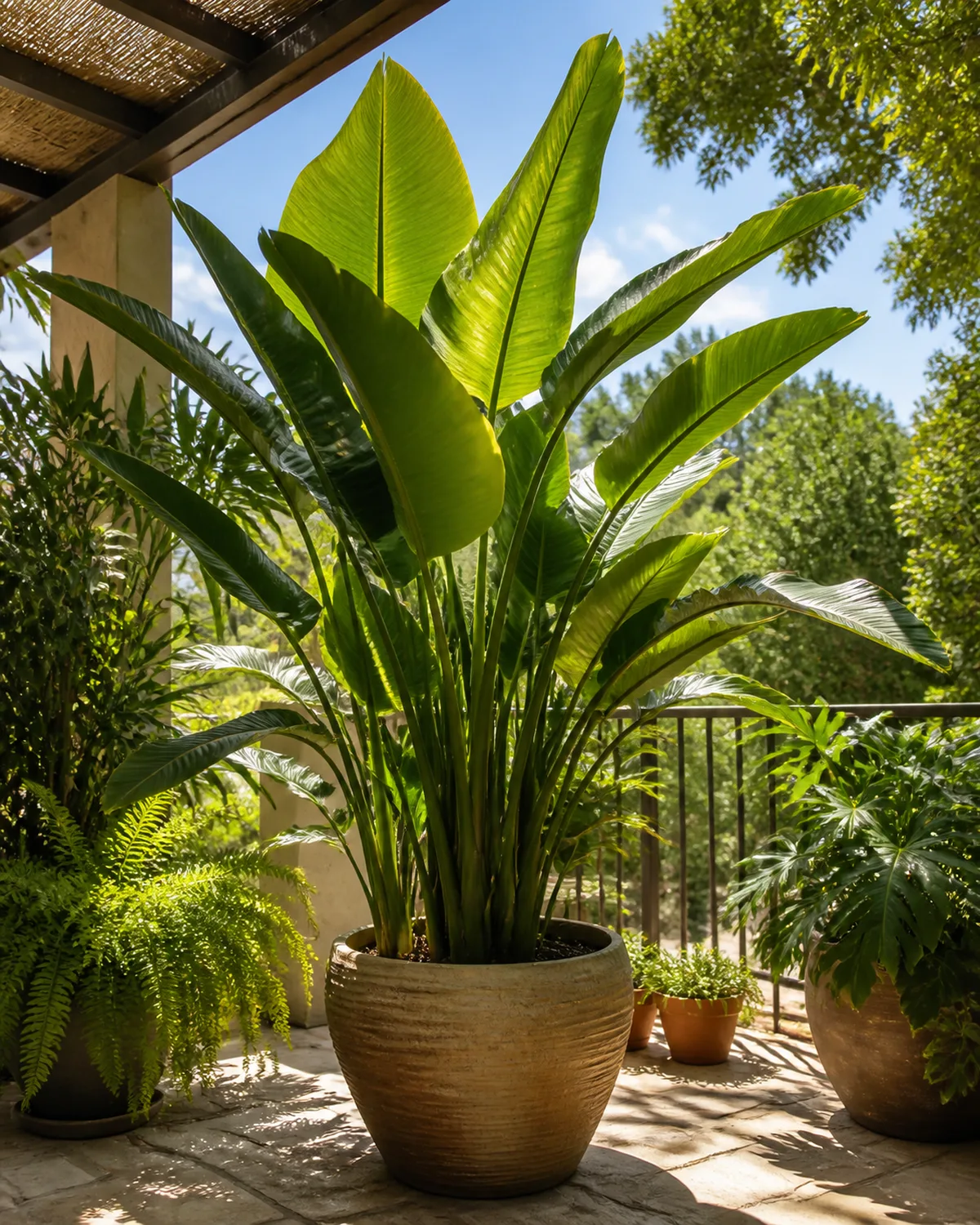
The single most impactful thing you can do for a bird of paradise is give it a summer outdoors. The difference in growth between indoor-only and indoor-with-outdoor-summer plants is dramatic.
Spring: resume fertilizing every two weeks. Increase watering as growth accelerates — new leaf spears appear most rapidly now, and a healthy plant can push a new leaf every two to three weeks. Repot or divide if needed.
Summer: peak growth season.
- Acclimate to outdoor sun gradually over one to two weeks: shade first, then partial sun, then full morning sun
- Outdoor plants produce noticeably larger, stiffer leaves with more intense green color
- Water may be needed every three to four days in hot weather
- Bring indoors before nighttime temperatures consistently drop below 50°F
Fall: reduce watering and stop fertilizing. Bring outdoor plants inside well before the first frost.
- Acclimate from outdoor brightness to indoor light gradually — moving directly from full outdoor sun to a moderately bright window can trigger leaf drop
- One to two leaves dropping during the indoor transition is adjustment, not decline
Winter: growth slows or stops entirely.
- Water sparingly, every 10 to 14 days
- No fertilizer until spring
- A cool winter rest with nighttime temperatures of 55 to 60°F actually benefits reginae bloom potential
- Keep near the brightest window available and consider a grow light supplement for the shortest days
Toxicity and pet safety
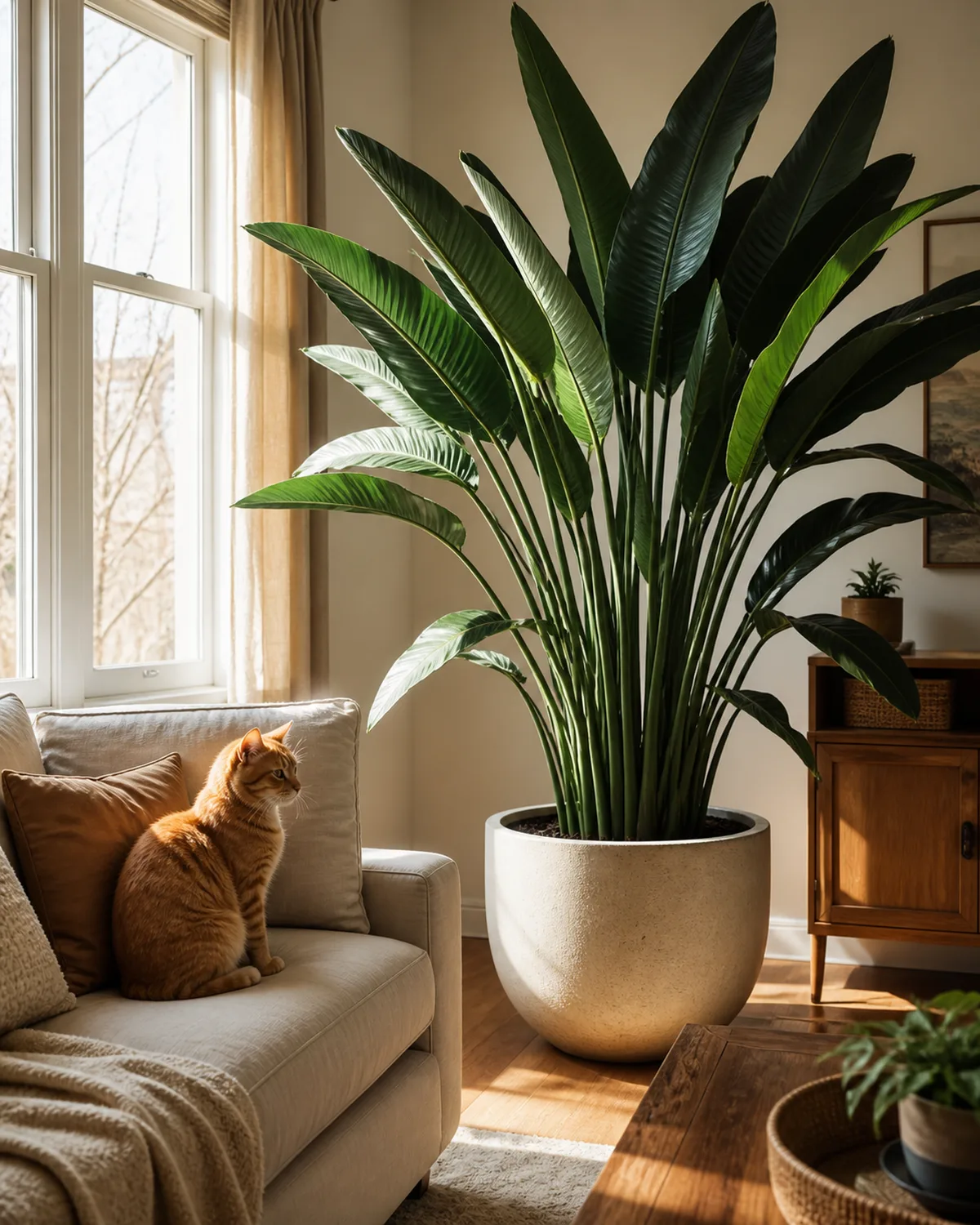
Bird of paradise is toxic to cats and dogs. The ASPCA classifies it as causing gastrointestinal symptoms — nausea, vomiting, and drowsiness — if ingested.
The toxic compounds include tannins and hydrocyanic acid (hydrogen cyanide in trace amounts), concentrated most heavily in the seeds and flowers. Leaves and stems are mildly toxic — a curious nibble typically causes mouth irritation and drooling rather than serious poisoning.
Practical risk assessment:
- The large, stiff leaves are naturally unappealing to most cats — no trailing vines to chase, no grass-like texture to chew
- A mature bird of paradise is a large floor specimen that most cats ignore entirely
- The biggest concern is kittens or young dogs who chew indiscriminately
If you have a persistent plant-chewing pet, choose a non-toxic tall plant alternative:
- Parlor palm — elegant, cat-safe, tolerates lower light
- Areca palm — feathery fronds, ASPCA non-toxic, similar tropical feel
- Boston fern — cascading fronds, completely safe, loves humidity
Not toxic to humans through handling. No sap irritation, no contact dermatitis, safe to touch and prune barehanded. For the full list of plants safe for cats that still deliver visual impact, see that dedicated guide.

Mara Quinn edits Kultivy, where she shares houseplant care, propagation, beginner-friendly plant picks, and plant-styling ideas for anyone who wants their indoor plants to actually thrive. Every guide is image-led and reviewed for clarity, usefulness, image accuracy, and Pinterest-to-page alignment before it goes live. Visit the About page.