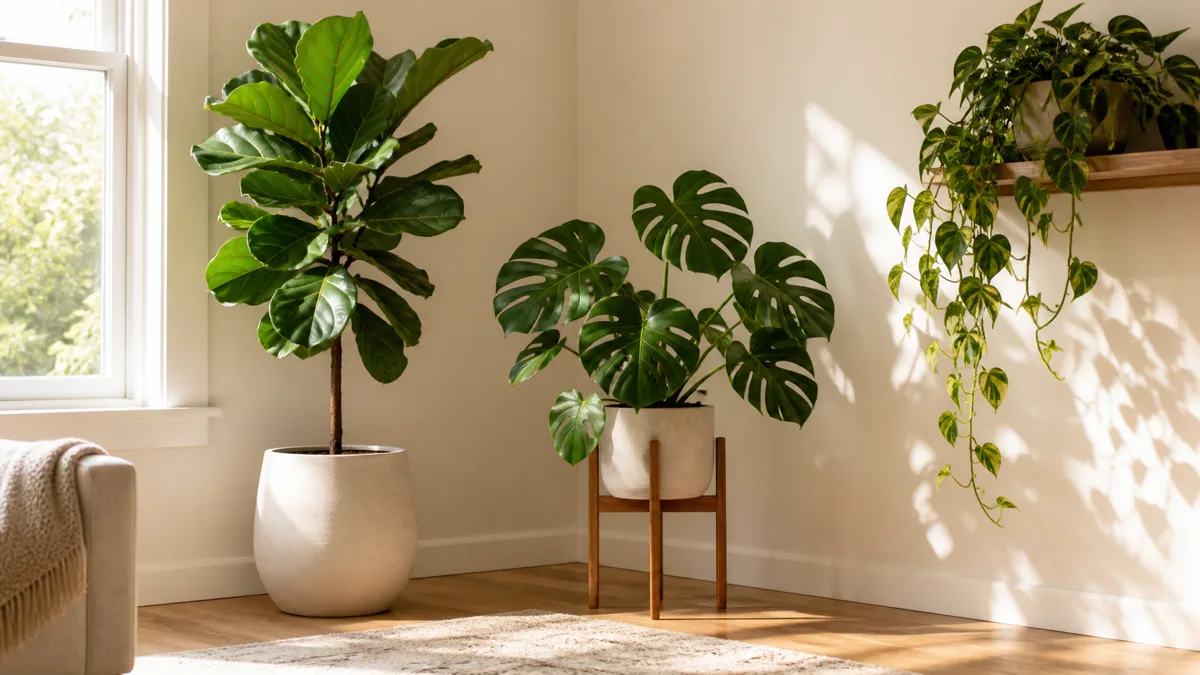
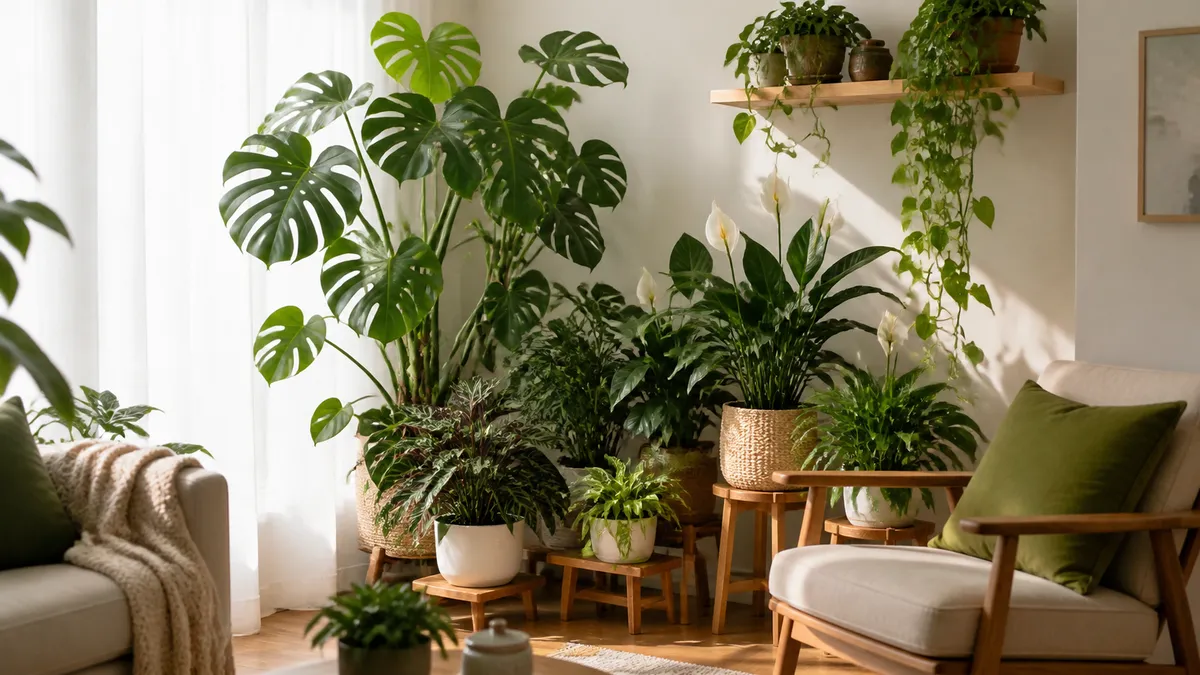
Every shelf has a limit. Every windowsill fills up. But the ceiling sits empty in almost every room, and a single macrame plant hanger turns that overhead space into a garden tier that no floor stand or bookcase can reach.
The woven texture of cotton cord adds a layer of handmade warmth that a plain plastic hanging pot never delivers. It is the visible part of the display, not something you hide behind leaves.
These twelve styles cover every room shape, every budget, and every level of knotting experience. Pick the one that fits your ceiling, pair it with the right plant, and hang it where the light actually is.
Why Macrame Hangers Belong in Every Plant Collection
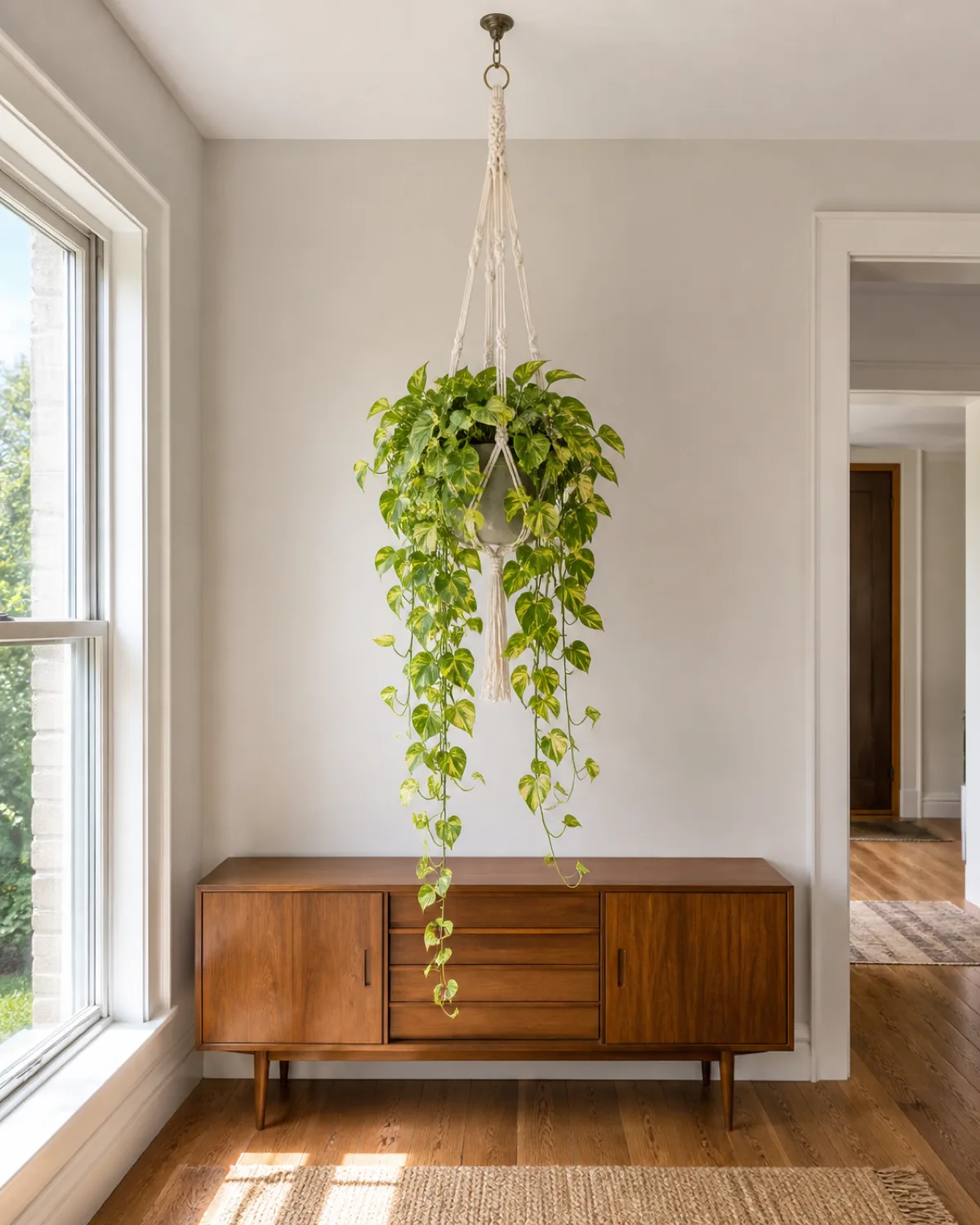
Floor space has a hard ceiling. Shelf space fills up faster than you expect. But the overhead zone between the top of your tallest furniture and the ceiling sits completely empty in most rooms, and a macrame plant hanger claims that space with zero impact on the surfaces below.
Hanging a plant high does more than save room. Trailing species like pothos, string of pearls, and tradescantia look their best when gravity pulls the vines downward from above, because that cascading silhouette is exactly how these plants grow in the wild — draping from tree branches toward the forest floor.
- Light upgrade for free: The top third of a window pane delivers more photosynthetically active radiation than the sill — hanging a plant at window-top height can mean 30 to 50 percent more useful light without moving it to a sunnier room
- Texture layer: Woven cotton or jute cord adds a handmade, organic quality that breaks up hard modern surfaces — one hanger softens a white wall the way a rug softens a hard floor
- Zero footprint: Unlike a plant stand or shelf, a ceiling-hung macrame takes no floor or counter space at all
A plain plastic hanging pot does the same job structurally, but the macrame itself becomes part of the display. The knot pattern, the cord color, the tassel at the bottom — all of it is visible and deliberate, not something you want to hide behind leaves.
Classic Single-Pot Spiral Hanger
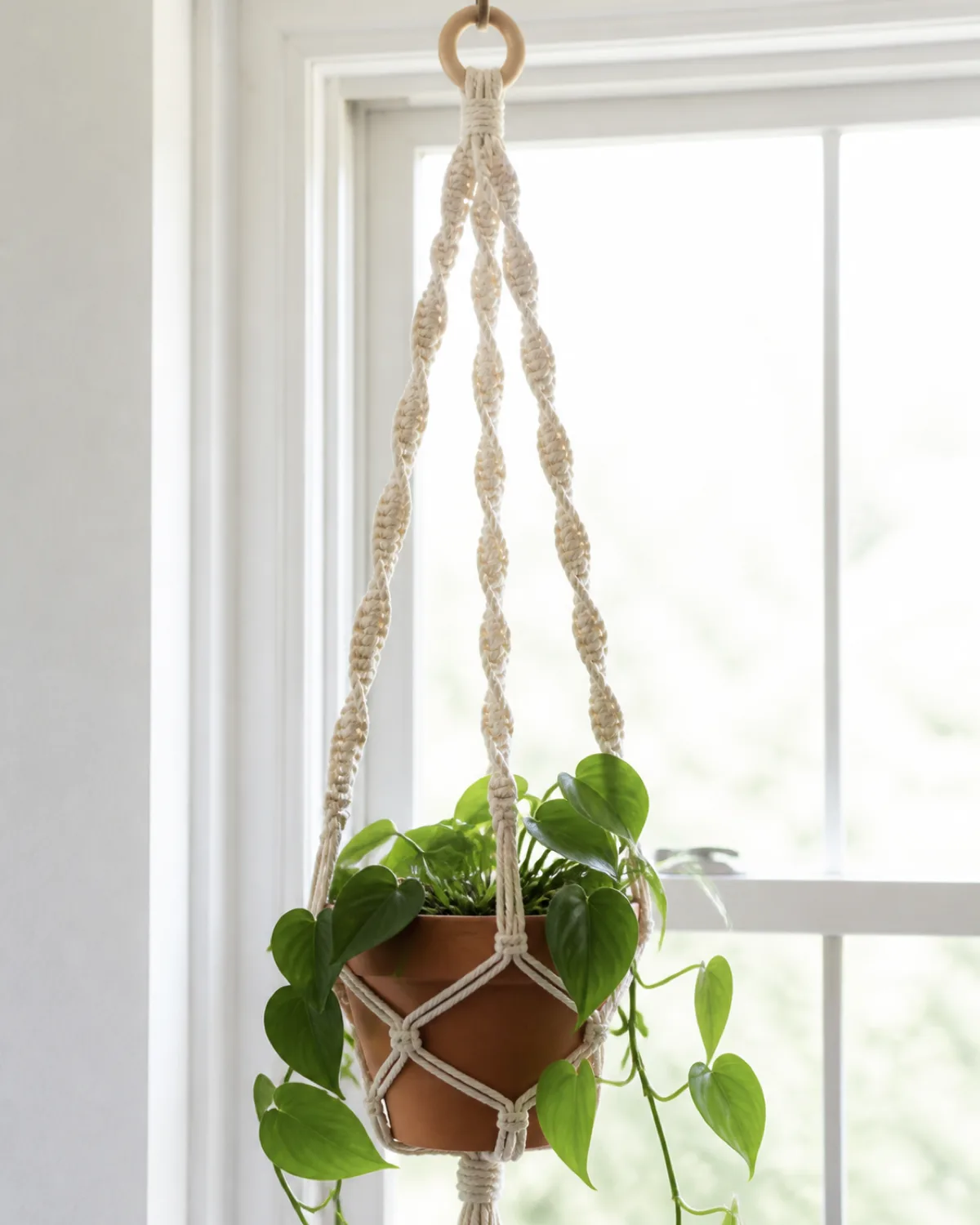
The spiral is the style most people picture when they hear "macrame plant hanger." Four cords meet at a metal or wooden ring at the top. Half knots tied in one direction twist the cords into a spiraling column that ends in a net cradle at the bottom, and a single pot sits inside.
The pattern uses only one knot — the half knot, repeated in the same direction. That single repeating motion is what creates the spiral twist. No other macrame style is this forgiving for a first attempt.
- Best plants: Compact 4-to-6-inch pots with trailing growth — pothos, philodendron heartleaf, or tradescantia whose vines escape through the cord gaps
- Materials: Eight cords of 5mm cotton rope, each about six feet long, plus one 2-inch wooden or metal ring
- Time: About thirty minutes from start to finished hanger
Hang it beside a window and let the trailing vines frame the glass on one side. The spiral catches light differently throughout the day as the sun angle shifts, which gives the hanger a subtle visual motion even when the air is still.
Basket-Weave Bowl Hanger
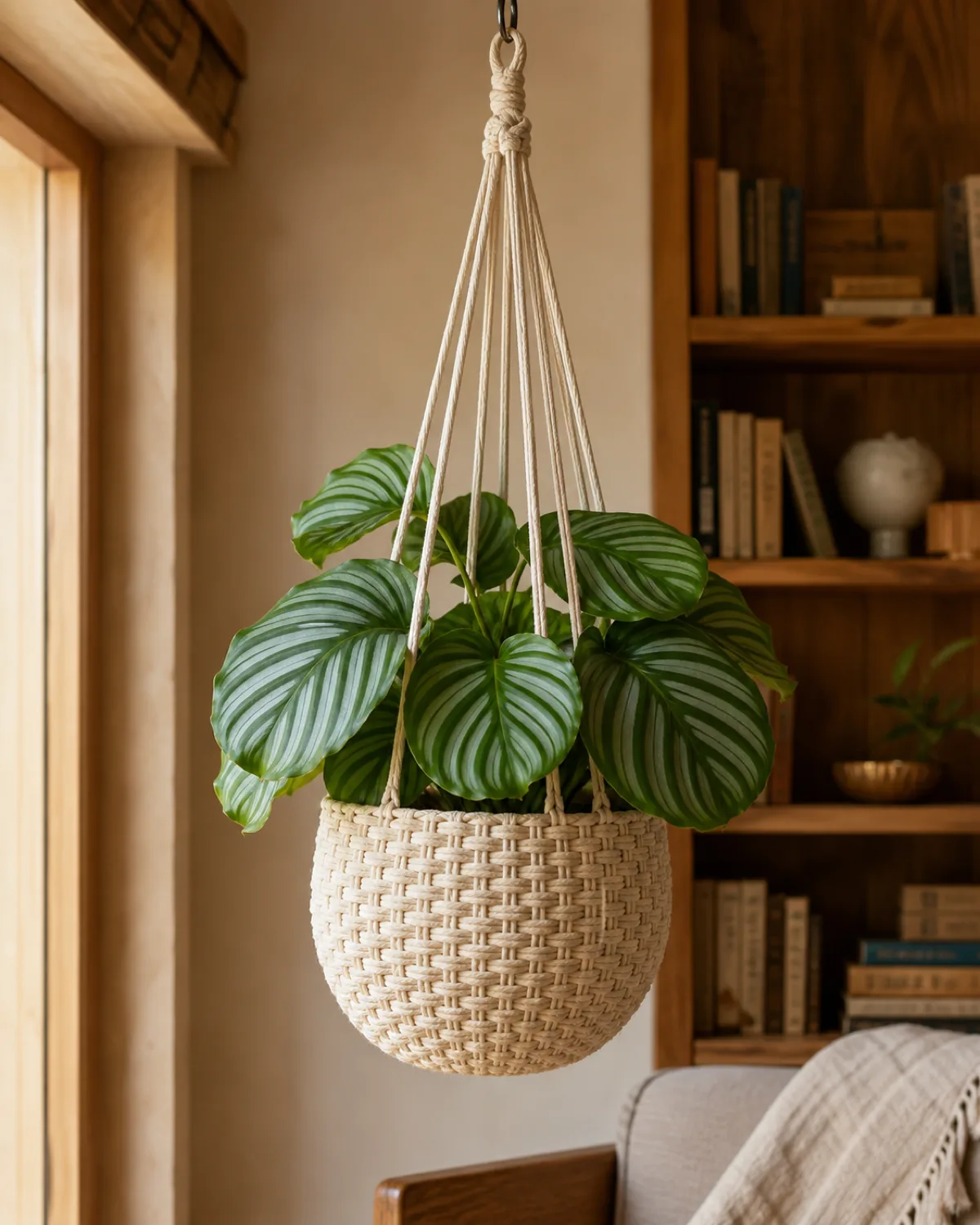
Where the spiral cradles a pot in an open net, the basket-weave wraps it in a solid woven bowl. The pot disappears inside, and the hanger looks more like a suspended planter than a net holding a container.
The visual weight is heavier than a spiral — the dense weave gives the hanger its own presence rather than letting the pot do all the talking. That makes it a better match for bushy, compact plants whose foliage mass needs a proportionally substantial holder.
- Best plants: Rounded, self-heading species like calathea, prayer plant, or peperomia that fill the bowl shape with foliage from the top
- Cord choice: Finer 3-to-4mm cotton gives tighter weave density — thicker cord leaves gaps that defeat the bowl effect
- Pot flexibility: The woven bowl conforms to irregular pot shapes, so handmade or oddly shaped ceramics work perfectly here
Difficulty steps up to intermediate. The basket base requires a woven grid pattern rather than simple repeating knots, and getting the bowl shape symmetrical takes some practice. Budget one to two hours.
Double-Tier Hanger for Vertical Stacking
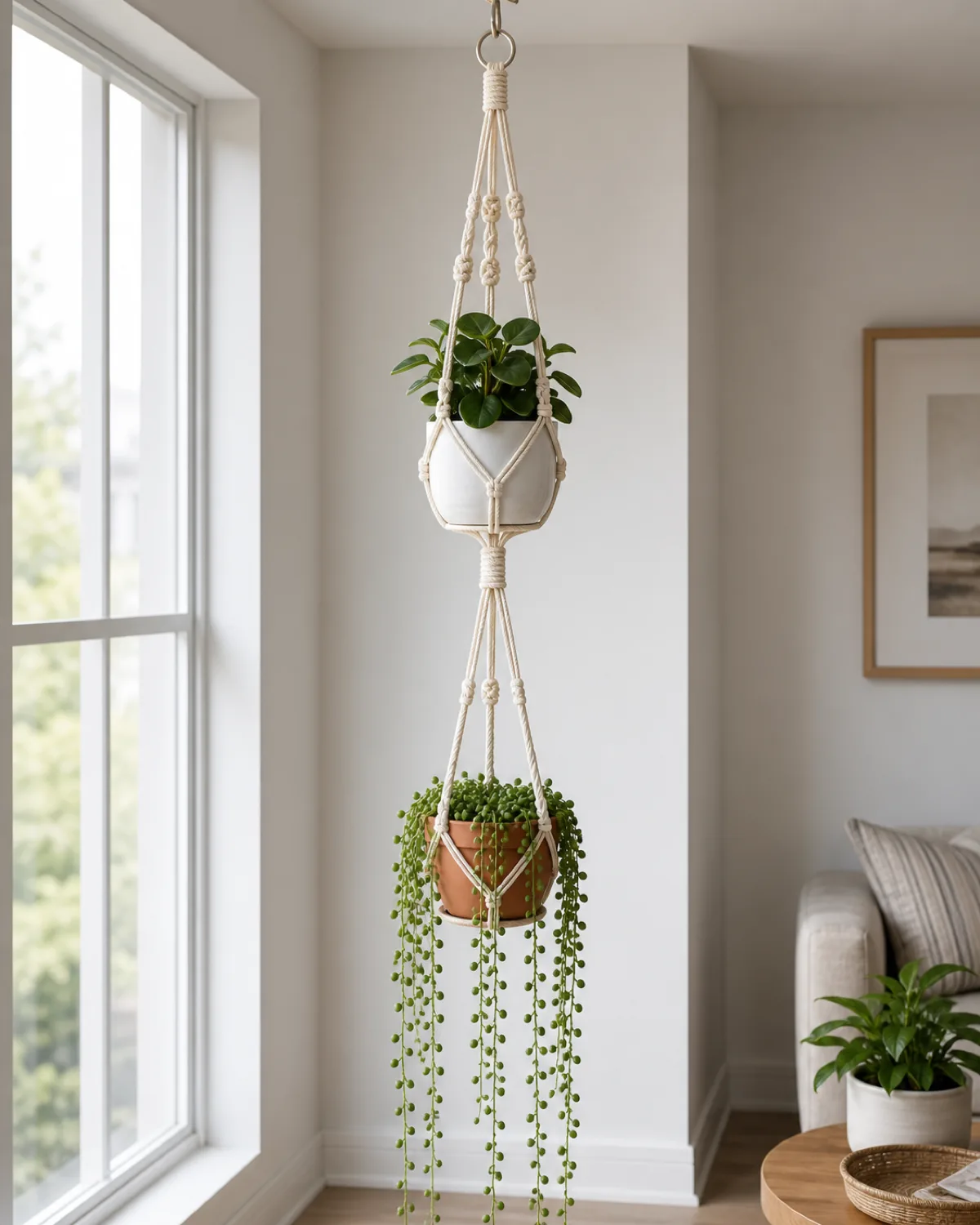
One ceiling hook, two plants. The double-tier hanger stacks a compact plant at the upper level and a trailing plant at the lower level, connected by a section of square knots or gathering knots that forms two independent weight-bearing planes.
The stacking math is simple: one hook supports twice the greenery of a single hanger, using exactly the same ceiling attachment point. In a room where you can only drill two or three ceiling hooks, double-tiers double your plant count.
- Upper tier plant: Something compact and upright — small fern, peperomia, or pilea — because the upper cradle sits at eye level where bushy leaves are most visible
- Lower tier plant: Something trailing — string of pearls, pothos neon, or tradescantia — whose vines continue the downward line past the cradle
- Weight warning: Two pots with wet soil can reach 10 to 15 lbs — use a stud-mounted screw hook or toggle bolt rated for at least 25 lbs
The full visual reads as four layers: macrame cord, upper plant, more cord, lower plant plus trailing vines. That vertical rhythm draws the eye from ceiling to floor in a way no single hanger can.
Minimalist Straight-Line Hanger
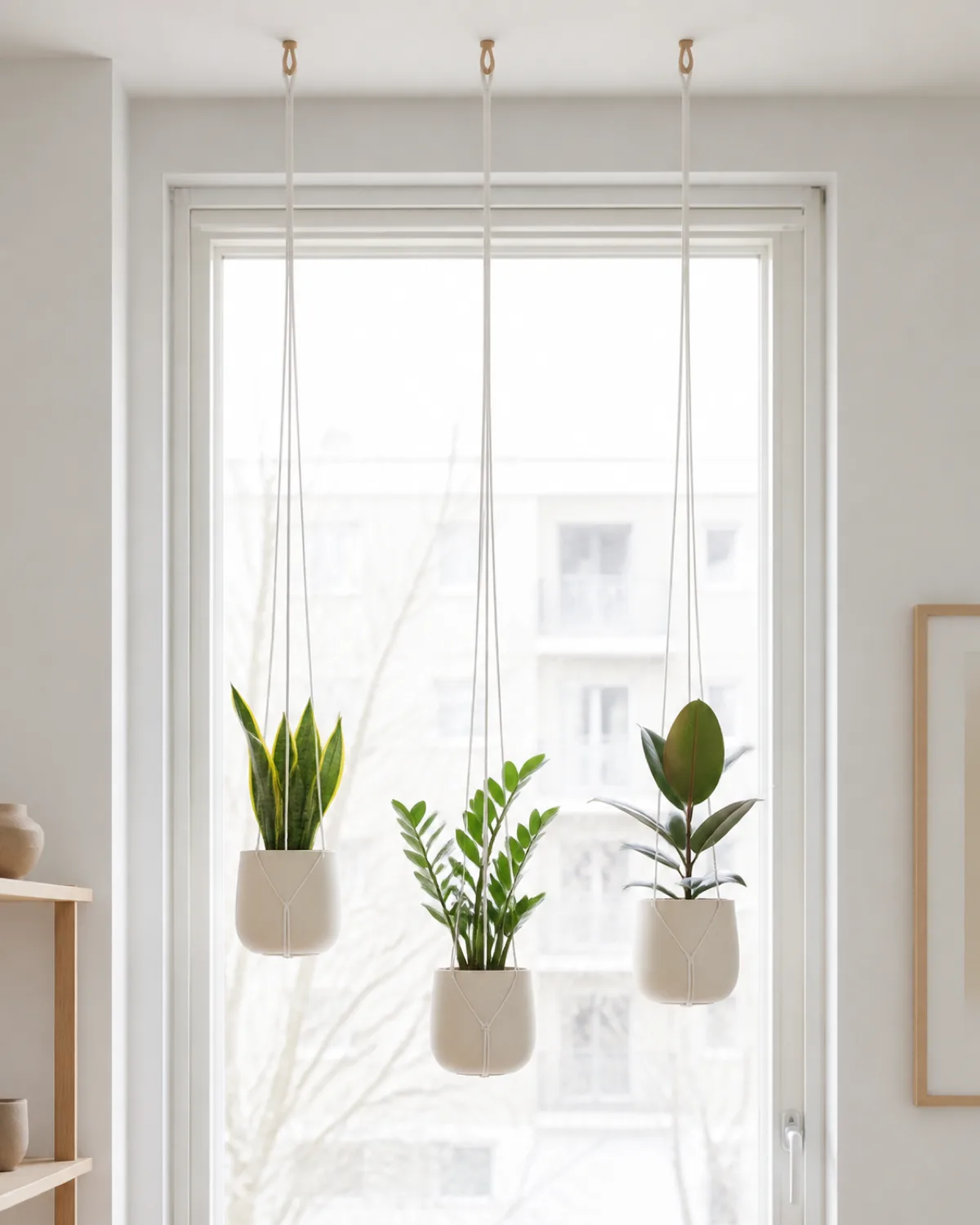
Strip away the spiral. Remove the basket weave. What remains is the simplest macrame form: four cords dropping straight from a ring, with square knots only where they meet to hold the pot.
The visual language is geometric, not bohemian. Clean vertical lines, minimal texture, maximum negative space. That restraint pairs with Scandinavian and modern interiors where ornate knotwork would fight the room's quiet aesthetic.
- Best plants: Architectural single-stem species — small snake plant, ZZ plant, or compact rubber plant — whose strong form reads clearly without competing with the hanger
- Cord choice: White or light grey cotton for clean rooms, black synthetic for industrial spaces
- DIY time: Ten minutes — the fastest macrame hanger to make, because the design is deliberately sparse
Hang three to five minimalist hangers in a row across a window at slightly staggered heights. The repeated vertical lines create a curtain effect that filters light without blocking the view, and the staggered heights add rhythm that a single row of identical lengths cannot match.
Driftwood Bar Multi-Hanger
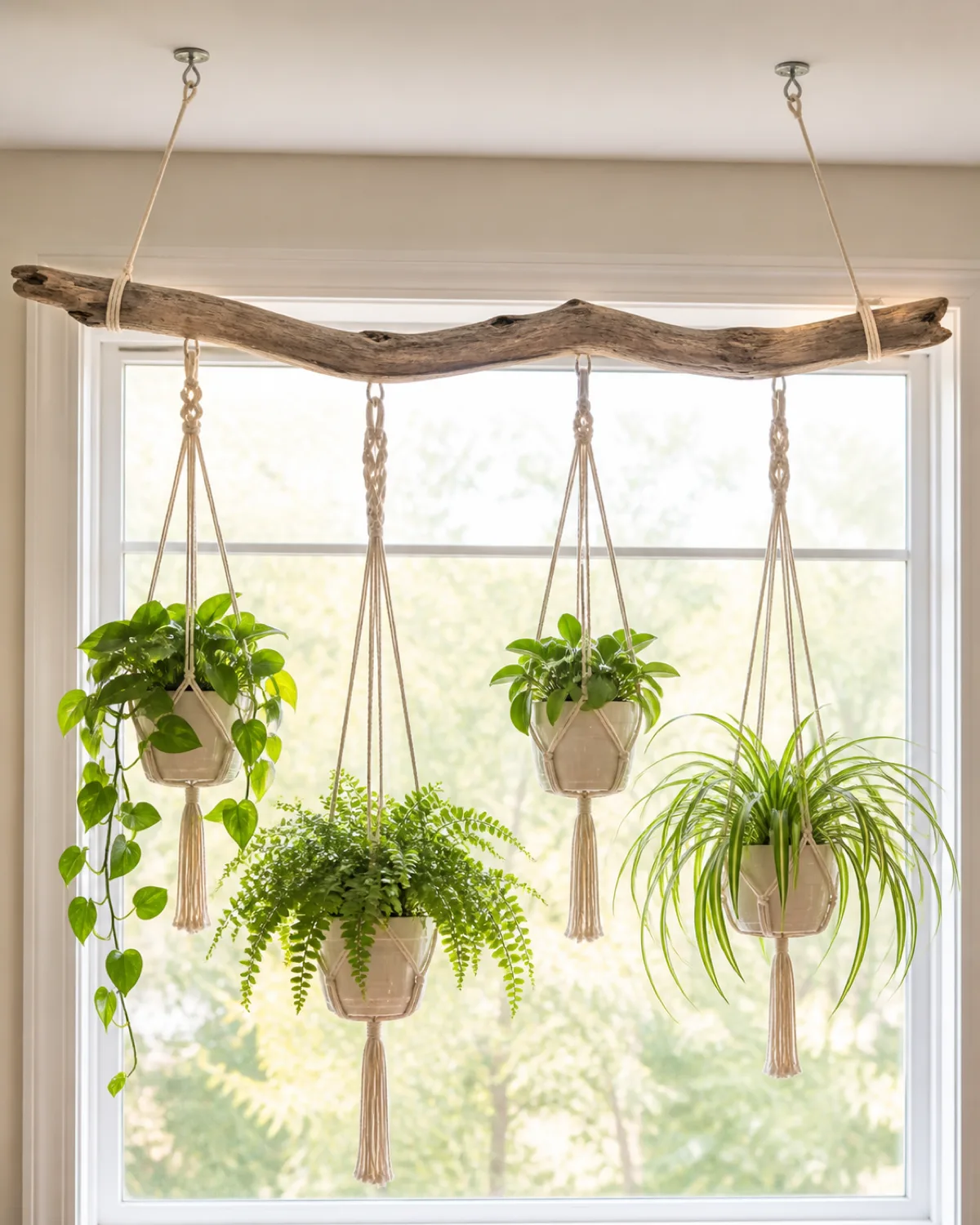
A single ring supports one plant. A driftwood bar supports a whole row. The bar hangs horizontally from two ceiling hooks, and three to five independent macrame cords drop from it, each holding its own pot at a different height.
The magic is in the triple-layered texture: weathered grey driftwood, cream woven cord, and living green foliage. Each material is organic and irregular in its own way, and together they produce a natural composition that no manufactured shelf can replicate.
- Stagger the lengths: Alternate short and long hangers so the plants form a rhythmic wave — a compact peperomia high, a trailing pothos low, a bushy spider plant at medium height
- Bar alternatives: A thick wooden dowel, a copper pipe, or a bamboo pole works if driftwood is hard to find — the key is a horizontal element that reads as deliberate rather than structural
- Installation: Two ceiling hooks spaced the width of the bar, each stud-mounted or toggle-bolted to carry half the total weight — three to five pots with wet soil can reach 15 to 20 lbs total
Level the bar with a bubble level before tightening the support cords. Even a slight tilt is visible from across the room and makes the entire arrangement look unfinished.
The best macrame hanger depends on the shape of the plant inside it, not the other way around. Start with what you grow, then pick the style that shows it off.
Wall-Mounted Macrame Shelf Hanger
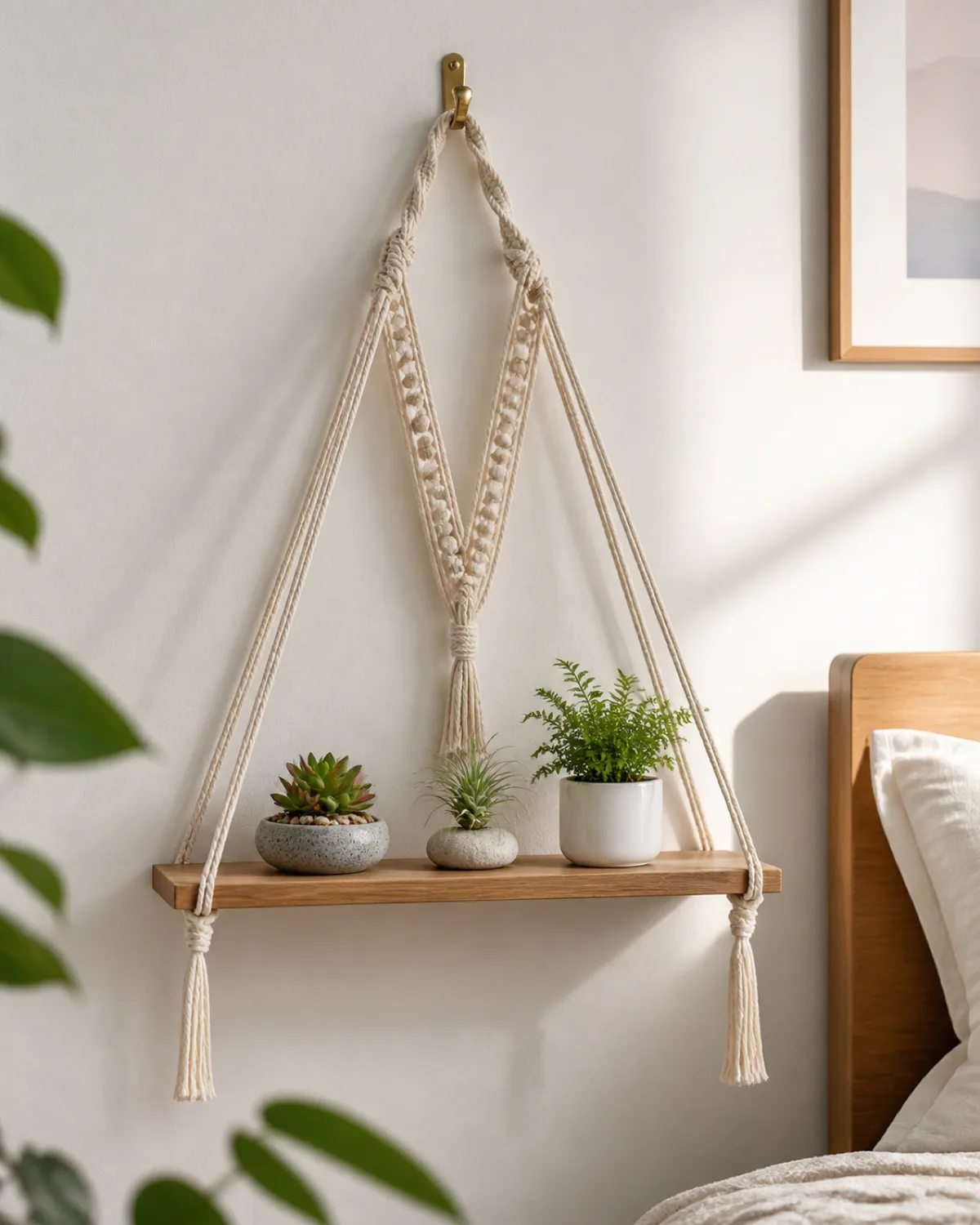
Not every macrame hanger needs a ceiling hook. The wall-mounted version suspends a wooden shelf from a single wall bracket using V-shaped or Y-shaped macrame cords. Two or three small pots sit on the shelf surface, held in place by gravity rather than a net.
This solves three common problems at once. Renters who cannot drill ceiling holes get a macrame display with only one small wall anchor. Rooms with low eight-foot ceilings avoid the top-heavy feeling that a vertical hanger creates in compressed space.
Plants that need a flat surface — succulents, air plants, tiny ferns — finally get a macrame option that works for their form.
- Shelf size: 14 to 20 inches wide, 5 to 6 inches deep — wide enough for three small pots, shallow enough to stay proportional to the cords
- Cord pattern: V-shaped from hook to shelf corners is the most stable configuration — Y-shaped adds a decorative center tassel but distributes weight less evenly
- Weight limit: A single wall hook typically holds 10 to 15 lbs depending on the anchor type, which covers three small pots comfortably
Keep the shelf level by measuring the cord lengths precisely before tying. Unlike ceiling hangers where a slight tilt is barely visible, a shelf that slopes even one degree toward one end will slowly slide pots toward the low side.
Choosing the Right Cord for Your Hanger
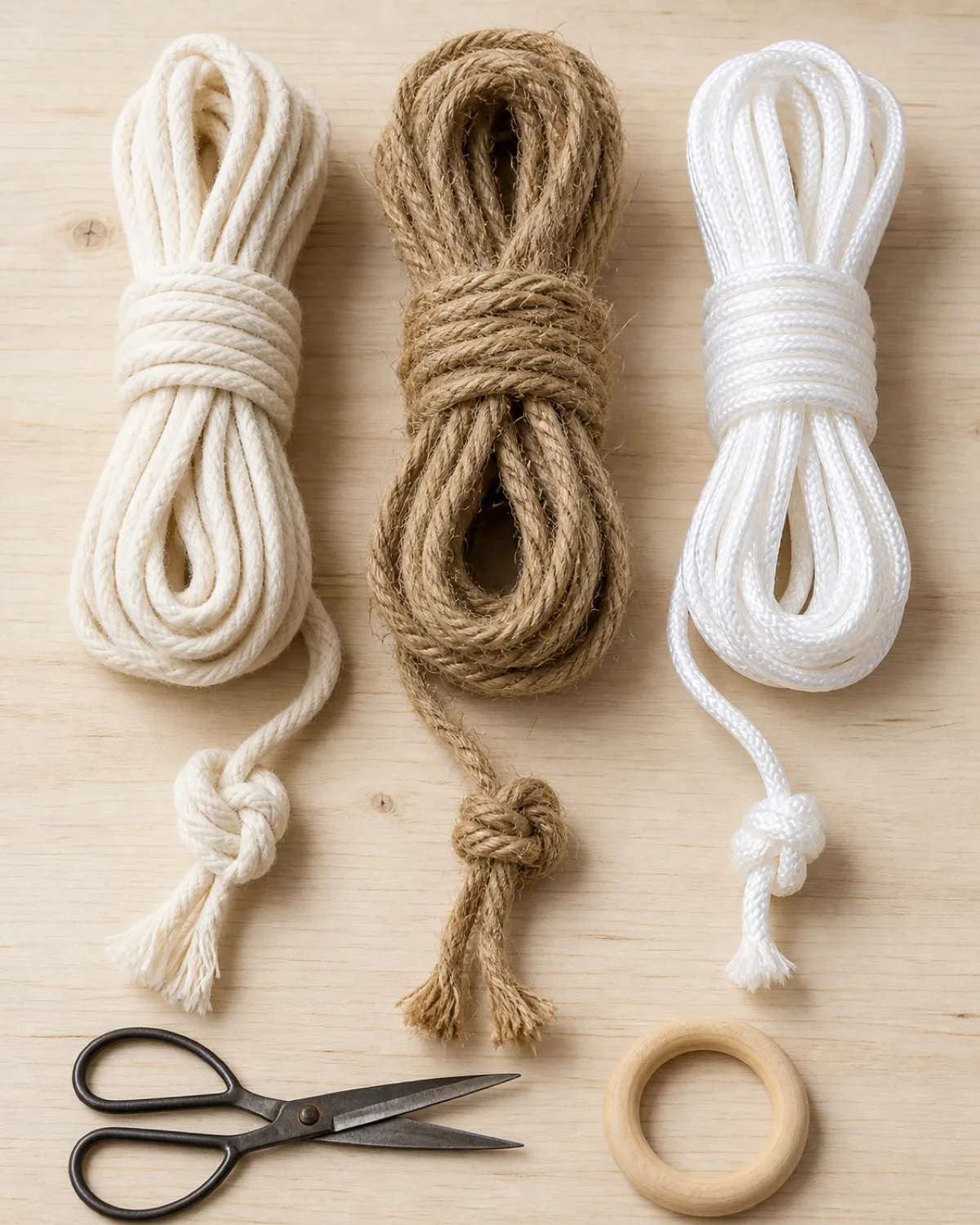
The cord is the hanger. Every visual quality — color, texture, drape, knot definition — comes from which fiber you choose. Three materials dominate macrame, and each one trades off against the others.
Natural cotton is the most popular for a reason. It is soft, easy to knot, holds its shape after tying, and comes in dozens of dyed colors. The trade-off is moisture: cotton absorbs water, which means splashes from watering can wick into the cord and create mildew over time.
Jute brings a rougher, more rustic character. The golden-brown color and coarse texture read as farmhouse or coastal. Jute resists moisture better than cotton, but the stiffness makes knotting harder on your hands, and finished knots look less crisp.
- Synthetic nylon or polyester resists water and mold entirely, which makes it the best option for bathroom or outdoor hangers — but knots can slip without heat-sealing the cut ends, and the shiny finish lacks the organic warmth of natural fibers
- Cord diameter guide: 3mm for small pots under 4 inches, 4-to-5mm for standard 6-inch pots, 6-to-7mm for large pots above 8 inches
- Color longevity: Cotton bleaches in direct sun over months — consider that aging effect part of the aesthetic, or switch to synthetic if you want the color to hold
Touch the cord before buying. Online photos flatten the difference between cotton and jute. In your hands, the softness gap is obvious, and that softness translates directly to how easy or difficult the knotting process will be.
Ceiling Hardware That Holds Without Falling
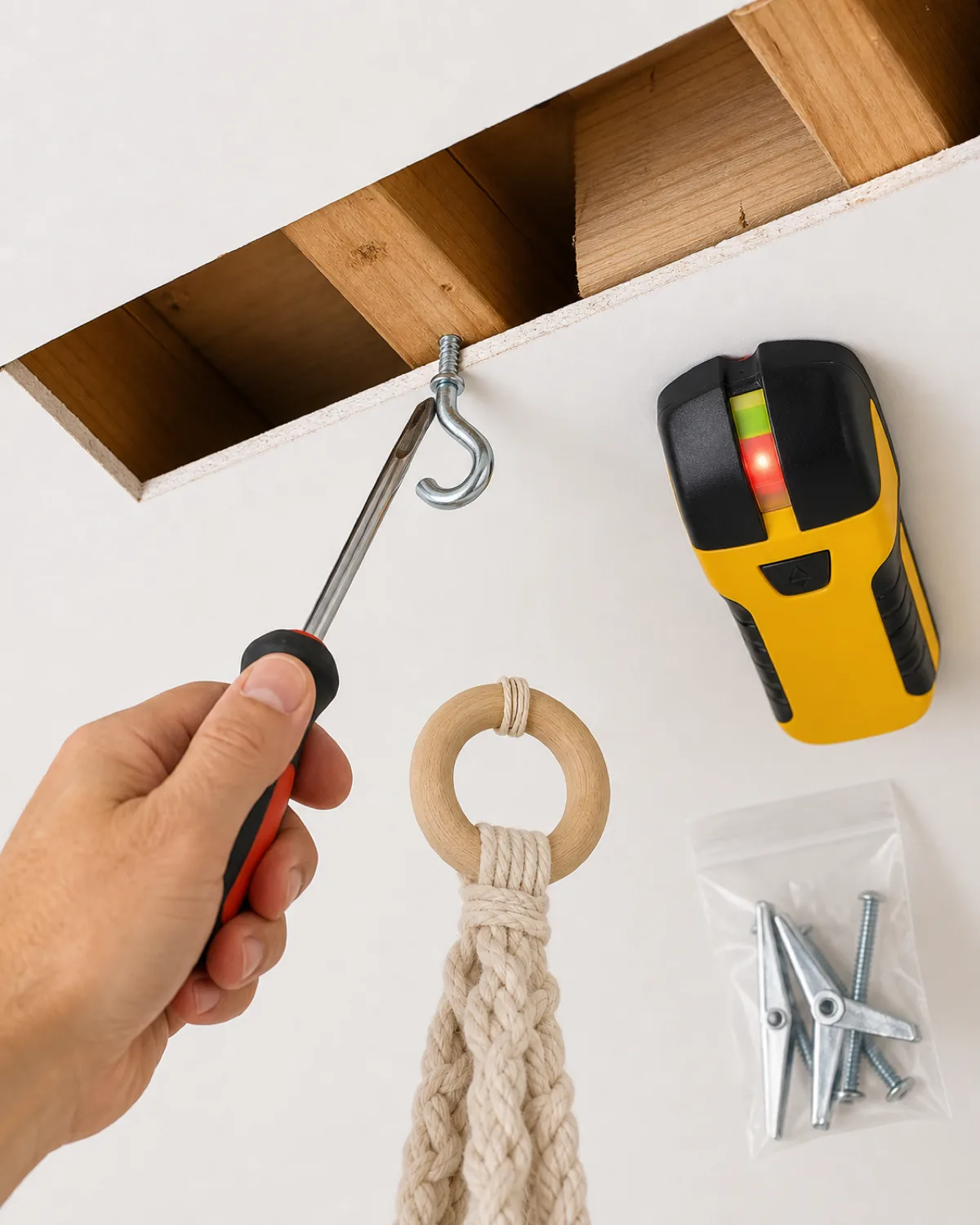
Installation is the only step where a macrame hanger can genuinely cause damage. A plant, a wet-soil pot, and a ceramic saucer can weigh five to ten pounds. Multiply that by two for a double-tier. If the hardware fails, the entire assembly drops.
Four mounting methods exist, ranked by holding strength from strongest to weakest.
Tension rods fit inside window frames and require no hardware at all. They work for lightweight single hangers in the window opening, but the placement is limited to wherever the frame is. Combine with plant corner ideas when the window is near a corner for maximum impact.
- Pull-test every installation: Before hanging any plant, grab the hook with both hands and pull downward for 30 seconds at twice the expected load — if it holds your body weight pulling, it will hold a potted plant
- Quarterly check: Screw hooks can loosen over months of watering-weight cycling — retighten every three months
- Renter-friendly option: Command strip ceiling hooks rated for 7.5 lbs cover most small plastic-pot hangers without any damage to the surface
Pairing Plants with Hanger Styles
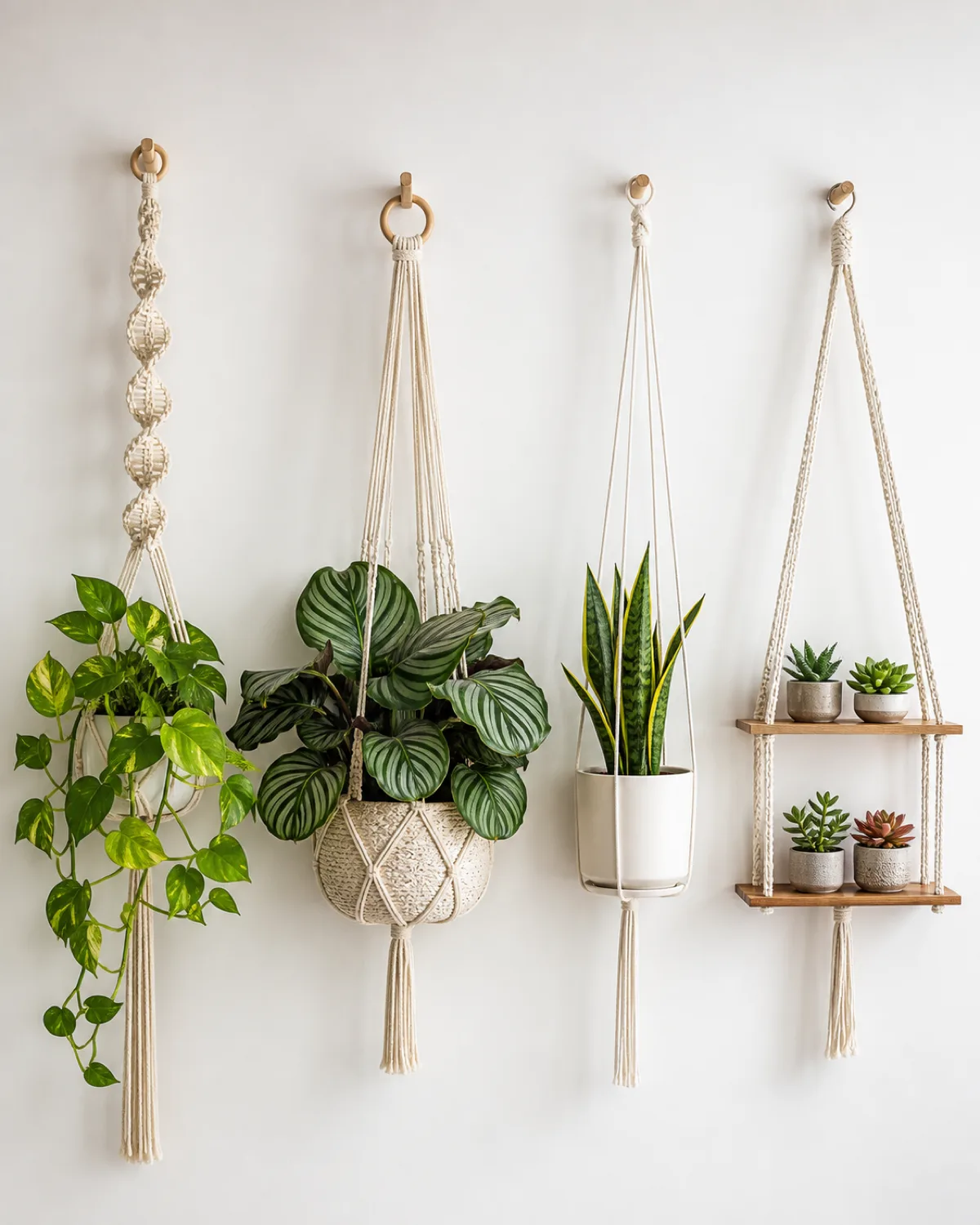
The hanger style and the plant form need to work together. A trailing pothos in a basket-weave bowl hides the best part of the plant inside the weave. A spiky snake plant in a spiral hanger tangles its stiff leaves in the cords. Matching shape to shape matters more than matching color to color.
The decision module above covers the four main pairings. Here are the details that make each pairing work or fail.
Trailing plants in spiral or minimalist hangers succeed because the open cord gaps give vines an exit path. The vines drape between the cords and cascade freely.
Pothos is the safest choice because its flexible stems navigate tight cord gaps without breaking. String of pearls is the most dramatic because the bead-like leaves catch light as they hang in a curtain.
- Weight at height: Use a lightweight plastic inner pot rather than ceramic when hanging trailing plants — the visual focus is on the trailing vines, not the pot, so the lighter material is invisible and reduces load on the ceiling hook
- Light awareness: Hanging a plant higher puts it closer to the window's brightest zone, which is ideal for most trailing tropicals — but low-light species like pothos can sunburn if hung directly in a south window's path, so east or north windows are safer for those
- Rotation: Turn the pot a quarter-turn every two weeks to prevent one-sided growth — hanging plants grow toward the window and develop a lopsided silhouette faster than plants on a table, because the light angle is steeper at height (see light requirements guide)
Where to Hang for the Best Visual Impact
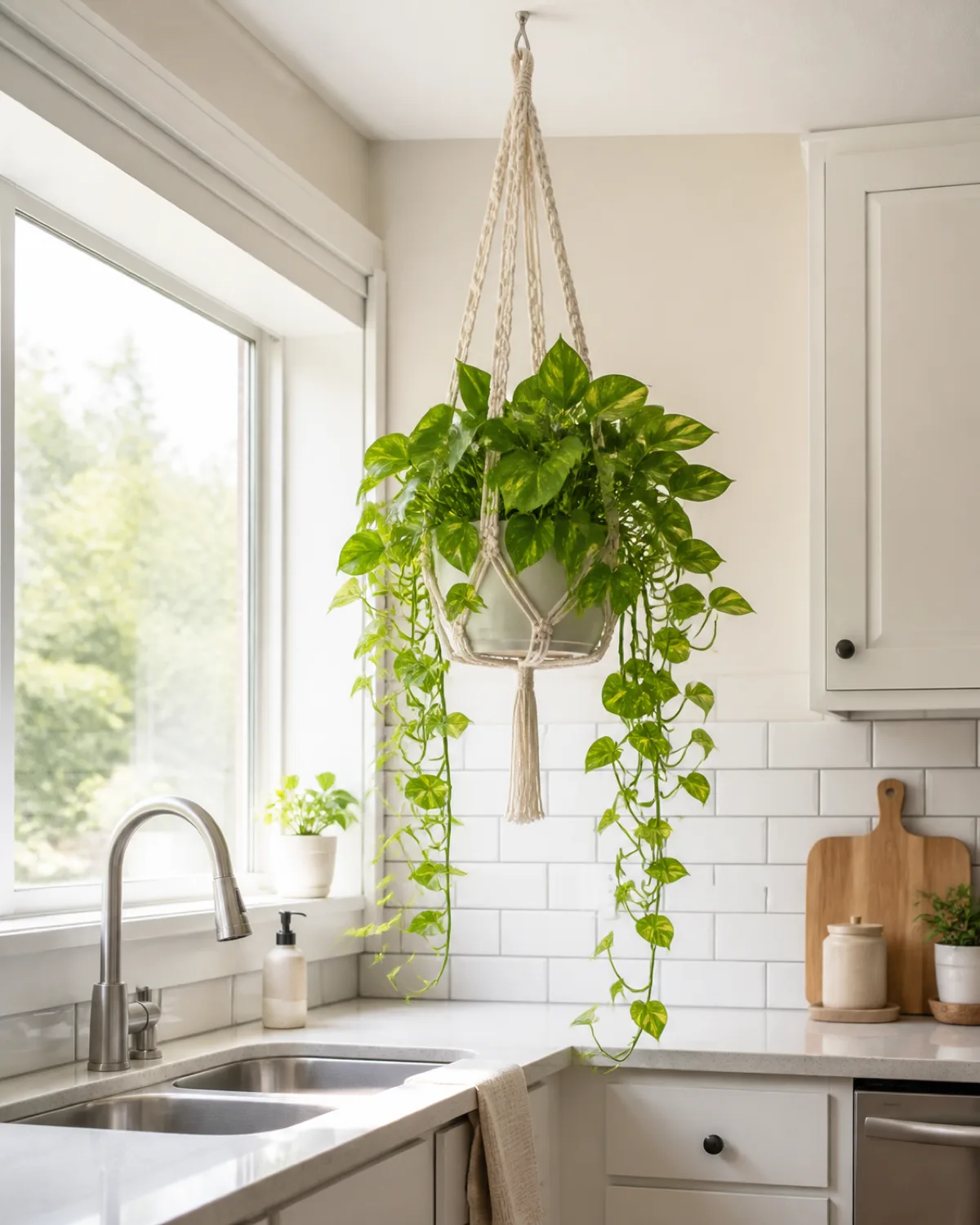
Position determines whether a macrame hanger reads as a design feature or an afterthought. The five best locations all share two qualities: reliable natural light and a reason for the eye to travel upward.
Window corner where two walls meet is the strongest single position. The intersection draws the eye naturally, light comes from two directions, and the hanger fills the dead triangle of space that no furniture can occupy. A plant corner setup with floor plants below and a macrame hanger above creates a complete vertical garden in under four square feet.
Above the kitchen sink works because the window is already there, humidity from dishwashing benefits tropical plants, and you see the plant every time you wash a dish — which means you notice when it needs watering. Kitchen-friendly plants like pothos and spider plant handle the steam and temperature fluctuations.
- Reading nook or bedside: Hang a single trailing hanger at seated eye level so the vines frame your peripheral vision — a calming green presence without demanding attention
- Staircase landing: Double-height ceilings above stairs let you hang a long macrame with a trailing pothos or string of pearls that descends six or more feet from the upper level toward the lower one — the most dramatic single-hanger effect possible
- Bathroom with skylight: A fern in a macrame hanger directly under a skylight gets the diffused overhead light and elevated humidity that ferns demand
Avoid hanging directly above high-traffic walkways where people duck, near HVAC vents that blast dry forced air onto foliage, and on interior walls without a nearby window. A macrame hanger on a dark interior wall is a slow death sentence for any plant inside it.
Maintaining Your Macrame and Keeping Plants Healthy Up There
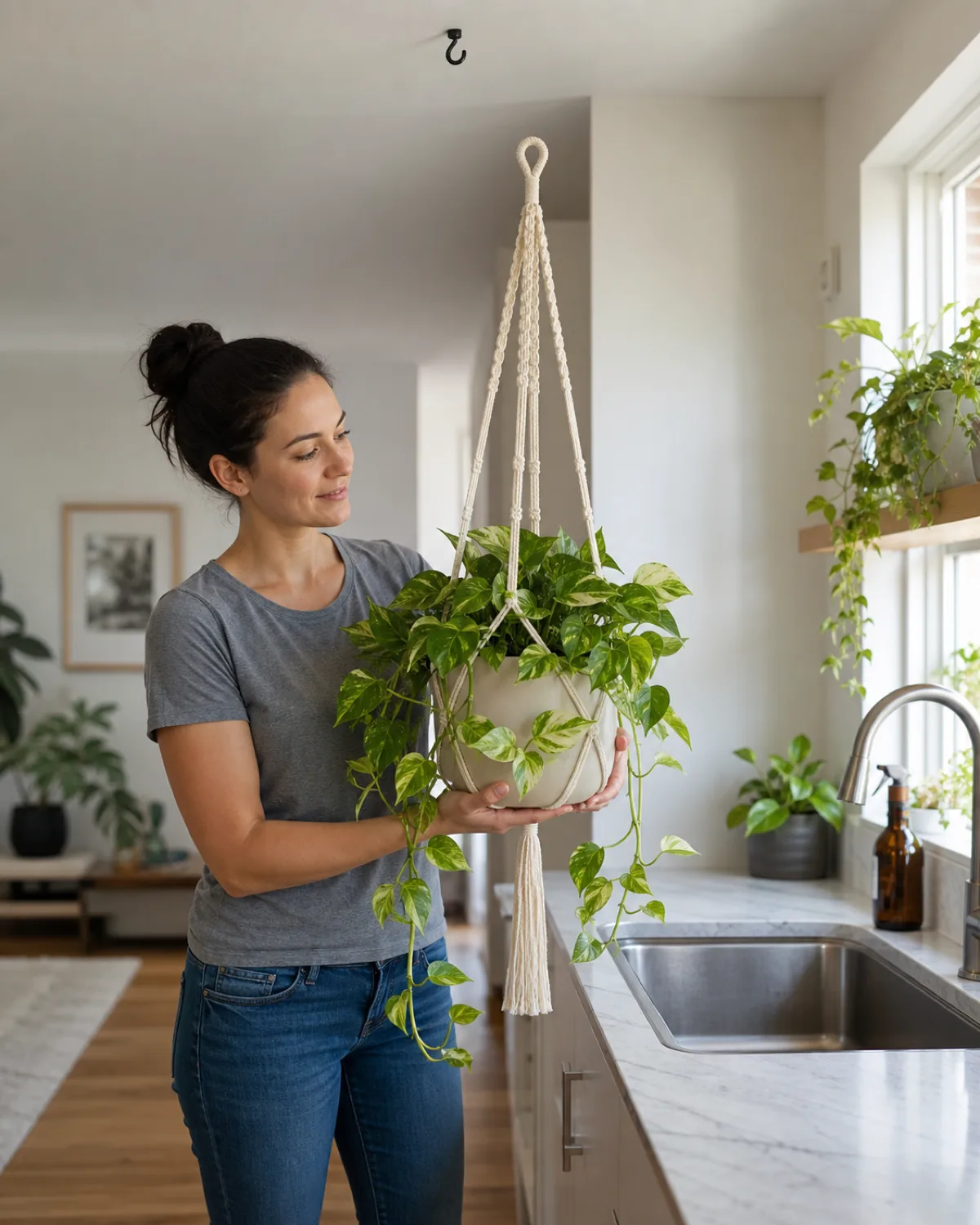
A plant in a macrame hanger needs the same care as the same plant on a shelf, plus a few adjustments for the height and the cord.
Watering is the biggest logistical difference. Reaching overhead to pour water accurately is hard, and any overflow drips onto the floor or furniture below. The most reliable method is to unhook the hanger, carry the entire assembly to the kitchen sink, soak the soil thoroughly, let the pot drain for 20 to 30 minutes, and rehang it.
If unhanging every week is too much effort, two workarounds reduce the hassle.
- Ice cube method: Place three to five ice cubes on the soil surface and let them melt slowly — the gradual release prevents overflow and gives the soil time to absorb evenly
- Built-in saucer: Set the pot inside a slightly larger saucer before placing both in the macrame cradle — the saucer catches drainage water so it does not run down the cord
The cord itself needs periodic inspection. Cotton absorbs moisture from watering splashes, and over months the damp-dry cycle can develop mildew at knot points where cord layers overlap. Check every knot junction every six months by pressing your fingers into the layered cord and feeling for soft, spongy spots.
- Sun bleaching: Direct sunlight gradually yellows natural cotton — many people consider this a desirable aging patina, but if you want the cord to stay white, switch to synthetic or move the hanger out of direct sun paths
- Fraying tassels: The cut ends of cotton cord will unravel over time. Wrap each tassel end with thin thread, or dip the cut ends in white glue to seal them
- Rotation: Turn the entire hanger a quarter-turn every two weeks to prevent one-sided growth toward the nearest light source — trailing plants at height develop lopsided shapes faster than plants on a flat surface, because the light angle difference between the window side and the wall side is steeper at elevation
Macrame plant hanger quick reference
- 1Spiral hanger for trailing plantsOne knot type, thirty minutes, best for pothos and philodendron in 4-to-6-inch pots. The easiest style for beginners.
- 2Basket-weave for bushy plantsSolid bowl wraps the pot completely. Calathea, prayer plant, and peperomia look best cradled in the woven shape.
- 3Double-tier doubles your plant countOne ceiling hook supports two plants stacked vertically. Compact plant up top, trailing plant below. Check weight ratings.
- 4Minimalist for modern spacesStraight cords, minimal knots, Scandinavian aesthetic. Best with architectural plants like snake plant or ZZ plant.
- 5Driftwood bar for a plant curtainHorizontal bar from two ceiling hooks with three to five hangers dropping at staggered heights. Triple-texture natural statement.
- 6Wall-mounted shelf for rentersOne wall hook, no ceiling drilling. Ideal for low ceilings and plants that need a flat surface like succulents and air plants.
- 7Cotton cord for most hangersSoft, easy to knot, holds shape. Watch for mildew from watering splashes. Jute for rustic, synthetic for bathrooms.
- 8Stud-mount for heavy loadsScrew hook into a joist holds 50-plus lbs. Toggle bolt for drywall at 25-to-35 lbs. Adhesive hooks only for lightweight singles.
- 9Pull-test before you hangGrab the hook with both hands and pull hard for 30 seconds. If it holds your weight, it holds a potted plant. Recheck every three months.
- 10Water at the sink, not in the airUnhook, carry to sink, soak, drain 20 minutes, rehang. Or use ice cubes for a mess-free in-place option.
- 11Rotate a quarter-turn every two weeksHanging plants grow lopsided toward the light faster than table plants. Turning prevents one-sided silhouettes.
- 12Inspect cord knots every six monthsPress into each knot junction and feel for soft spongy spots. Cotton absorbs moisture and mildew hides in layered cord.

Mara writes plant care guides grounded in published botany and first-hand growing experience, not recycled social-media advice. Every recommendation on Kultivy is tested against real-world conditions before it reaches your screen. More about our editorial standards.