A dracaena marginata, sold almost everywhere as a dragon tree, looks like it should be fussy — the thin red-edged leaves and bare woody trunk read as sculptural, high-maintenance decor.
It isn’t. Most of what goes wrong comes down to one habit: watering on a calendar instead of checking the soil, and using straight tap water on a plant that would rather you didn’t.
This guide covers both, plus pruning a cane that’s grown too tall, propagating a cutting, and an honest note on pet safety.
Dracaena marginata is the woody-caned dragon tree most people confuse with a snake plant. The thirteen sections below cover the real identification tell, the water-quality lever behind brown tips, how to prune a tall cane, and propagation.
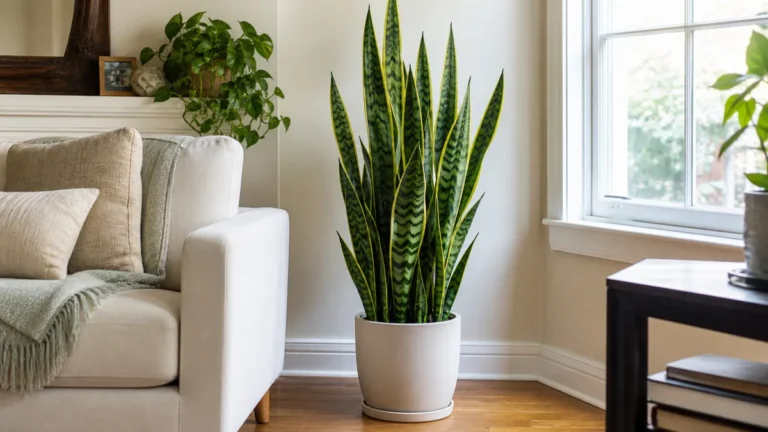
Dracaena marginata vs snake plant: how to tell them apart (and why care differs)

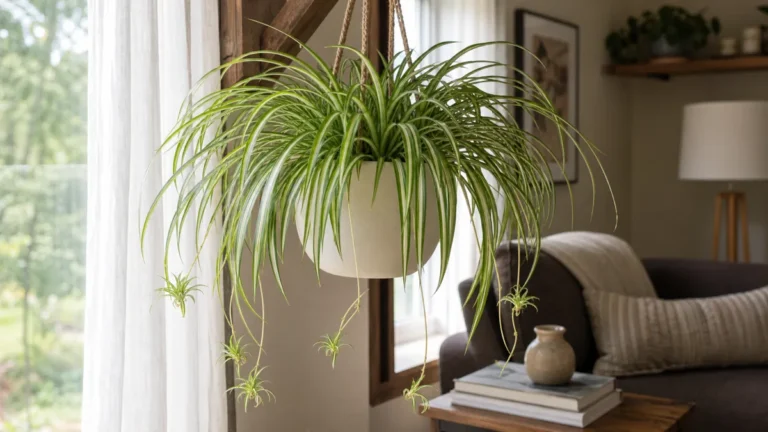
Both plants get recommended to the same “I kill everything” beginner, and both earn it, but they are built differently. A dracaena marginata grows thin, arching, grass-like leaves with red-to-purple margins radiating from the top of one or more woody, cane-like trunks that get taller over time and can be pruned to branch.
A snake plant has no visible trunk at all — just stiff, upright sword leaves rising straight out of the soil.
That structural difference carries into how each one fails. Dracaena is picky about water quality, showing brown tips from ordinary tap water long before it shows any sign of underwatering.
Snake plant is picky about overwatering instead, going soft and mushy at the base if the soil stays wet too long. They’re both near-impossible to kill, just in opposite directions — worth comparing side by side in the snake plant care guide if that one is also on the shortlist.
- A visible woody cane trunk points to dracaena; stiff leaves straight from the soil with no trunk points to snake plant.
- Dracaena fails from bad water quality (brown tips); snake plant fails from overwatering (mushy base).
- Both tolerate serious neglect, just along different axes.
How much light a dracaena marginata needs
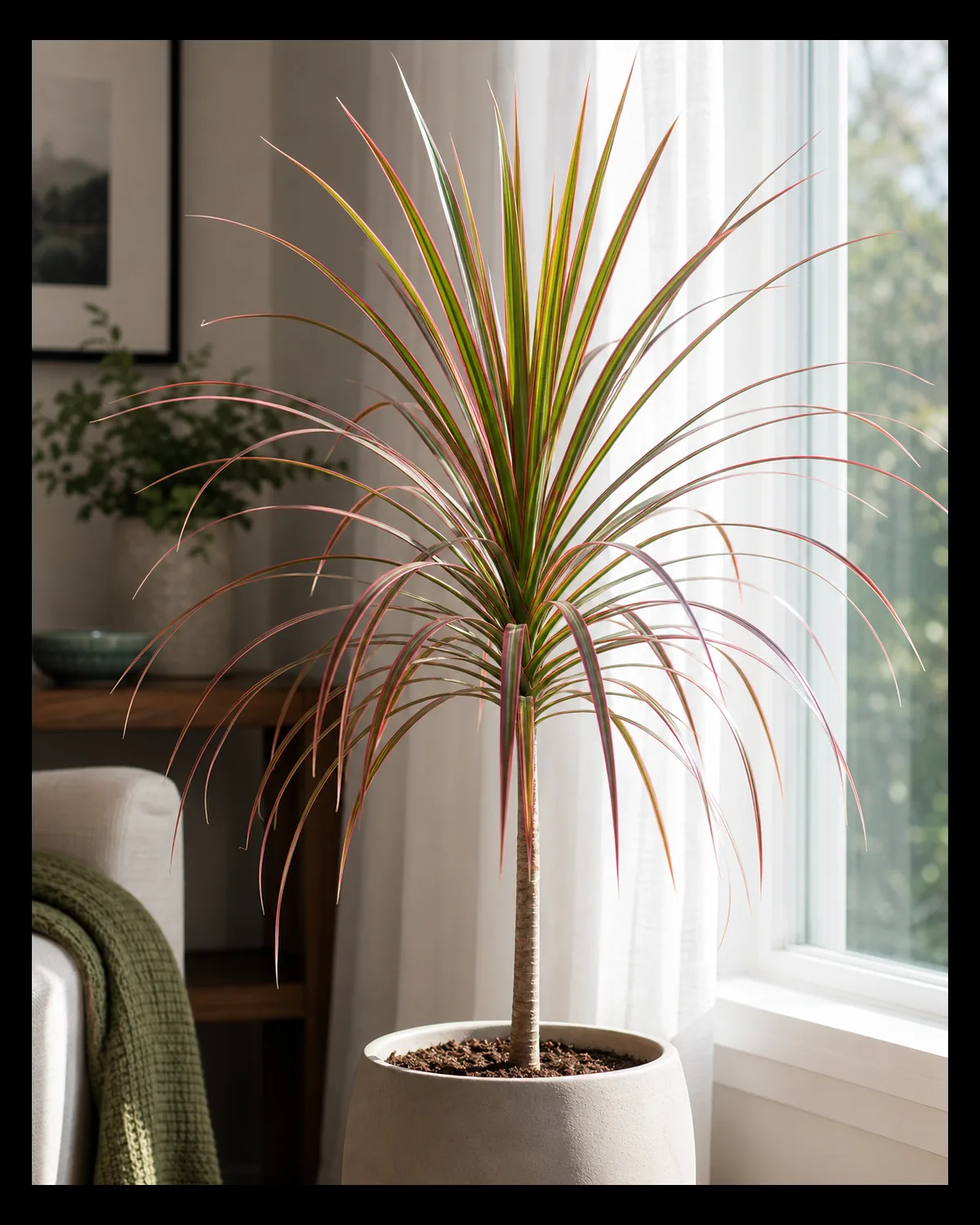
Bright indirect light keeps the leaf margins at their deepest red-purple and keeps new growth compact. It also tolerates medium and even low light for long stretches — a genuine low-light houseplant, not just a plant that survives dim corners out of spite.
The tradeoff shows up in color, not survival. The dimmer the spot, the more those colorful leaf edges fade toward plain green over time.
- Bright indirect light produces the deepest red-purple margins.
- Medium to low light is genuinely tolerated, not just barely survived.
- Dimmer spots fade the leaf color toward plain green rather than harming the plant outright.
How often to water (and why less is more)
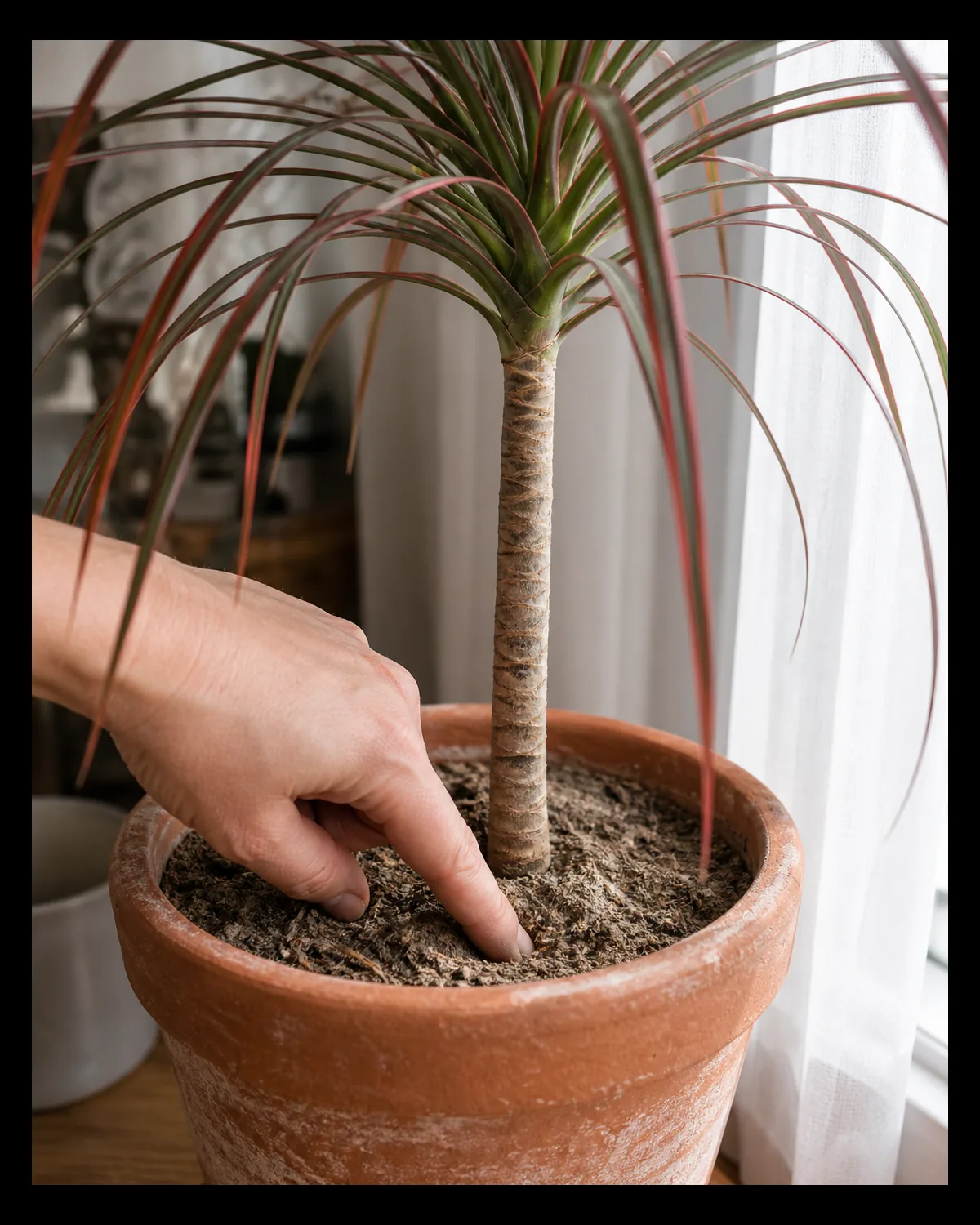
Water only once the top two to three inches of soil are completely dry, which usually lands somewhere around every two to three weeks in most homes. Dracaena stores a reserve of water in its cane-like stem, so it can go longer between waterings than the size of the plant would suggest.
Overwatering, not underwatering, is the top killer here. It shows up as a soft, dark, mushy base rather than wilted leaves, since the cane is absorbing the excess before the foliage shows any distress.
- Check two to three inches down, not the calendar, before watering.
- Roughly every two to three weeks is typical, but soil dryness overrides any fixed schedule.
- A soft, dark, mushy base signals overwatering, the more common failure than drought.
Most dracaena marginata questions trace back to one of four situations. Start with whichever one describes yours, then circle back to the rest later.
Why the leaf tips are turning brown (the water-quality lever)
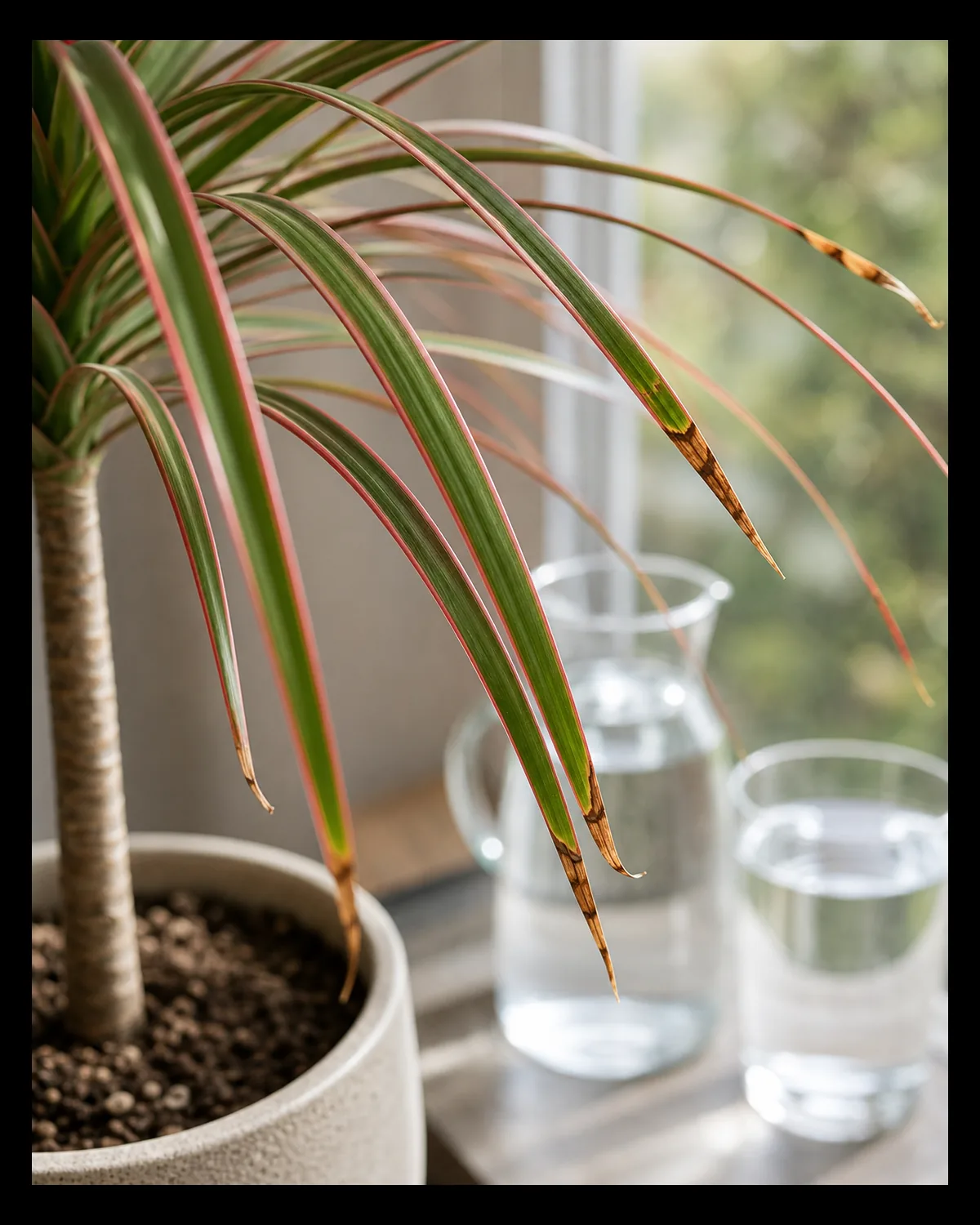
This is the plant’s signature complaint, and it’s almost never about how often you’re watering. Dracaena marginata is unusually sensitive to the fluoride and chlorine present in most municipal tap water, which builds up in the leaf tips over time as crisp, brown, dried edges while the rest of the leaf stays green and healthy.
Switching to distilled water, filtered water, rainwater, or even just letting tap water sit uncovered for 24 hours before use (which lets some chlorine evaporate) stops new tips from browning. Existing brown tips won’t turn green again, but they can be trimmed off with clean scissors for a tidier look.
- Brown, crispy tips on otherwise healthy leaves point to water quality, not underwatering.
- Distilled, filtered, rainwater, or rested tap water prevents new tips from browning.
- Existing brown tips don’t reverse — trim them off rather than waiting for them to green up.
The right potting mix for a cane that stores its own water
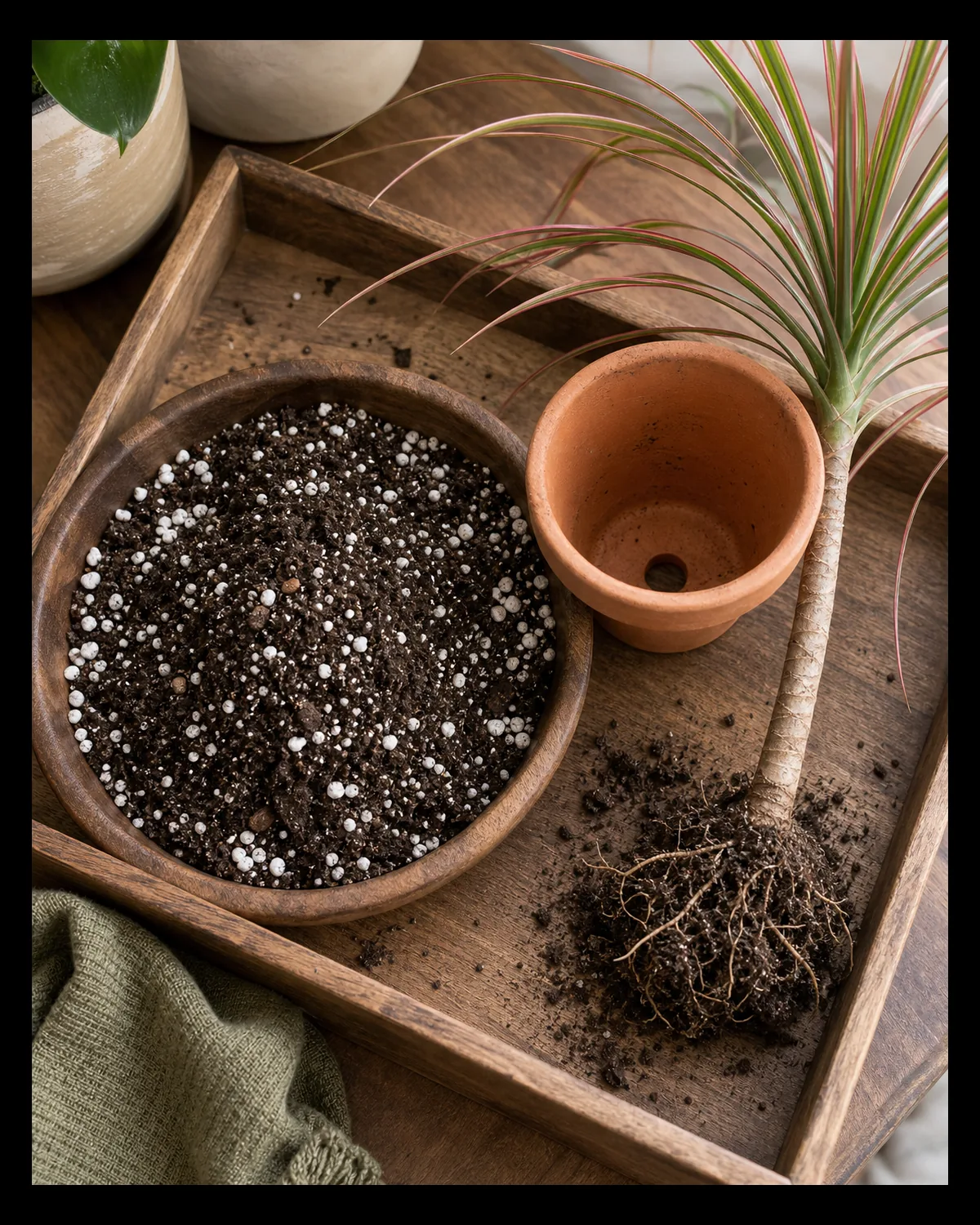
A well-draining potting mix — standard potting soil with added perlite — in a pot with a drainage hole is all this plant needs. Because the woody cane already stores a water reserve of its own, soggy, slow-draining soil around the roots is a bigger risk for dracaena than it is for most other houseplants.
A pot that’s a size too small is a minor inconvenience. A pot that holds water too long, on a plant whose stem is already stocked with moisture, is what actually causes root and stem rot.
- Standard potting soil plus perlite gives the fast drainage this plant needs.
- A drainage hole is non-negotiable, more so than for plants without a water-storing cane.
- Slow-draining soil is a bigger risk than a slightly small pot.
Why the leaves are turning yellow or dropping
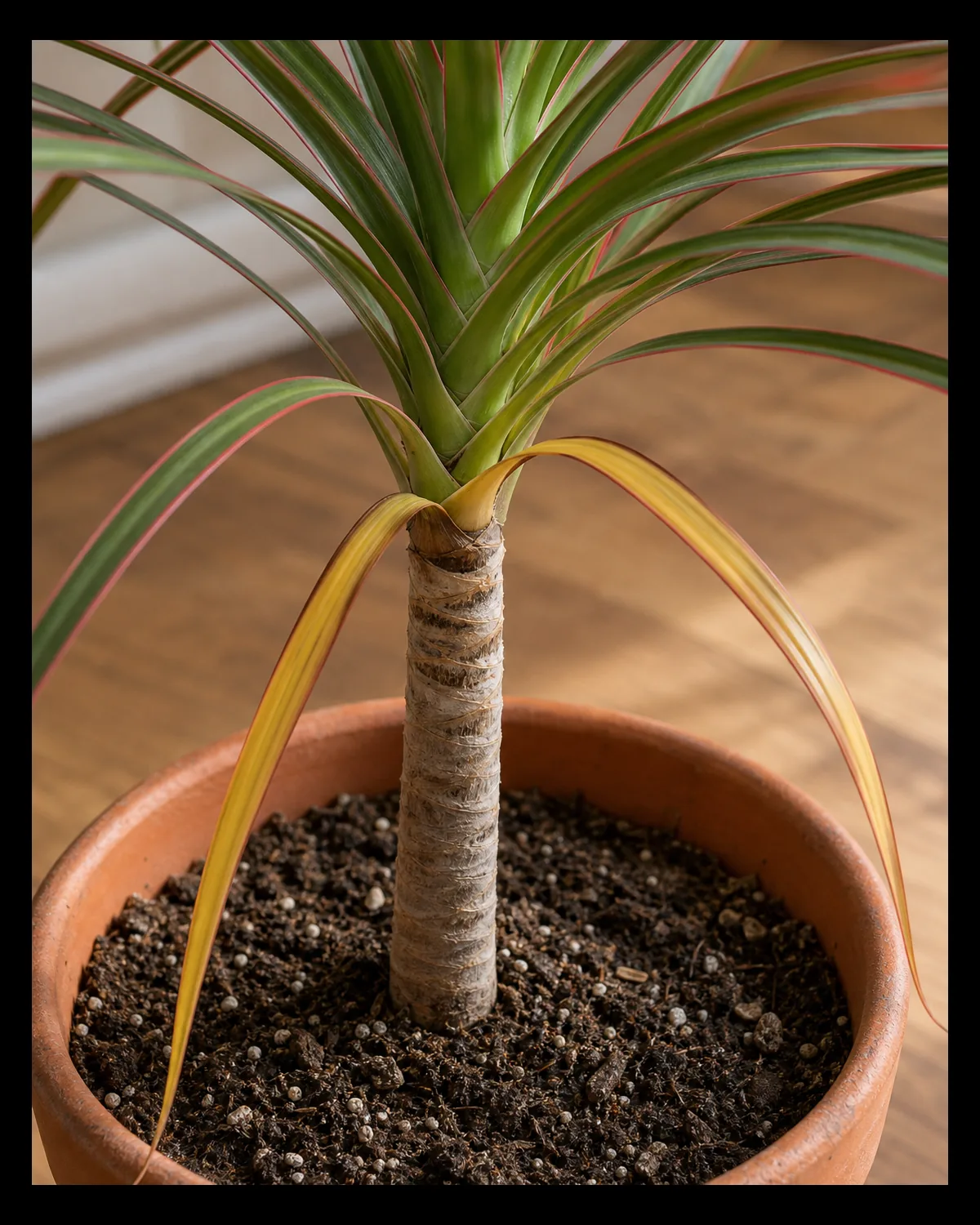
A few lower, older leaves yellowing and dropping over time is normal aging, not a problem — the cane sheds from the base as it grows taller and pushes new growth higher up. As long as the yellowing stays limited to the oldest leaves near the bottom, there’s nothing to fix.
Widespread yellowing higher up the plant, on newer leaves further from the base, usually points to overwatering instead, and is worth checking against the soil-dryness and pot-drainage guidance above.
- Yellowing limited to the lowest, oldest leaves is normal aging as the cane grows.
- Yellowing spreading higher up the plant usually signals overwatering.
- Check soil moisture and drainage if the yellowing looks widespread rather than isolated to the base.
Most dracaena disappointments trace back to one of four moves people skip. Hold these four and a dragon tree stays healthy with clean, undamaged leaf margins instead of a slow crop of brown tips.
The cane is getting tall and bare — how to prune it
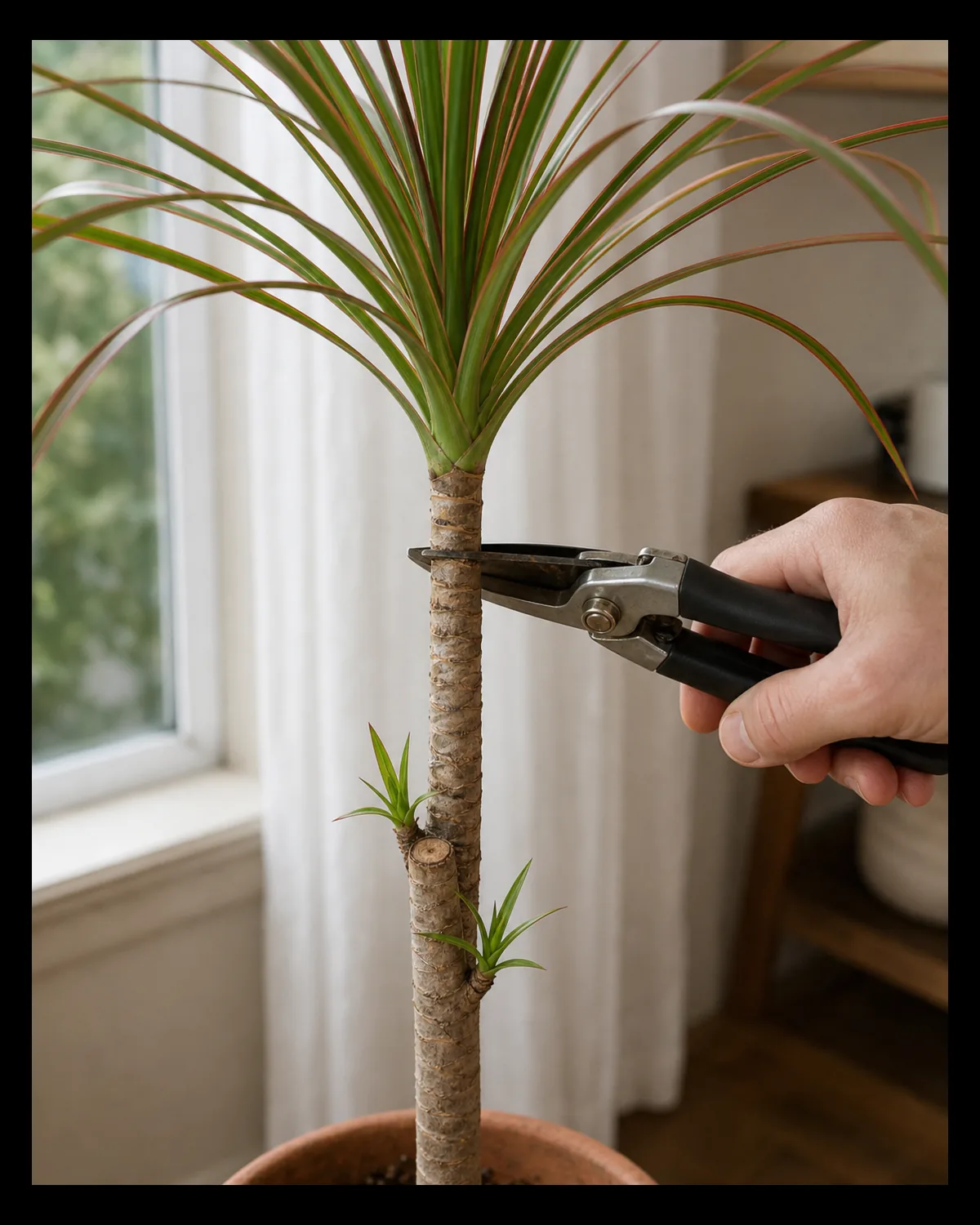
Cut the woody cane at whatever height keeps it in proportion to the room. It looks drastic in the moment — a bare stick with a leaf spray on top, sitting exposed — but the cut point reliably sprouts two to three new leaf rosettes from the bark within a few weeks.
That resprouting habit is exactly how nurseries produce the branched, multi-head dragon trees sold in stores, each head at a slightly different height. A single home prune can turn one tall cane into a fuller, multi-headed plant the same way.
- Cut at whatever height suits the room — the plant resprouts from the cut point.
- Expect two to three new rosettes to appear from the bark below the cut within weeks.
- This is how branched, multi-head dragon trees are made, including the ones sold in stores.
How dracaena handles dry indoor air and low humidity (and the tap-water link)
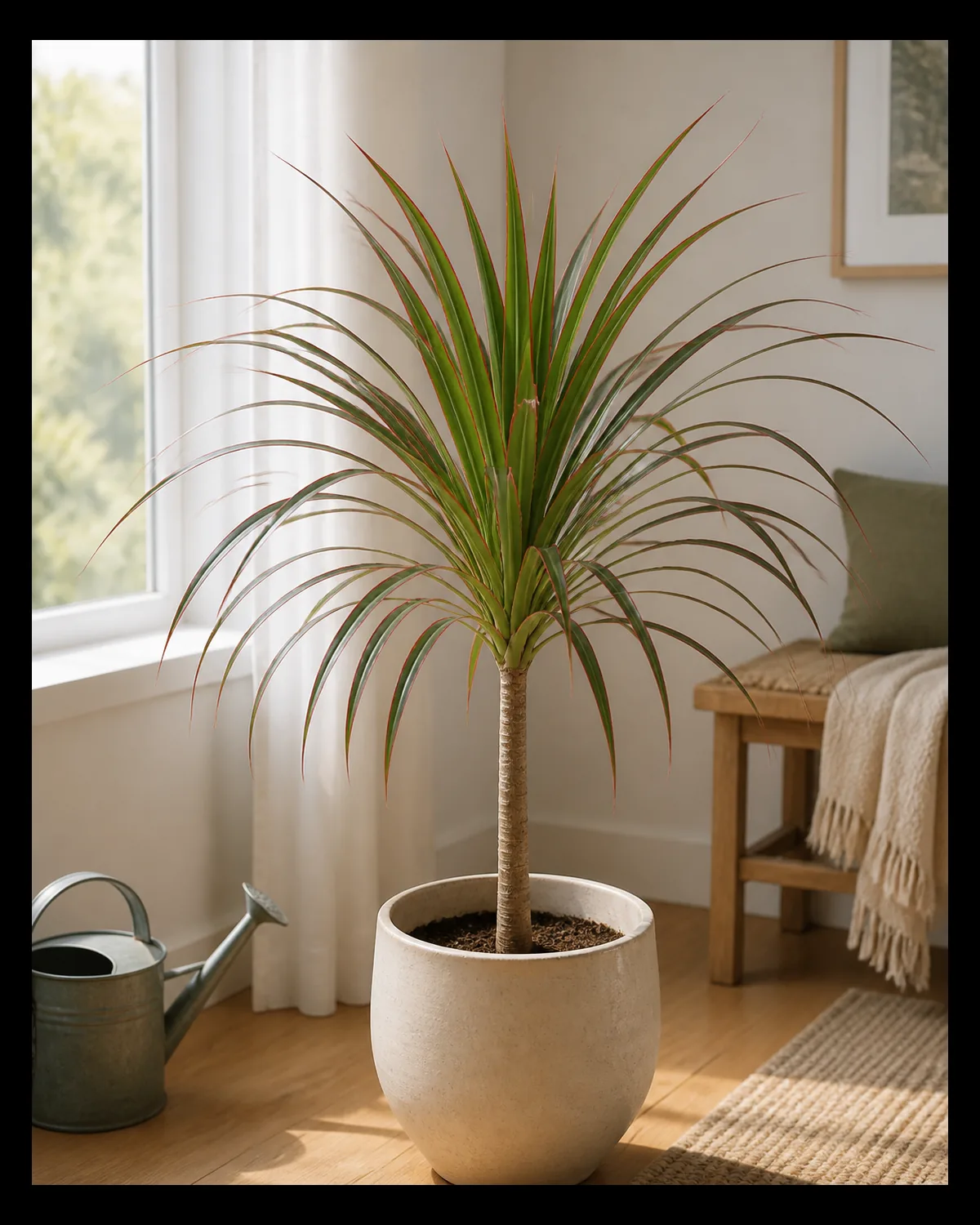
Unlike a lot of tropical houseplants, dracaena tolerates typical dry home humidity without complaint and doesn’t need misting. If the leaves are showing crispy brown damage, it’s almost always the water-quality issue covered above, not the air.
That’s a useful contrast with the zz plant care guide, a similarly tough, low-light, rhizome-based plant that shrugs off both bad water and dry air equally — it doesn’t share dracaena’s fluoride and chlorine sensitivity at all. Between the two, dracaena is the one that actually cares what’s in your water.
- Dry indoor air is not a problem for a dracaena — skip the misting.
- Crispy brown leaf damage points to water quality, not low humidity.
- ZZ plant tolerates both dry air and bad water, which is the one thing dracaena doesn’t share with it.
How to propagate a dracaena marginata cane cutting
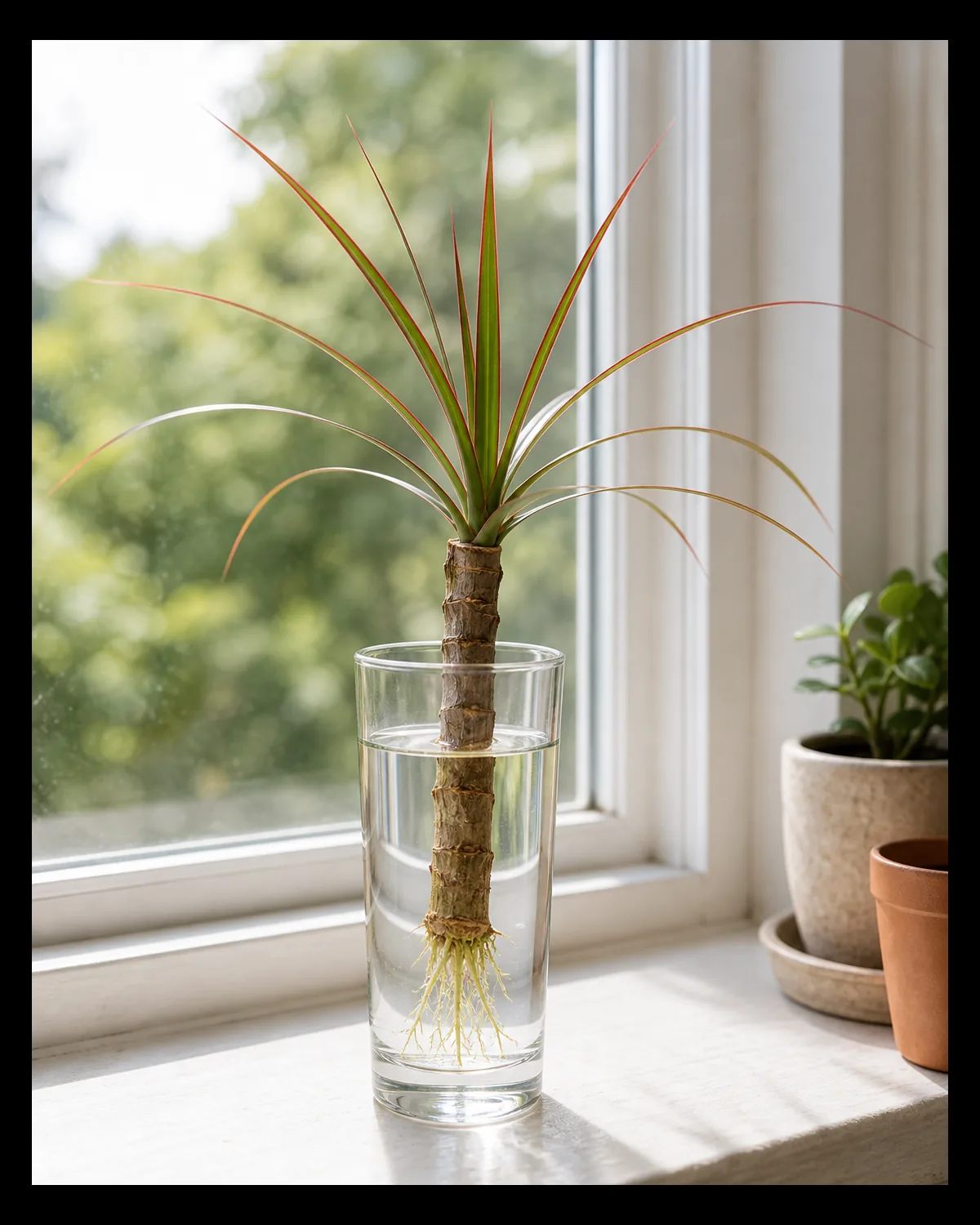
Cut a four to six inch section of cane, let the cut end callus over (air-dry) for about a day, then either plant it upright in slightly moist potting mix or stand it in a glass of water. New roots, followed by a leaf rosette, typically appear from the top of the cutting within four to eight weeks.
The callusing step matters more here than it does for softer-stemmed plants — skipping it raises the odds of the cut end rotting before roots form, since the woody cane holds enough stored moisture to stay damp at the cut for a while.
- Let the cut end callus for about a day before potting or watering it.
- Water or soil both work for rooting a cane section.
- New growth typically takes four to eight weeks to appear from the top of the cutting.
Dracaena Marginata Care: The Quick Reference
- 1Dracaena vs snake plant: check for a trunkA dracaena has a visible woody cane trunk with leaves radiating from the top. A snake plant has no trunk at all — leaves rise straight from the soil.
- 2Light: bright indirect for the deepest leaf colorMore light means deeper red-purple leaf margins. Low light is genuinely tolerated, but the color fades toward plain green.
- 3Water: check two to three inches downRoughly every two to three weeks in most homes. The cane stores its own water, so overwatering is the bigger risk than underwatering.
- 4Brown tips: it’s the water, not the scheduleFluoride and chlorine in tap water cause crispy brown tips over time. Switch to filtered, distilled, or rested tap water to stop new damage.
- 5Soil: fast-draining with a drainage holeStandard potting soil plus perlite. Slow-draining soil is a bigger risk here than a slightly small pot.
- 6Yellow leaves: base aging vs widespread overwateringOne or two yellow leaves at the base is normal aging. Yellowing spreading higher up the plant points to overwatering.
- 7Prune the cane to the height you wantThe cut point resprouts two to three new rosettes within weeks. This is how branched, multi-head dragon trees are made.
- 8Dry air is fine, no misting neededDracaena tolerates typical dry home humidity without issue. Brown tips are a water-quality problem, not a humidity one.
- 9Propagate a 4-6 inch cane cuttingLet the cut end callus for a day, then root it in water or moist soil. New growth appears in 4-8 weeks.
- 10Pests: check the leaf axils along the caneSpider mites show as fine webbing in dry conditions; mealybugs hide in the axil pockets where leaves meet the cane.
- 11Styling: a narrow silhouette for dim cornersIts upright, sculptural shape works as a floor plant in corners with less direct light than most statement trees need.
- 12Repot when roots circle the drainage holeEvery two to three years, sizing up only one pot size to avoid trapping excess moisture.
- 13Pet safety: toxic, keep it out of reachToxic to cats and dogs if chewed. Classic green-and-red, Tricolor, and Colorama are the common varieties, all with the same care.
kultivy.com
Spider mites and mealybugs on a dracaena cane
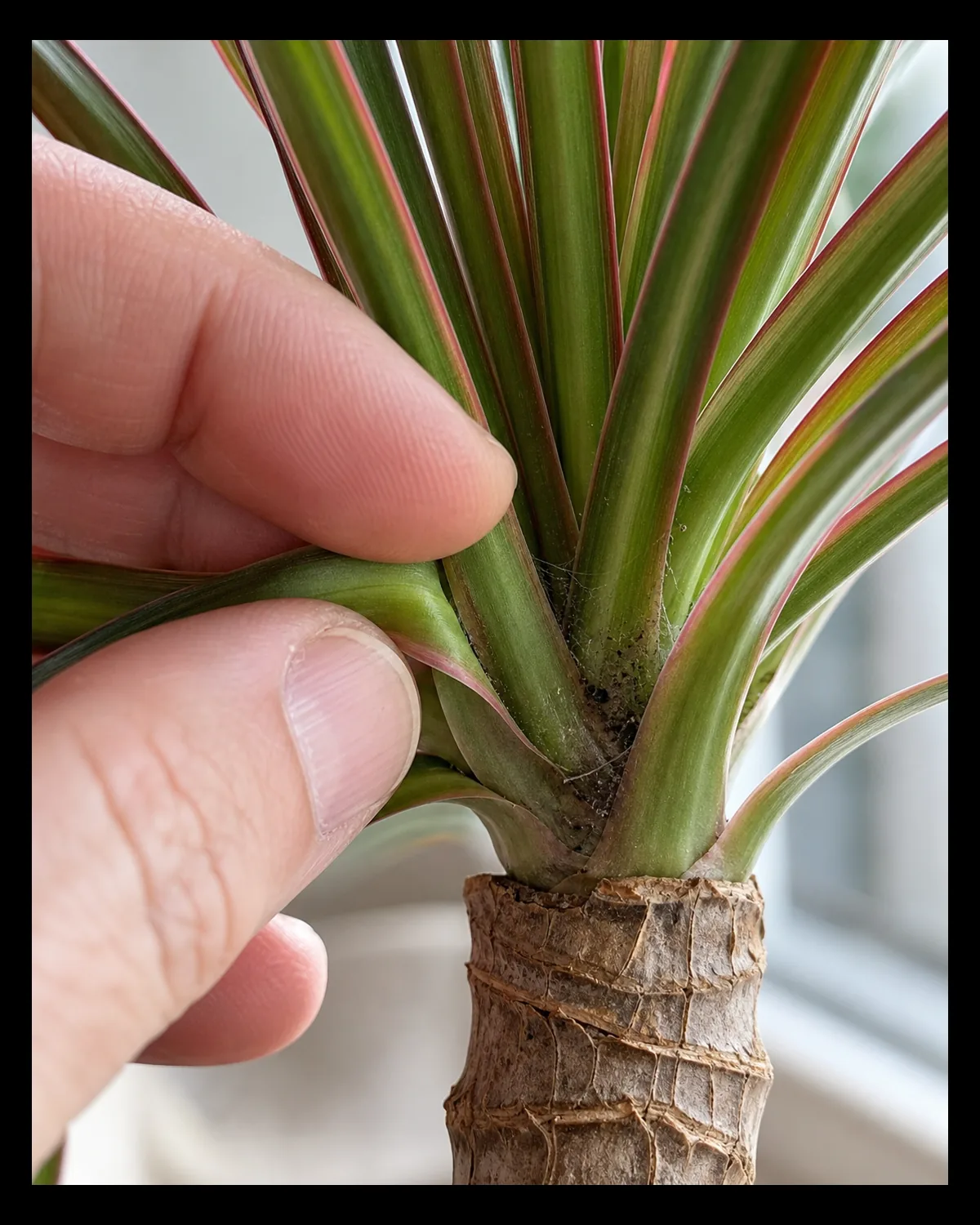
Spider mites show up most in dry conditions, appearing as fine webbing and stippled leaves. Mealybugs prefer to tuck themselves into the leaf axils — the pockets where each thin leaf meets the woody cane — which makes them easy to miss on a quick glance.
A monthly check that includes gently parting those axil pockets catches both early. Wipe leaves with a damp cloth as routine maintenance, and treat any real infestation with insecticidal soap applied to the whole plant, not just the spots where pests are visible.
- Fine webbing and stippled leaves point to spider mites, worse in dry conditions.
- Check the leaf axils along the cane, not just the leaf surfaces, for mealybugs.
- Insecticidal soap on the whole plant treats an infestation more reliably than spot-treating.
How to style a dracaena marginata in a room (and why low light works)
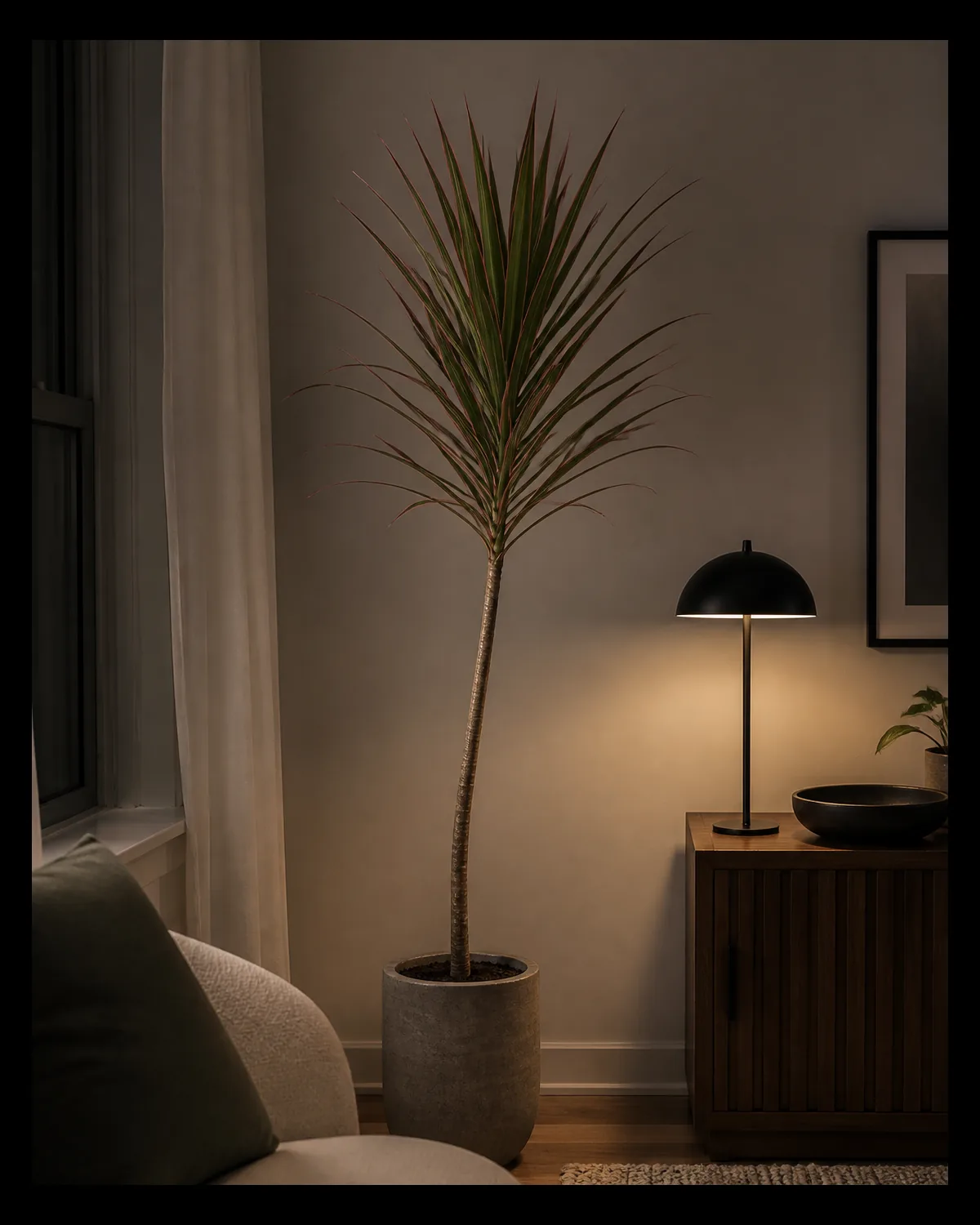
Its narrow, upright, sculptural silhouette makes a dracaena marginata a strong floor plant for corners that get less direct light than most statement trees would tolerate. A single cane topped by a spray of leaves fills a tall, narrow gap next to a chair or lamp without crowding it, which most wide-canopy trees can’t manage in that same footprint.
For more picks built around the same constraint, the low light plants roundup covers other species that hold up in corners like this one.
- A narrow, upright silhouette suits tight or dim corners better than wider statement plants.
- Low light is a styling advantage here, not just a tolerance.
- A single cane reads as sculptural even without bright, direct light.
Repotting: when and how
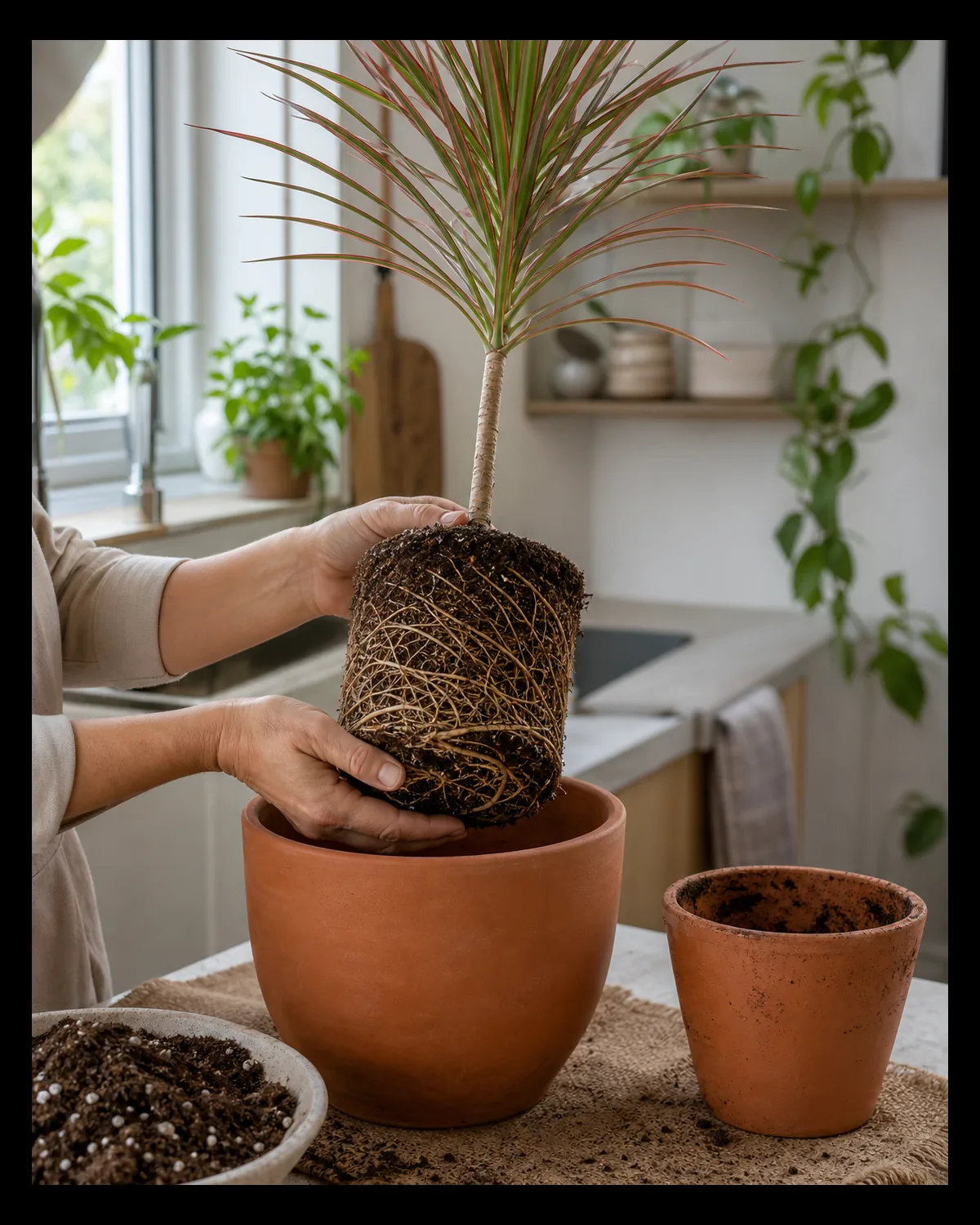
Repot every two to three years, or sooner if roots are visibly circling the drainage hole when you check. Size up by only one pot size at a time — going much bigger traps excess soil moisture around roots that don’t yet reach it, which works against the fast-draining setup this plant needs.
Circling roots at the base of the root ball are the clearest signal it’s time, more reliable than counting years since the last repot.
- Roots circling the drainage hole are the clearest sign it’s time to repot.
- Size up by one pot size only, not more, to avoid trapping excess moisture.
- Every two to three years is typical, but check the roots rather than relying on a fixed timeline.
Is dracaena marginata toxic to pets, and what are the common varieties?
Honestly: yes, dracaena marginata is toxic to cats and dogs if chewed, which can cause vomiting and drooling. Keep it somewhere out of reach of pets that like to chew on houseplants — this is one of the few plants on this site that isn’t a safe pick for that situation.
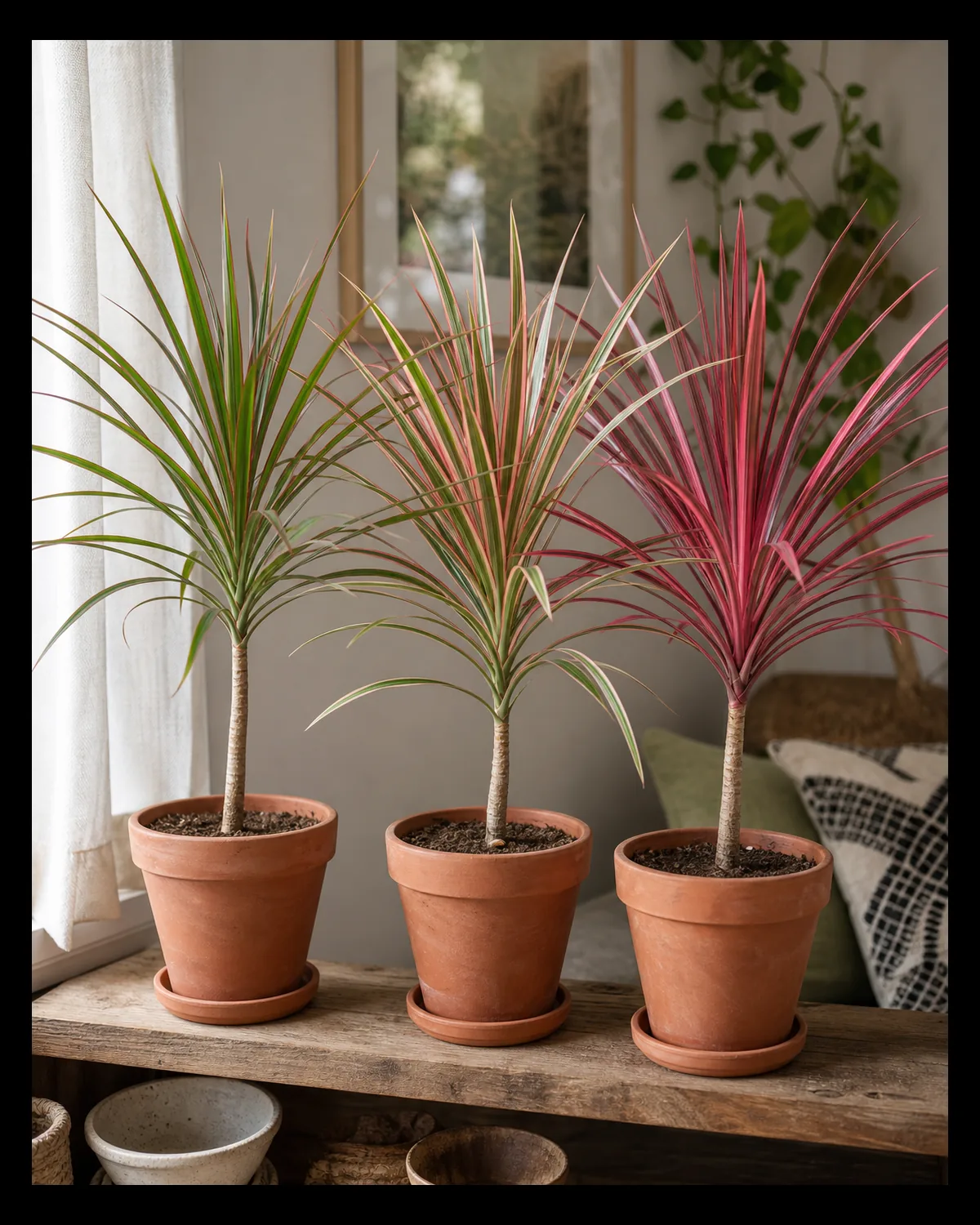
The plain green-and-red species type is the classic dragon tree sold nearly everywhere. ‘Tricolor’ adds a cream stripe alongside the red margin on each leaf, and ‘Colorama’ leans almost entirely pink-red with barely any green showing. All three share the exact same care routine in this guide.
New to houseplants and need something completely non-toxic instead? See the easy houseplants roundup for pet-safe picks.
- Toxic to cats and dogs if chewed — keep it out of reach in pet households.
- Classic, Tricolor, and Colorama are the most common varieties, all sharing the same care.
- Want a non-toxic alternative instead? The easy houseplants roundup has pet-safe picks.

Mara Quinn edits Kultivy, where she shares houseplant care, propagation, beginner-friendly plant picks, and plant-styling ideas for anyone who wants their indoor plants to actually thrive. Every guide is image-led and reviewed for clarity, usefulness, image accuracy, and Pinterest-to-page alignment before it goes live. Visit the About page.